


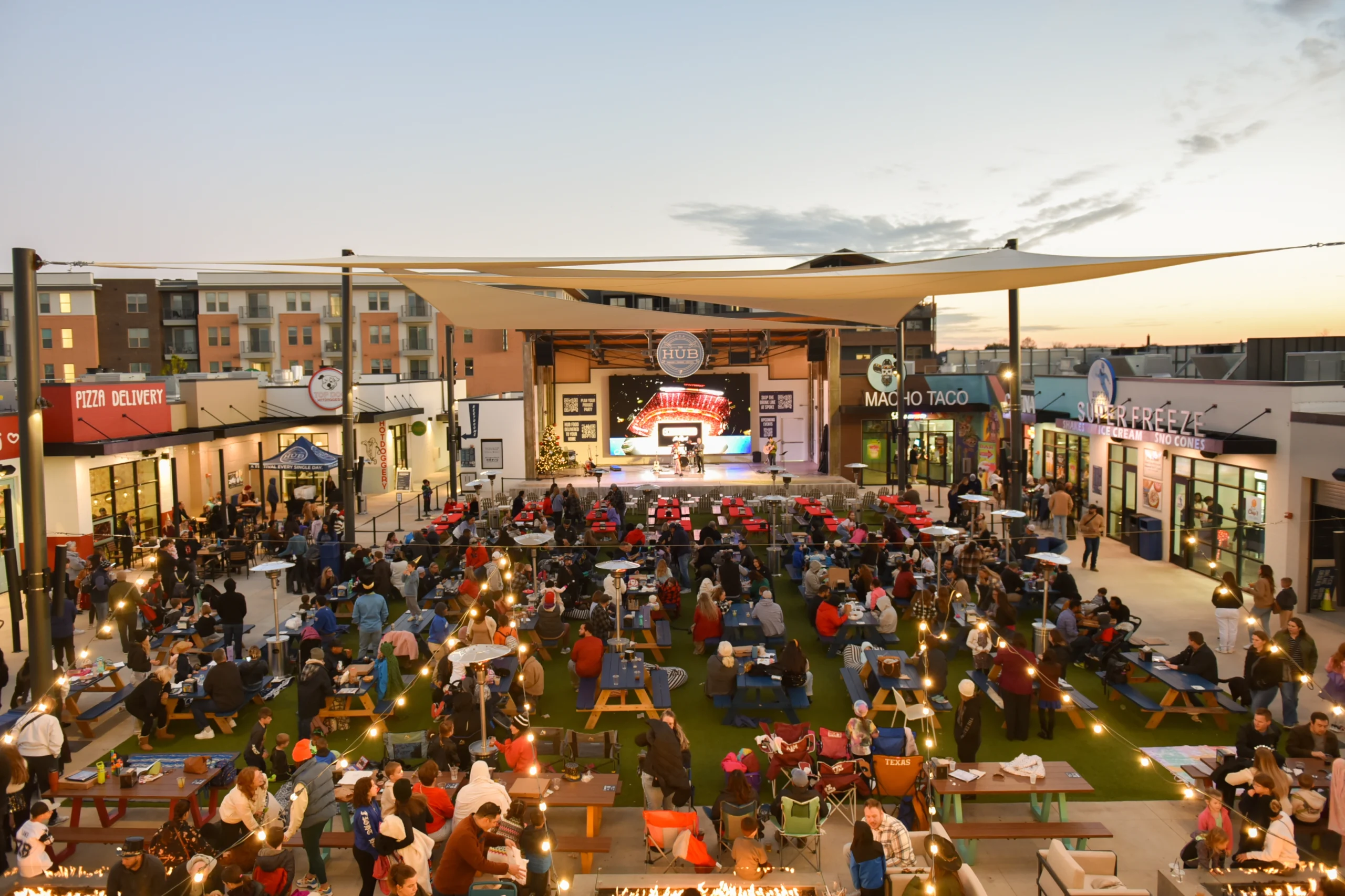
Building on the success of the Big Chill on 30-A (formerly The Hub), The Hub at the Farm serves as the vibrant centerpiece of a 135-acre mixed-use development featuring 2,400 multi-family units and 1.6 million-square-feet of office space, known as The Farm in Allen. DAG designed the prototype concept, which will guide the development of future Hub locations across the country. The design includes 15,000 SF of weather-protected communal dining and gathering areas, a 5,200 SF event lawn, and a 12,000 SF of outdoor space. The Hub boasts 11 distinct restaurant and bar concepts, offering a dynamic and social destination for residents, workers, and visitors alike.
Portfolio Type: Retail
Our retail design work creates better built environments for consumers and retail tenants by drawing inspiration from our local communities to deliver functional, engaging spaces.
Sunliner Diner
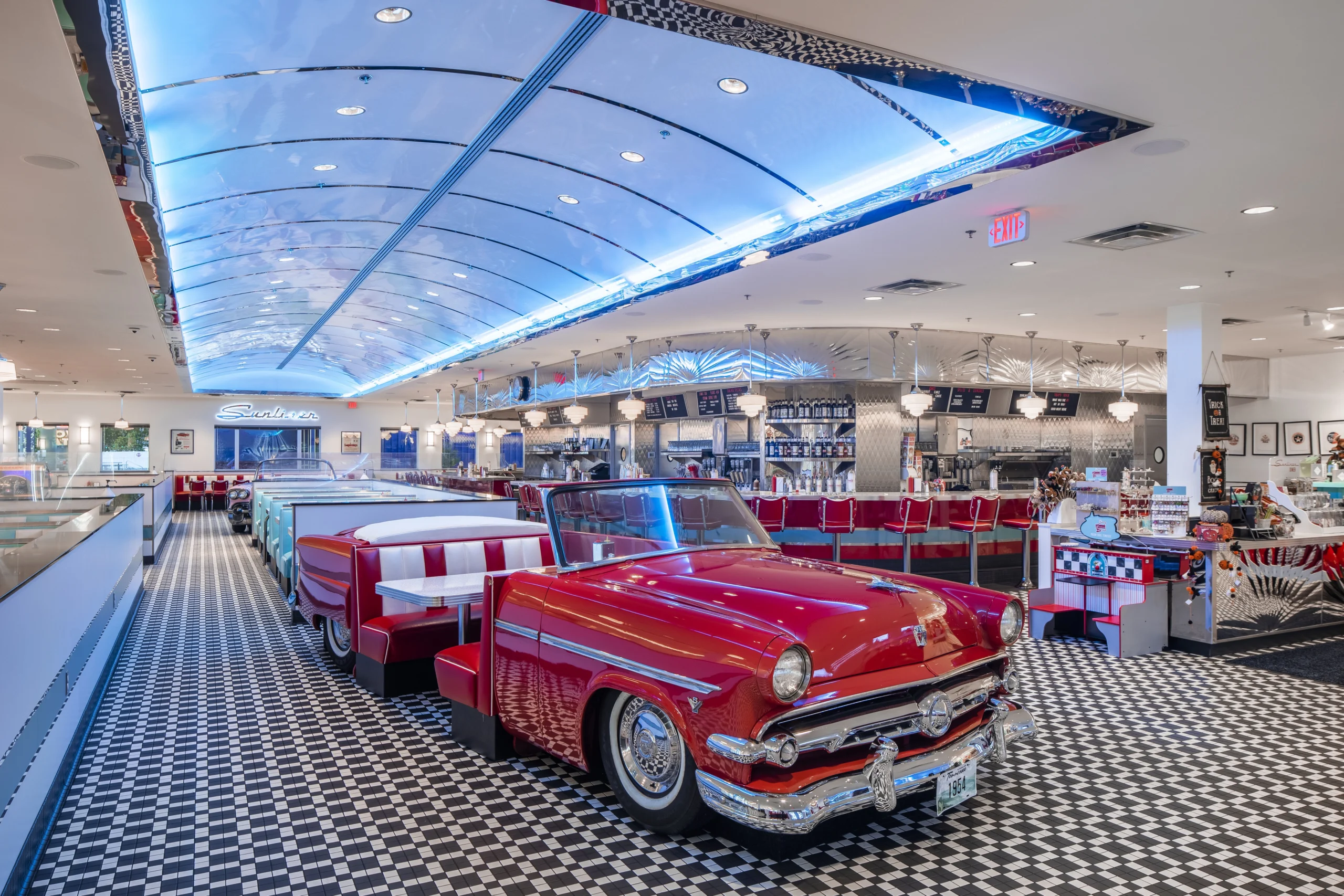
DAG Architects collaborated closely with the client and FK Companies to reimagine the spirit of the classic American diner within a contemporary setting. The design challenge was to create a distinctive and highly recognizable destination that honors mid-century Americana, while meeting the operational demands of a modern restaurant.
The building’s exterior makes a bold visual statement, drawing heavily from 1950s automotive culture and roadside diner aesthetics. Striking geometric forms, vibrant neon lighting, and a carefully selected palette of timeless materials—such as polished metal, glass block, and porcelain enamel—establish a commanding roadside presence and evoke the glamour of a bygone era.
DAG led the interior architectural design, orchestrating every detail to heighten the nostalgic experience. From checkerboard flooring and chrome accents to vintage vehicles and classic jukebox elements, the interior environment immerses guests in a richly layered narrative. Every finish, fixture, and spatial element was intentionally curated not only to evoke memory and emotion, but also to ensure lasting durability, comfort, and operational efficiency.
The team’s success allowed the client to extend this design language into new iterations of the roadside attraction, reinforcing the diner’s identity as both a cultural landmark and a high-performing hospitality venue. The result is architecture that transcends simple theming—merging playful retro iconography with rigorous design thinking to create a vibrant, immersive, and enduring destination.
Maserati Dealership
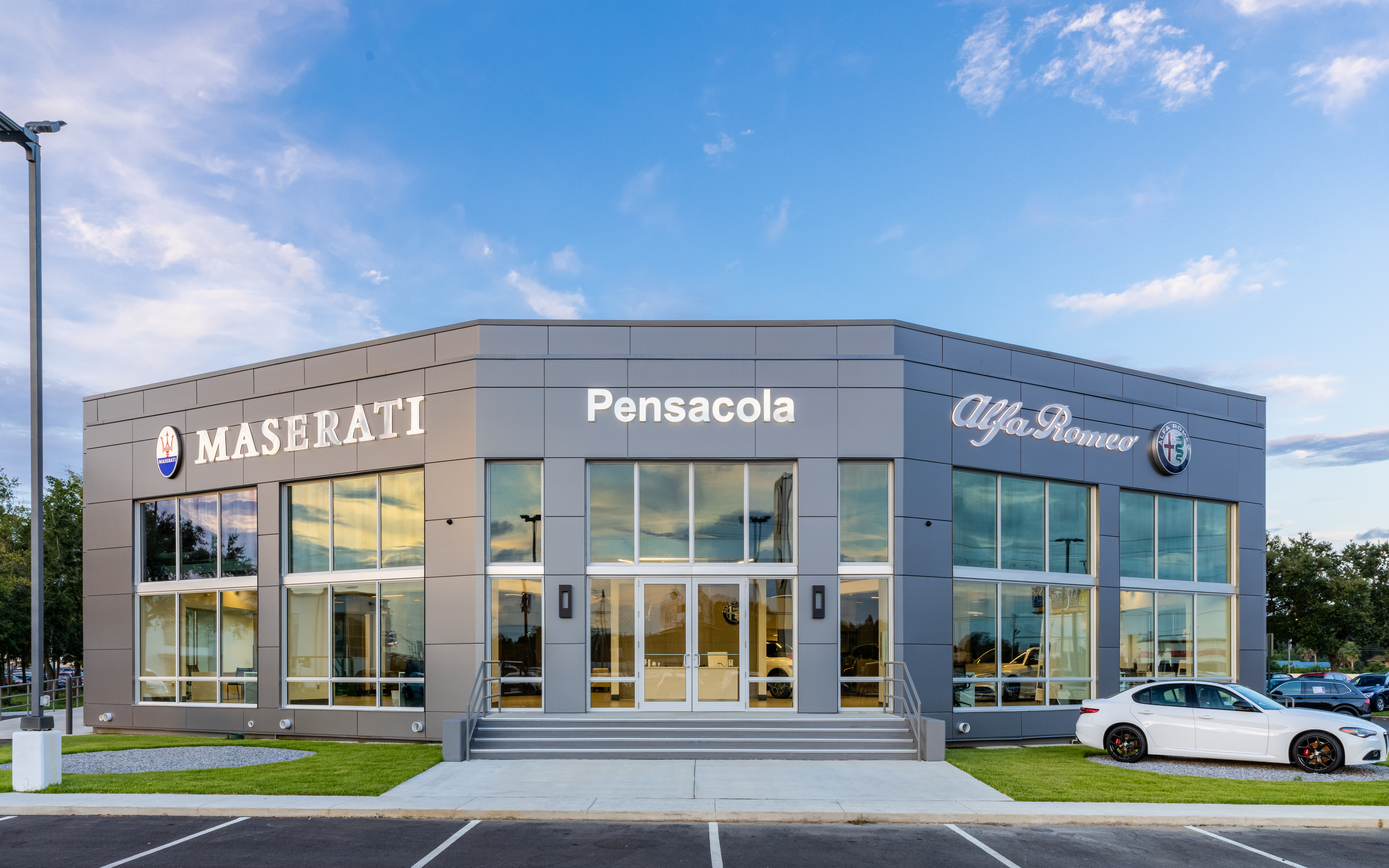
Originally built in the 1990s, this dealership in Pensacola, Florida, is located at the entrance of the “Car City” district on busy Highway 29. Step One purchased the property a year before our involvement and operated its Maserati & Alfa Romeo dealership in the existing building. However, the facility did not meet the corporate standards for Italian luxury cars. The owner’s architect initially developed the branding and concept, but as the architect of record, we were tasked with preserving the design intent while adapting the aging structure to fit within budget, on a tight timeline, and in compliance with new building codes.
The building’s unique design features an obtuse angle and a pie-shaped roof, with a large cylindrical structure at the entrance, a holdover from its previous incarnation as a Honda dealership. This structure was removed as part of the renovation to create a more modern and welcoming entrance. Additionally, existing offices were removed to open the showroom floor, fostering better interaction between sales staff and customers.
Renovations included upgrading the second-story office area, enhancing the interior glazing system, and creating a more prominent front façade with a new service drive. The outdated service drive was replaced, and a wider, more inviting entrance with larger stairs and doors was added. The renovation also included new sales showrooms, sales offices, a service drive-up, accessible elements, product display spaces, updated restroom facilities, and a break room. New mechanical and electrical systems were installed, along with updated finishes and a new glass interior wall system. Additionally, the sales offices were relocated next to the showroom for better functionality and flow.
Hello Hilo Restaurant
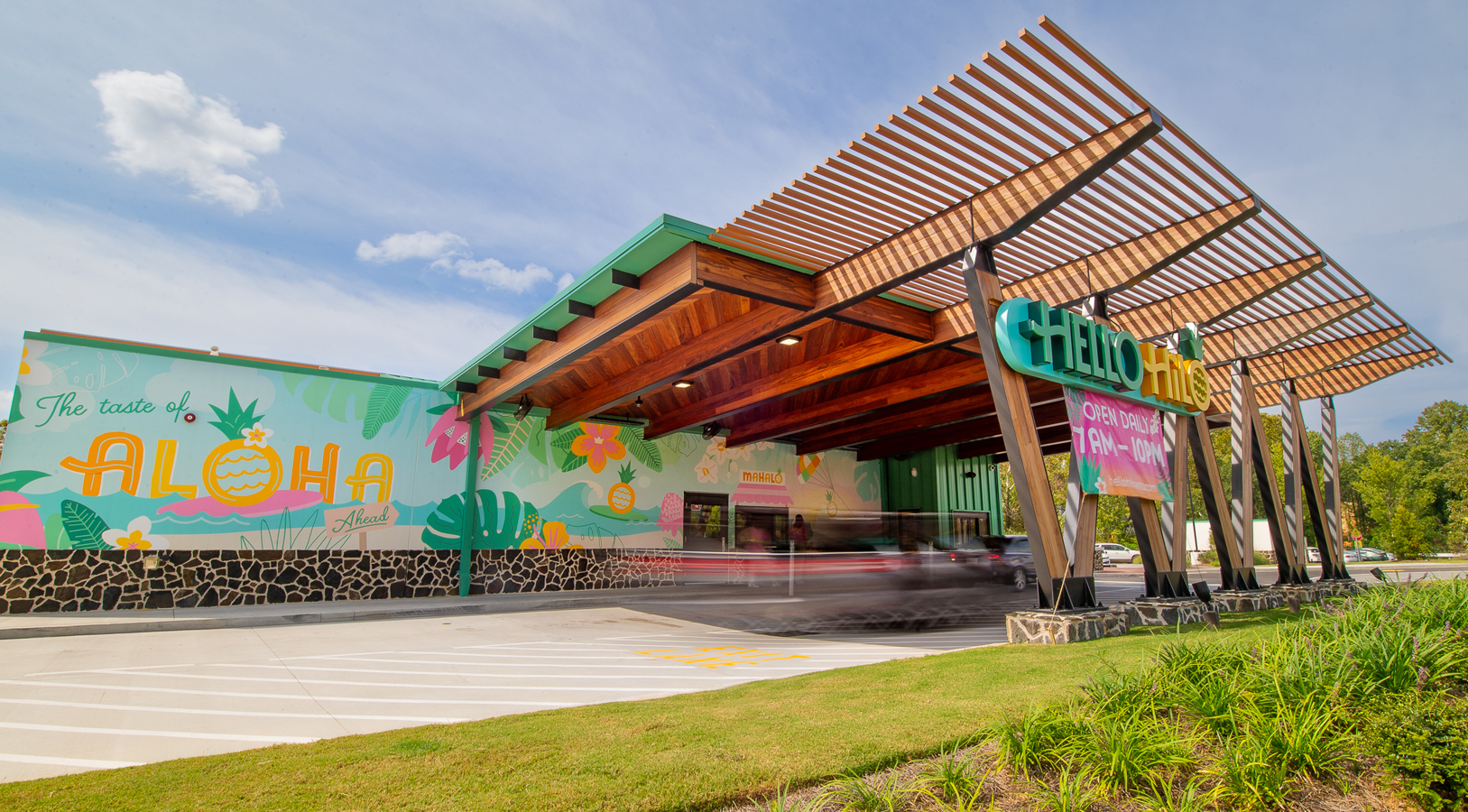
Hello Hilo is a restaurant prototype bakery for King’s Hawaiian and its Hello Hilo brand. The design aimed to embody the spirit of “ohana,” reflecting a sense of family and warmth through the sharing of food and hospitality. To promote this atmosphere, the space features abundant indoor and outdoor seating to encourage guests to linger, along with large windows that foster connections between areas.
The architecture pays tribute to traditional Hawaiian elements, incorporating natural and diverse woods and stones. The roof’s angle creates a striking silhouette against the sky. Additionally, the drive-thru, often overlooked in restaurant design, boasts a spacious, intricately designed overhang and wide driveways. We prioritized ample space for customer and staff interactions, ensuring that every aspect of hospitality was thoughtfully considered. Vibrant colors and signage enhance the tropical aesthetic, while oversized sculptures offer creative backdrops for visitors’ social media photos. Since its opening, the bakery has achieved notable success in the community, prompting the business to extend its hours and optimize the use of its expansive back-of-house areas.
Harrison’s Kitchen & Bar
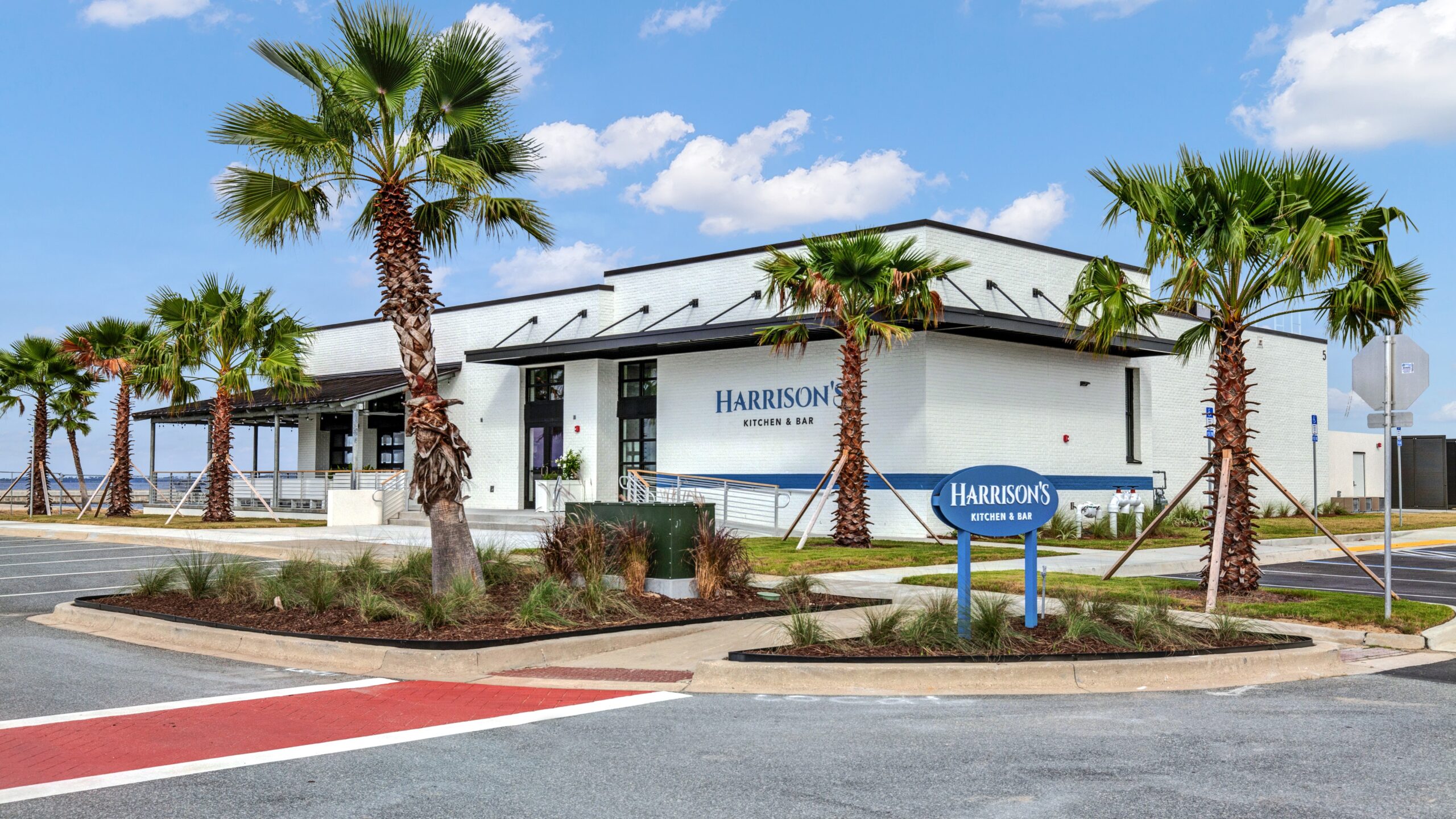
Harrison’s Kitchen & Bar is a key dining destination in historic downtown Panama City, a revitalized space after Hurricane Michael’s devastation in 2018. Offering stunning views of the Panama City Marina and St. Andrews Bay, the restaurant’s name pays homage to the historic downtown’s early name and Harrison Avenue, the main route leading visitors through downtown to the restaurant’s entrance.
The design features brick construction paired with wood floors and industrial accents, reflecting the rich history of the Panama City Marina. The open layout and expansive windows create a light and airy atmosphere, framing the scenic beauty of St. Andrews Bay. Inside, guests enjoy comfortable seating and a large, full-service bar, while the outdoor area offers a mix of covered and open patio seating, complete with a fireplace and space for games within the restaurant’s garden walls.
Bud & Alley’s
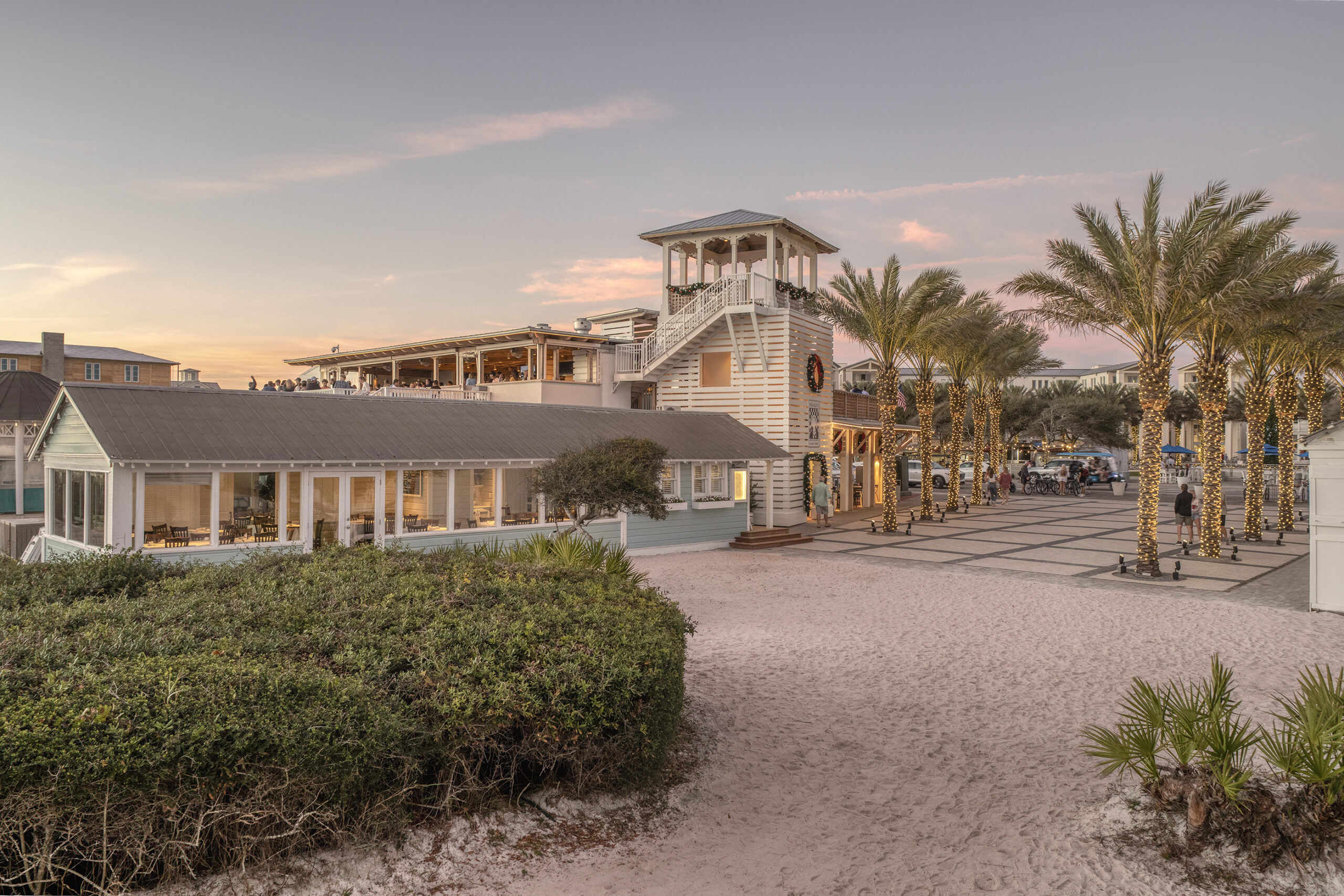
A new cypress wood-exposed roof, detailed wood railings, and a full bar renovation completed this restaurant project. The new ground floor addition consisted of a new pizza bar, waste storage, and elevator. The project was a major transformation of Southside 30A by changing the back-of-house facilities into an open plaza front. The main challenge was to maintain a functioning restaurant during construction. This required finding inventive ways of locating support services and functions, while screening them from the public view.
Part of this refresh included a renovation to Bud & Alley’s, Seaside’s oldest restaurant. We provided a 3,800-square-foot addition with a nautical-inspired tower to provide views of the ocean. The addition connects to the existing covered porches to provide indoor/outdoor connections that facilitate socializing. A new terrace-level dining area and expanded bar seating was provided. An additional 2,200 SF of renovations included updating the restrooms and providing additional outside space for operational needs. These renovations and additions were designed by Dhiru Thadani and DAG Architects was the Architect of Record.
Shelter Cove Towne Centre
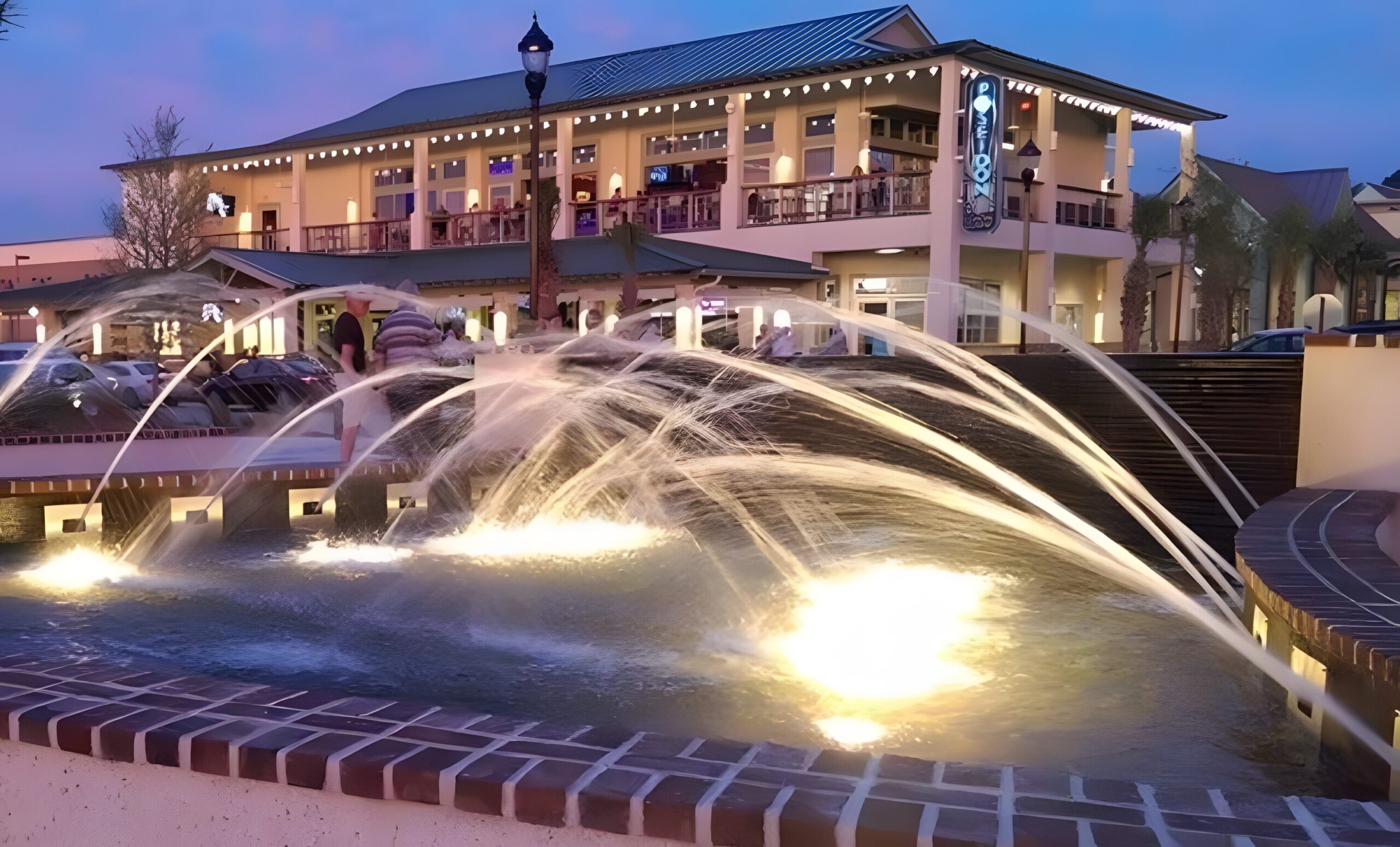
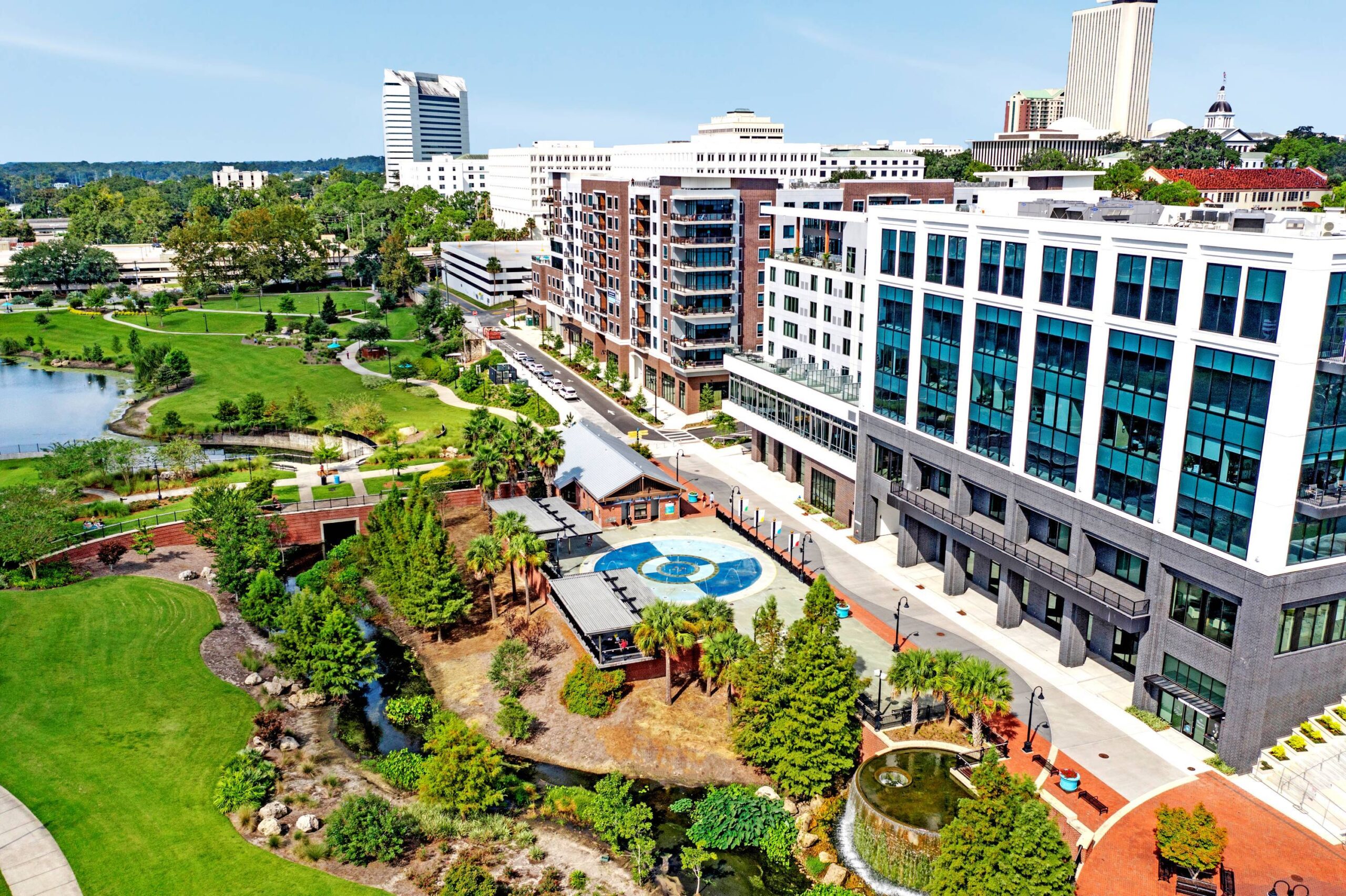
Shelter Cove Towne Centre is a 42-acre redevelopment featuring over 270,000 square feet of retail space, 240 luxury waterfront apartments, and a seven-acre linear park. Originally an enclosed single-level mall with three anchor tenants, the site was transformed into a vibrant mixed-use development. It now boasts an array of shops, restaurants, and residences, all overlooking Broad Creek on Hilton Head Island and connecting a public walkway to other neighborhoods.
Redesigned to resemble a southern fishing village, Shelter Cove Towne Centre offers a unique, upscale shopping experience in a park-like setting. This revitalized destination caters to both the island’s residents and the 2.5 million annual visitors. The building palette pays homage to Hilton Head’s heritage with indigenous colors and materials to create a distinctive, inviting atmosphere. At the geographical center of the island, this mixed-use project has evolved into the island “town center,” and its park regularly hosts community events.
Designed by Principal Larry Sweat while with a previous firm.
The Hub (Big Chill 30A)
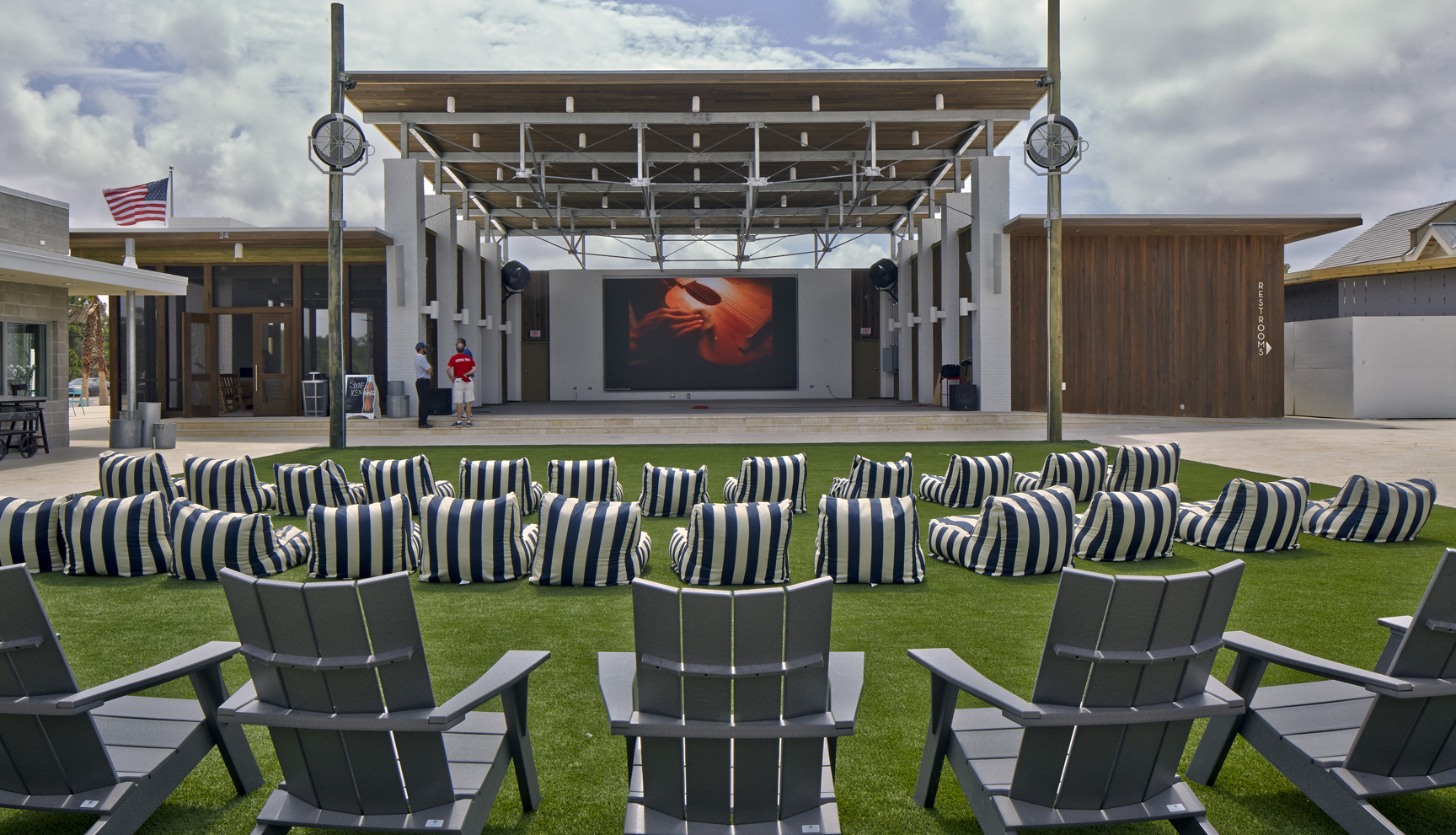
The Hub, also known as Big Chill 30A, is a vibrant, festival-style gathering space reminiscent of 1950s full-service drive-in theaters—minus the cars. Located along the iconic 30A highway, The Hub links several well-known planned communities. It offers a blend of restaurants, entertainment, and shopping, appealing to both locals and Gulf Coast vacationers.
The master plan for this three-acre site, developed in collaboration with Lew Oliver, features a mix of small retail spaces and larger restaurant areas positioned at each corner of the development. An event lawn provides ample seating for outdoor concerts and movies, while the centrally located Pavilion boasts a multipurpose stage and amphitheater, a 25-foot-wide outdoor movie screen, and a screened porch with a fireplace and large-screen TVs.
The architecture adopts the mid-century modern aesthetic that was once prevalent in this region. Concrete masonry units, cypress wood, galvanized steel, and painted brick are the predominant materials, with the palette defined by their naturally occluding colors. These materials are sourced locally and are very low maintenance. Structurally the restaurant and retail buildings have simple wood frame walls and roofing. The stage structure is a combination of load bearing CMU, wood framing, heavy timber, and galvanized steel tension chord trusses on the main stage. Due to the compact nature of the smaller retail and restaurants they can be conditioned with extremely energy-efficient mini-split HVAC units. The anchor restaurant uses an AEON roof top mechanical system. LED lighting provides low operating and long-term maintenance costs. Although the project did not seek LEED certification, the design team made environmental issues an important goal to create a sustainable, energy efficient environment.
Brighten Park

The renovation of Brighten Park represents the quintessential design of current neighborhood centers. It answers the demands of this upscale community with a unique mix of organic grocery, retail, dining, and services amidst quality modern design with an organic sensibility. The renovation of this 1986 center not only extends the life but also rejuvenates an everyday neighborhood center into something special and unique to serve its community. Brighten Park’s unique revitalized vision provides shoppers reason to come back time and time again, not only to shop and dine but to gather and celebrate with their neighbors.
The center was designed with sophisticated exterior finishes, reflective of the high-end shopper, as well as architecture that reflects classic sensibilities with organic-modern details. The site design included patterned and textured shopping streets, as well as lush, stylized landscaping that not only enhances the organic feel of the center but serves as protective barriers for shoppers.
Designed by Principal Larry Sweat while with a previous firm.
The Shoppes @ Inlet
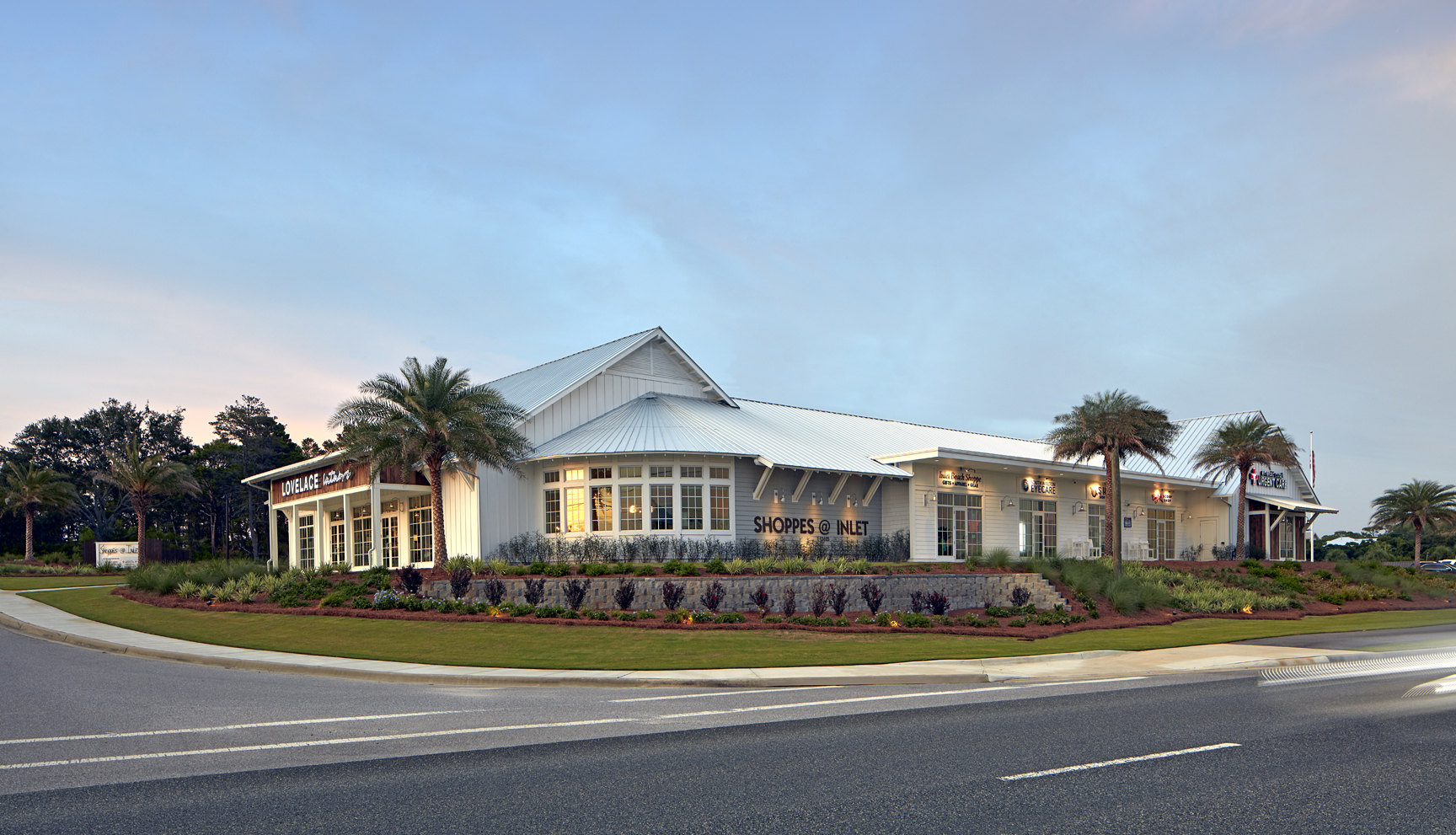
The Shoppes @ Inlet is a 14,000 SF retail and restaurant complex design that enjoys a prime location on East Emerald Coast Parkway (US98). In keeping with the architectural vernacular of the area, the buildings are styled to pay homage to the Historic Florida “cracker” style, with reclaimed wood accents, white painted lap siding, and a panoramic 120-degree presentation window. The courtyard offers a multi-use outdoor landscape complete with a relaxing water feature and comfortable seating for dining and enjoying music.