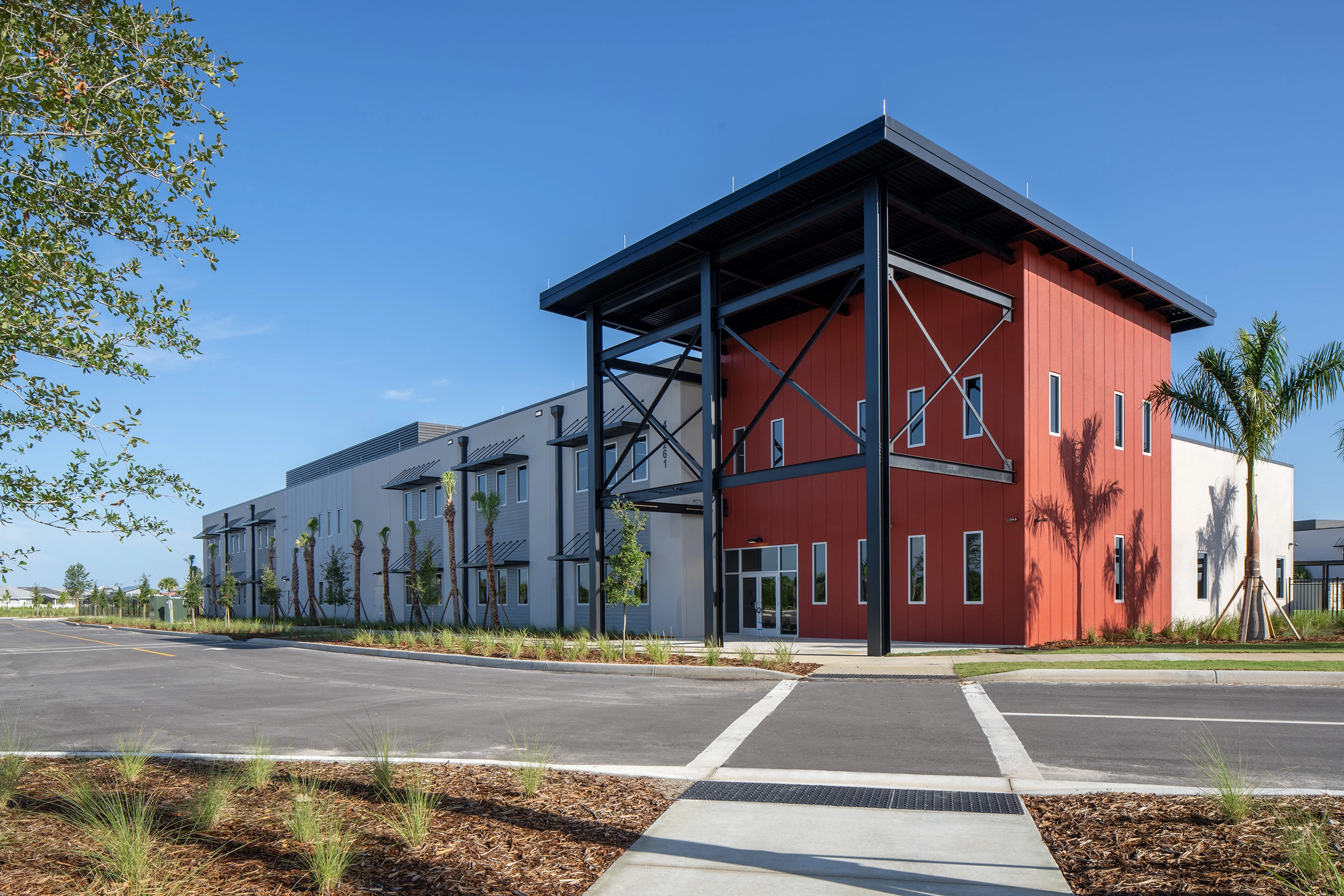
In association with STUDIO+, Babcock High School is designed for a 600-student capacity and is positioned on the property near the existing K-8 school to create a complete campus. This charter school design is intended for maximum flexibility in instructional and educational uses.
The building is designed to give a sense of openness and transparency to see learning happening. The signature space of the school is the two-story Assembly Hall, a central multipurpose space that can be used for assemblies, collaborative work, project presentations, awards, or announcements from the principal and administrators.
The main entrance is located at the east end of the building with an access controlled secure lobby. This location provides administrators with close access to the cafeteria and gym in the adjacent shelter. Main Street is the school circulation path. It is splayed to provide collaboration, breakout, and focus spaces at the center and west portions, while controlling circulation square footage. The Hive is the teacher’s workroom, centrally located on each floor with full visibility of Main Street for surveillance.
General classrooms are stacked along the south side of the school on the 1st and 2nd floors, while specialty lab spaces are on the ground floor with access to outdoor learning spaces. On the second floor, DAG created the four classroom pods to optimize instructional efficiencies through consistent messaging by allowing one teacher to present subject matter to four classes at a time. Time is then maximized to break out with the individual classroom teachers to focus on project-based learning.
The building’s exterior is designed to complement the architecture of the existing K-8 school yet provides a more technological and sophisticated aesthetic to clearly identify it as the high school on the campus. Branding is provided throughout to create a cohesive connection between the two schools, and reinforce the feeling of connection between students, staff, and administrators.
The success of this project and partnership also led to more campus projects, including the recent expansion.
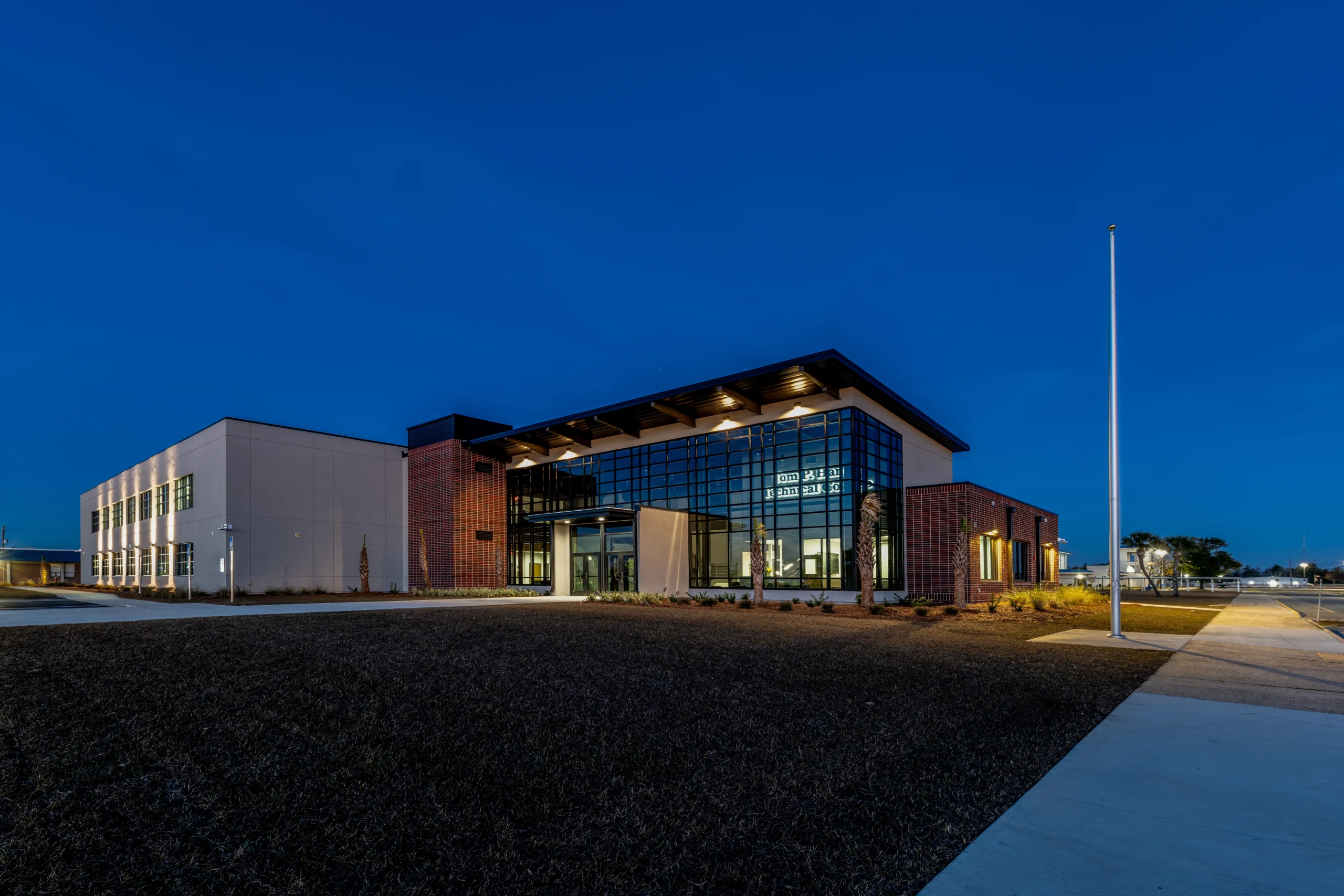
Since its opening in 1966, HTC has prepared students for skilled, high-paying careers. The design of the new Haney Technical College aligns with the evolving workforce needs of Bay County, featuring integrated lab and classroom spaces that promote real-world, hands-on learning. In the Nursing Lab, students train in realistic clinical settings, while the Computer Science/IT labs feature visible server rooms to showcase the tools used in instruction.
Built with insulated concrete forms (ICF) and steel framing, the new structure is intentionally energy-efficient, storm-resilient, and adaptable. Spacious, column-free rooms allow for flexible program-specific layouts, from the hospital-like Nursing Lab to office-style administrative classrooms and high-tech IT labs. The new campus center, located on the corner of FL-77 and Baldwin Road, serves as a welcoming “front door” to the community, enhancing the college’s reputation in the area. Designed to feel collegiate and accessible, it invites prospective students to explore high-demand programs in technical training and adult education.
The building has enabled the college to double its enrollment in Practical Nursing and add two more medical programs: Central Sterile Technologies and Patient Care Technician. Additionally, the open communal spaces are utilized daily by students for studying, enjoying meals, and taking breaks throughout the day. Haney Technical College is more than rebuilt—it’s reimagined for the future of work.
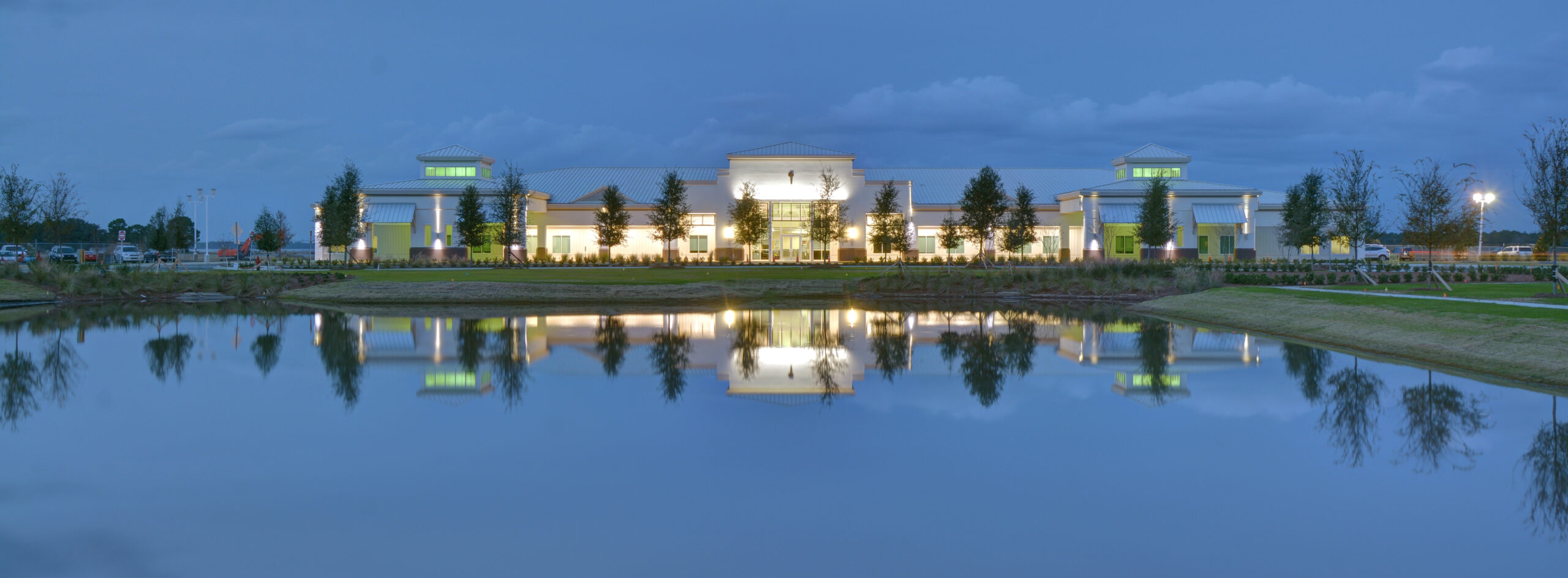
DAG’s adaptive reuse project in Panama City transformed a former airport terminal into a vibrant 68,000-square-foot charter school serving Pre-K through fifth grade students in the newly formed SweetBay community. The conversion anchors a 704-acre mixed-use, master-planned community, with residential areas, retail spaces, restaurants, and recreational facilities including a central park.
DAG employed soft color tones to reduce the scale of the building, allowing it to seamlessly integrate into the surrounding residential environment. The terminal’s outdated green and pink color palette was replaced with natural white and terracotta hues to complement the revitalized setting. Exterior enhancements included the addition of awnings and bracketing, as well as the replacement of windows and siding. The existing roof was re-coated with an energy-efficient finish, lightening its appearance. The former terminal parking lots were reimagined as a landscaped pond, aligning with the site’s new stormwater management plan.
To better suit its new role as an elementary school, the building’s entry scale was reduced. Visitors now enter through a secure vestibule, which opens into a striking two-story staircase. The central space of the terminal was re-envisioned as a key visual feature, celebrating the building’s aviation heritage through a vertical wood wing sculpture, stainless steel rivets and edges, and star-like pin lighting. The sculpture’s base offers a bleacher-like area for students to gather.
The terminal’s central concourse was reconfigured as the school’s main corridor. A brightly colored, transparent dining and multipurpose area now occupies the spaces once designated for ticketing, a café, and a lounge. A partial glass enclosure with Mondrian-inspired panels separates this area from the corridors, maintaining the space’s openness and transparency. The former baggage claims areas have been transformed into large gathering zones for classes or small group instruction. The corridor, once home to rental car services, now features bold color blocks to designate special areas, such as the teachers’ lounge and multipurpose classrooms.
Classrooms were designed for flexibility, with movable walls that can create one large space or three smaller classes. Cork-patterned luxury vinyl tile flooring distinguishes student and teaching areas, while acoustic ceiling discs and lighting add visual interest and enhance the overall atmosphere.
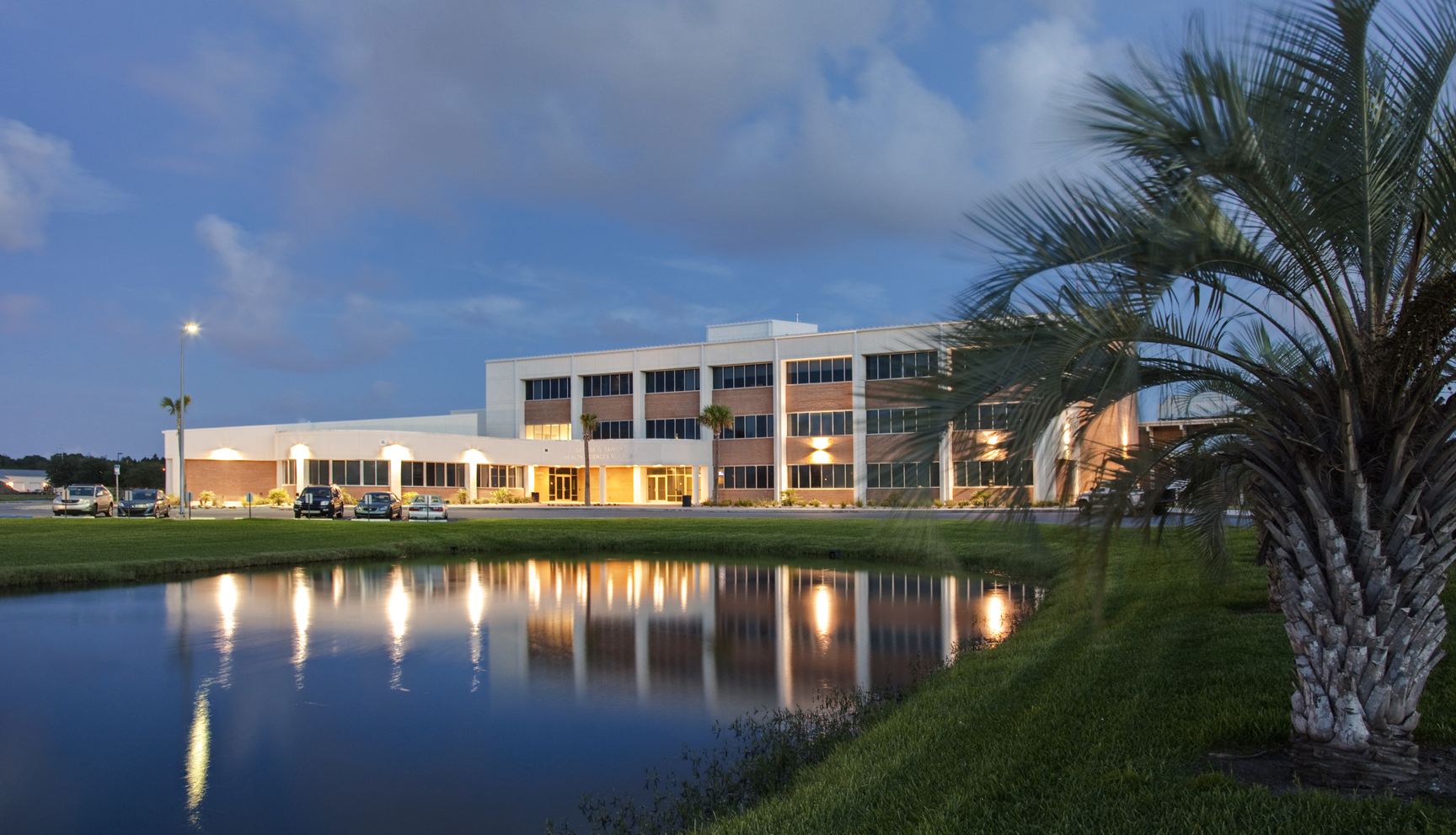
The Gulf Coast State College Health Science Building renovation modernized the academic program and addressed advancements in the health sciences and teaching strategies. Originally constructed in 1982, the three-story building required removal of both the exterior skin, as well as interior framing, leaving the structural bones from which to work. Thorough consultations with 15 allied health departments and staff ensured the new facilities met the needs of multiple stakeholders.
The updated center supports a range of programs, including Dental, Nursing, EMS, Respiratory Therapy, Pharmacy, Radiography, Surgical Technology, Physical Therapy, and Sonography. Modern classrooms feature cutting-edge teaching technologies and communication systems, while nursing labs benefit from advanced clinical equipment and simulation technology. On the first floor, a large dental clinic with dedicated dental hygiene and assisting labs provides affordable dental care to the community, enhancing both educational and service offerings.
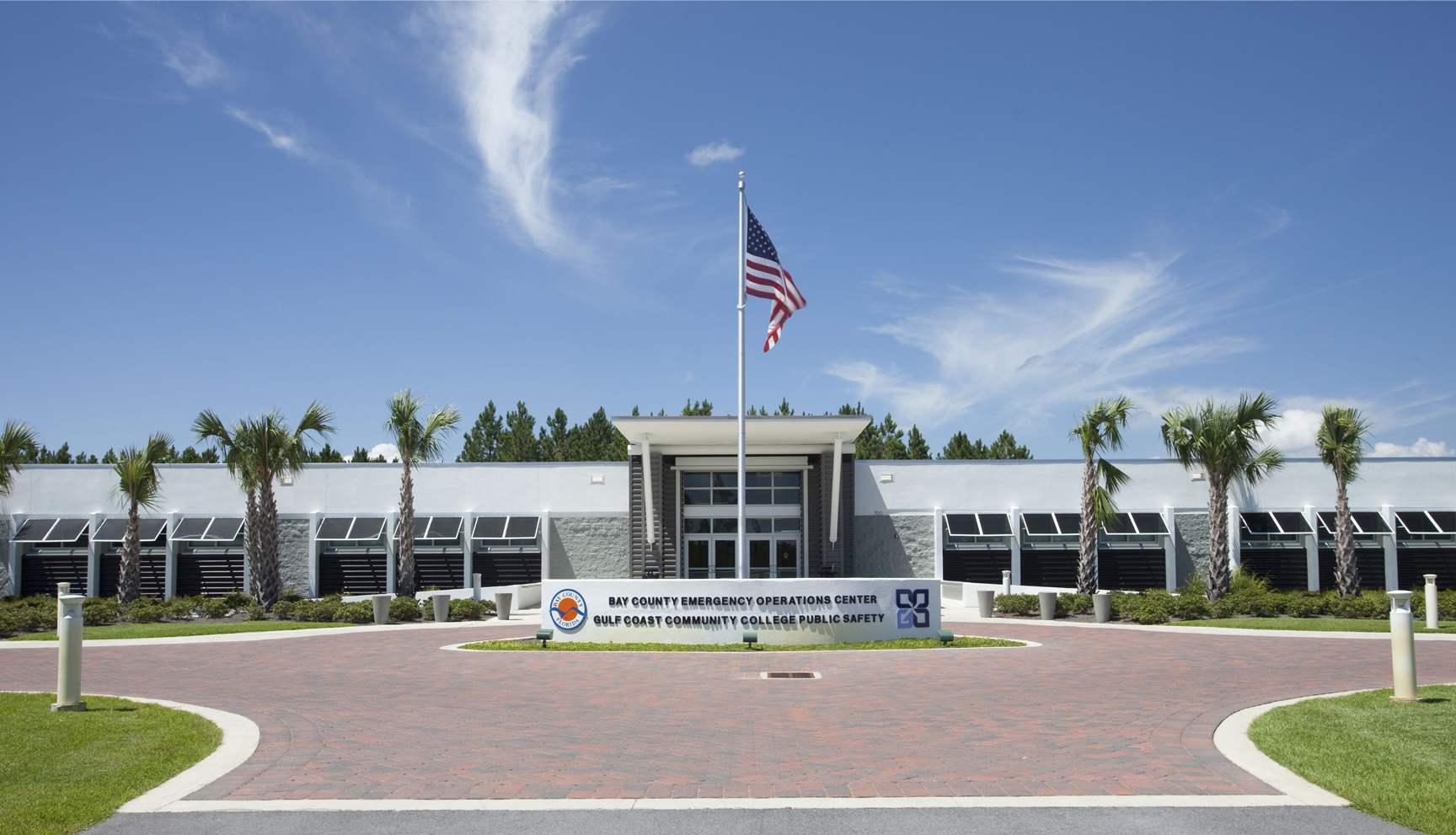
DAG Architects collaborated with Bay County and Gulf Coast State College to develop The Joint Use Emergency Operations Center, Florida’s first facility of its kind. This cutting-edge building serves dual purposes: coordinating emergency responses and providing training for students and emergency personnel.
The center includes critical facilities, such as an Incident Command Center, a 911 dispatch area, a Homeland Security Office, and a press room. It also features a food service area, lounge, and wellness center, along with locker rooms with showers, and sleeping quarters. There is a helipad, along with ample parking.
For the College, the center offers smart classrooms, computer labs, offices, storage, and workrooms designed to support the training of emergency personnel, public safety officials, law enforcement, and first responders. The project was funded through a combination of FEMA and Florida State PECO (Public Education Capital Outlay) funds, ensuring comprehensive support for both its operational and educational functions.
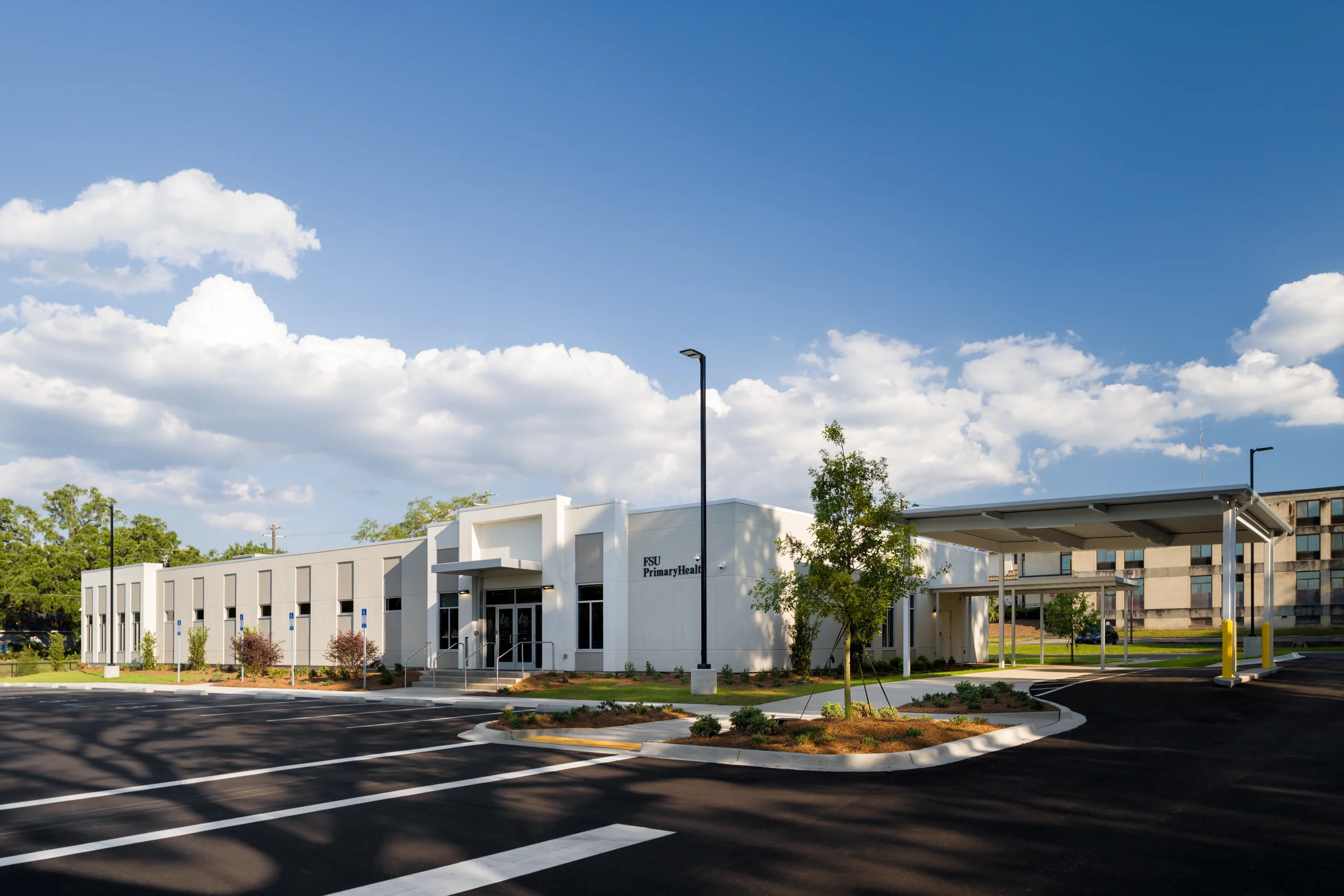
This new health center brings a range of primary care services to an underserved community of southwest Tallahassee for the first time. Addressing primary care needs and mental and behavioral health, the clinic is served by certified physicians and FSU College of Medicine faculty along with a rotation of medical students.
The nearly 10,000-square-foot building, organized on one level for easy accessibility, features 15 patient exam rooms, two rooms dedicated to behavioral health services, two health procedure rooms, and two separate rooms for conferences and community activities. Adjacent to the building is a covered ambulance bay, offering convenient transportation to Tallahassee hospitals.
Using a neutral color palette, the exterior architecture is distinguished by the rhythm of gray-striped vertical banding that organizes the fenestration, expresses the functions of the interior program, and creates a building that harmonizes with the existing neighborhood.
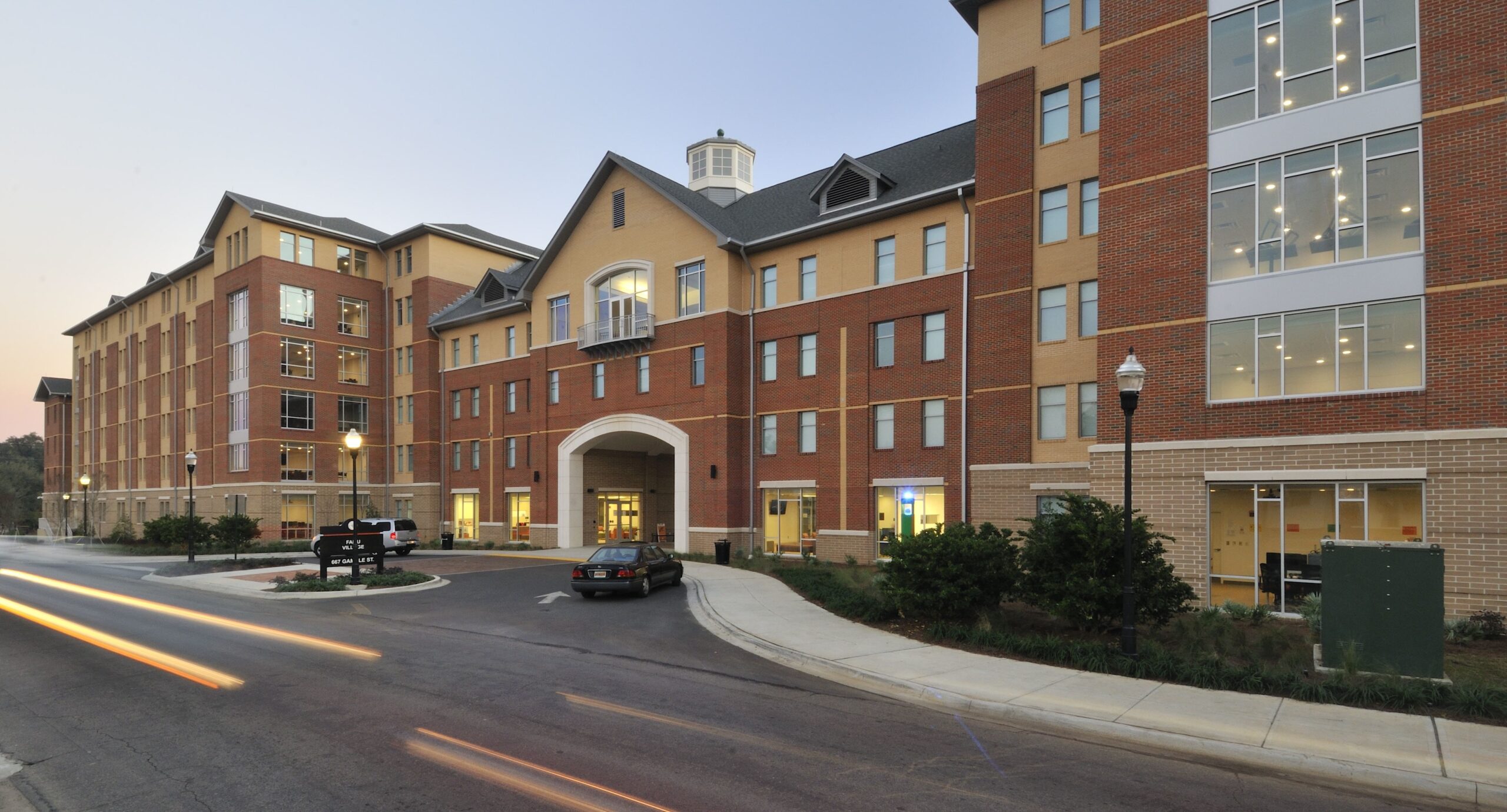
The Florida A&M University (FAMU) Village dormitory is the first new residence hall on campus in more than 17 years. It represents a key element in the university’s long-term strategy to enhance student services and foster a strong sense of community. The building features 800 beds spread across six floors, along with community rooms, study areas, and computer labs. As a new gateway to the campus, the building marks the western edge and complements the university’s architectural traditions while establishing its own unique identity. A notable feature is the “Game Day Lounge” on the fourth floor, which overlooks the central plaza and the football stadium, offering a space for student gatherings and enhancing the connection between the dorm and the stadium. Cooper Carry and HLGstudio were partners on this project.
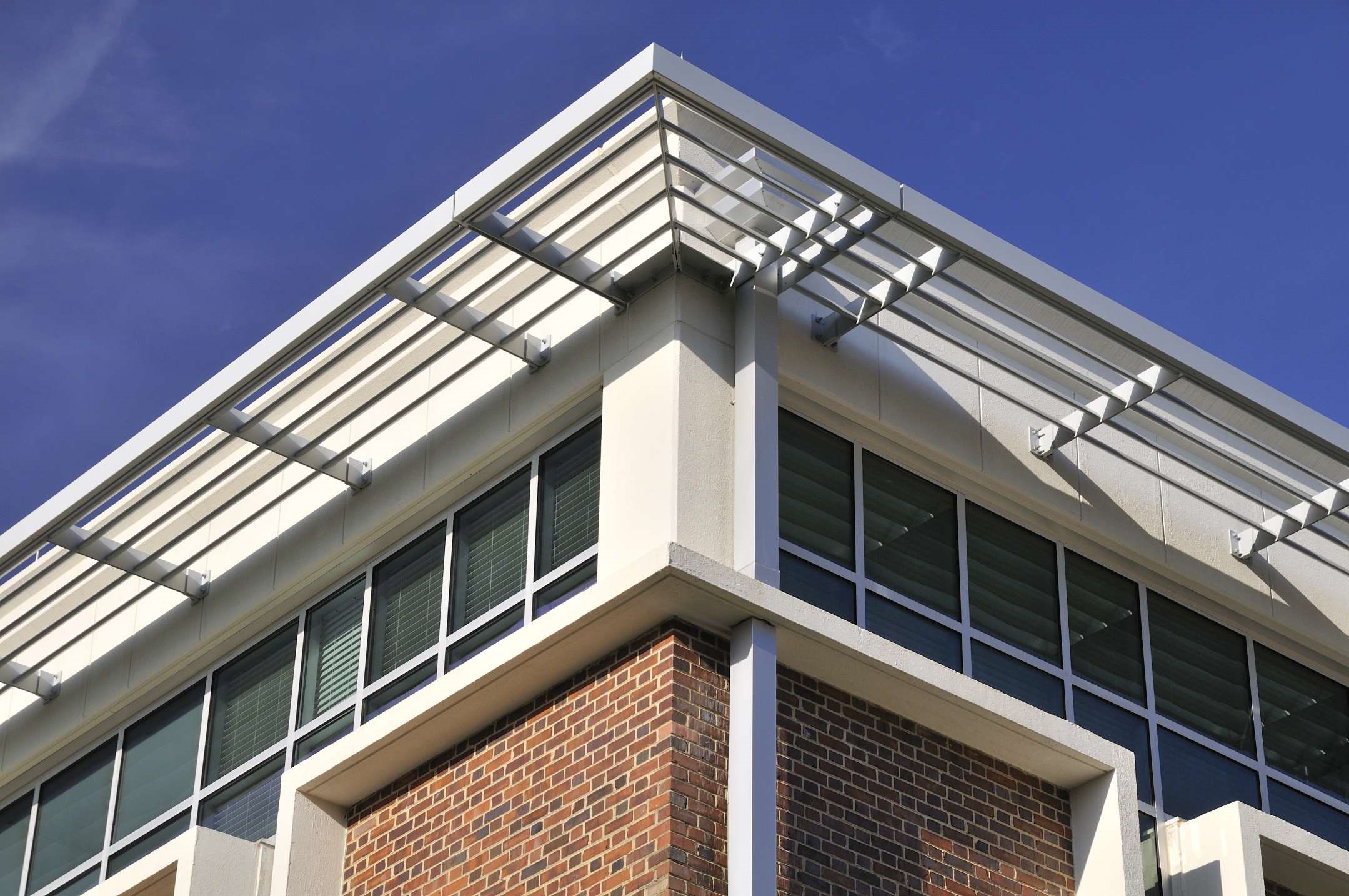
Florida A&M University (FAMU) sought to modernize a three-building complex serving the College of Education, Psychology Department, and General Studies Department. Originally built in 1968 and last renovated in 1988, the complex faced numerous issues, including life safety, accessibility, security deficiencies, and outdated mechanical and electrical systems.
The renovation began with a comprehensive programming study to assess the needs of the affected departments. The redesign improved circulation patterns within the buildings, enhancing wayfinding and increasing natural light in previously dark public corridors. Code deficiencies were addressed, and the building’s infrastructure was upgraded with new roofs, plumbing, air conditioning, and electrical systems.
Key updates included a complete renovation of classrooms, labs, conference rooms, offices, and meeting halls, as well as the remodeling and expansion of the restrooms. The complex now features advanced videoconferencing classrooms, computer labs, and Smart classrooms designed for collaborative and technology-rich learning.
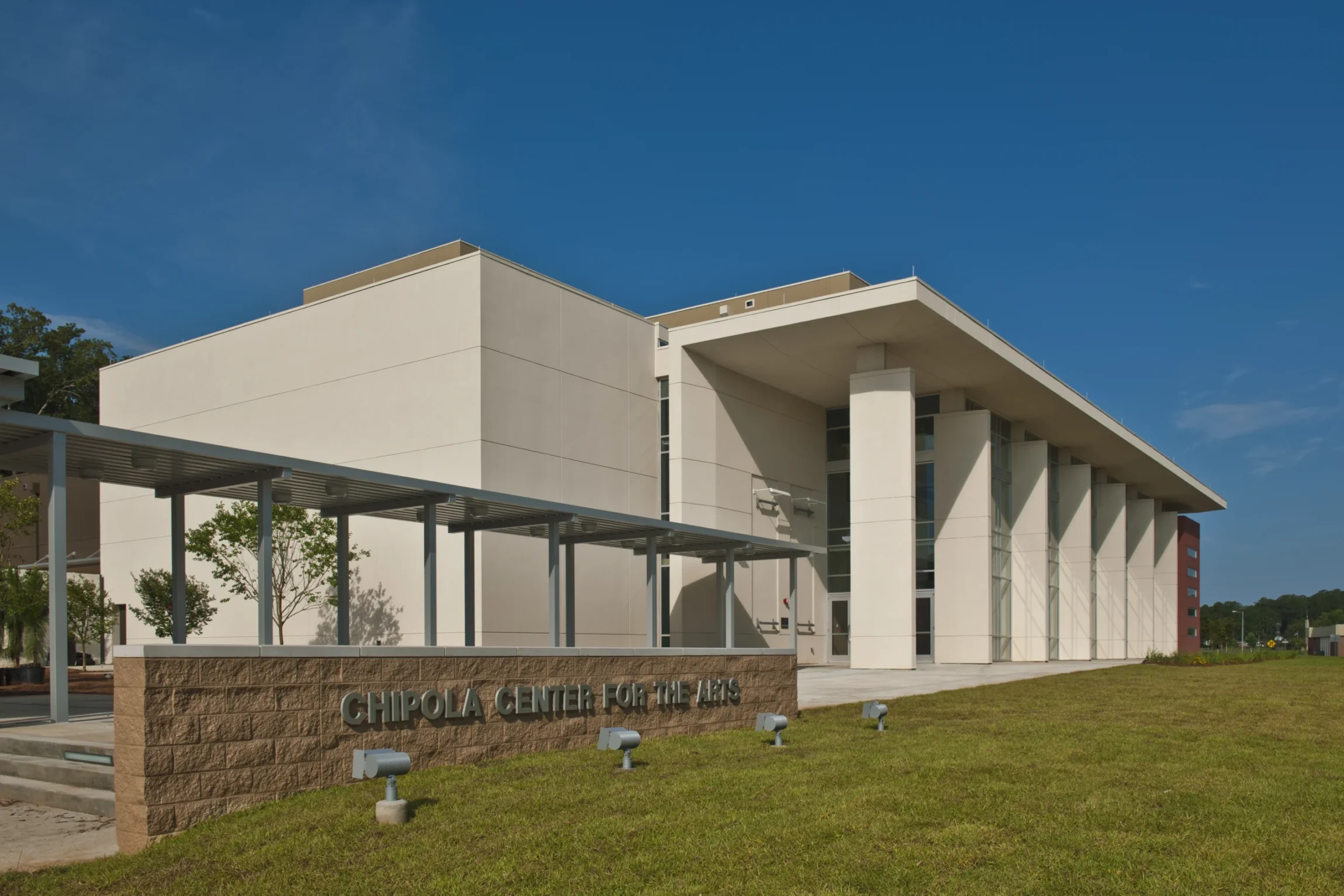
The new Center for the Arts established a prominent “front door” for the Chipola College campus. Serving approximately 10,000 annual visitors, the performing arts facility caters to the cultural and artistic needs of students, residents, and community organizations.
The center features a 655-seat performance theater equipped with a fly loft and orchestra pit, as well as a 150-seat black box theater designed for intimate performances and recitals. For the convenience of performers, there are four dressing rooms with capacity for 40-60 people. The center also includes an art gallery, a spacious green room, a dance studio, a costume shop, and a two-story set design workshop. The lobby serves as a central gathering space for informal socializing and fundraising events, enhancing the community’s engagement with the arts. HLGstudio partnered on the interior design.
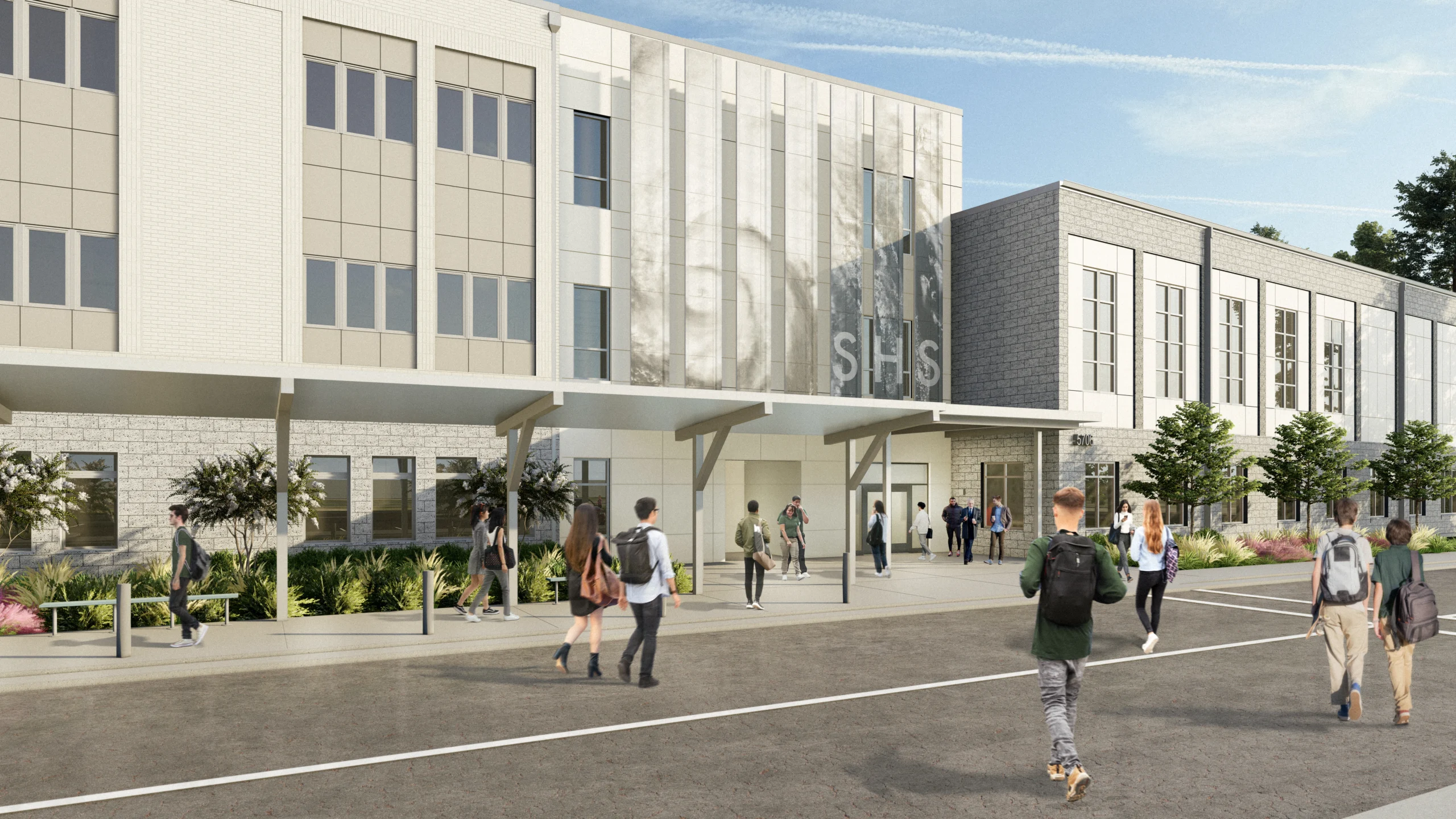
Slated for completion in Spring of 2026, the $110 million high school facility will accommodate 1,800 students in grade nine through twelve with a modern and thoughtful design. The interior and exterior materials and color palettes create a coastal, collegiate character for the campus.
This three-story high school will feature 74 classrooms, CTE (Career and Technical Education) labs, a gymnasium building, a sports fieldhouse, and various athletic fields including a synthetic turf multi-sport field. The design team maximized the 35-acre site by designing a 3-story high school with a central interior courtyard that provides a secure outdoor gathering area for the students. DAG provided a cohesive campus design down to the school mascot and school colors, which are incorporated into the sports facilities. The design prioritizes safety with secure entry points, including badge-access doors and restricted public access areas once the school is operational.