Babcock Ranch School Expansion

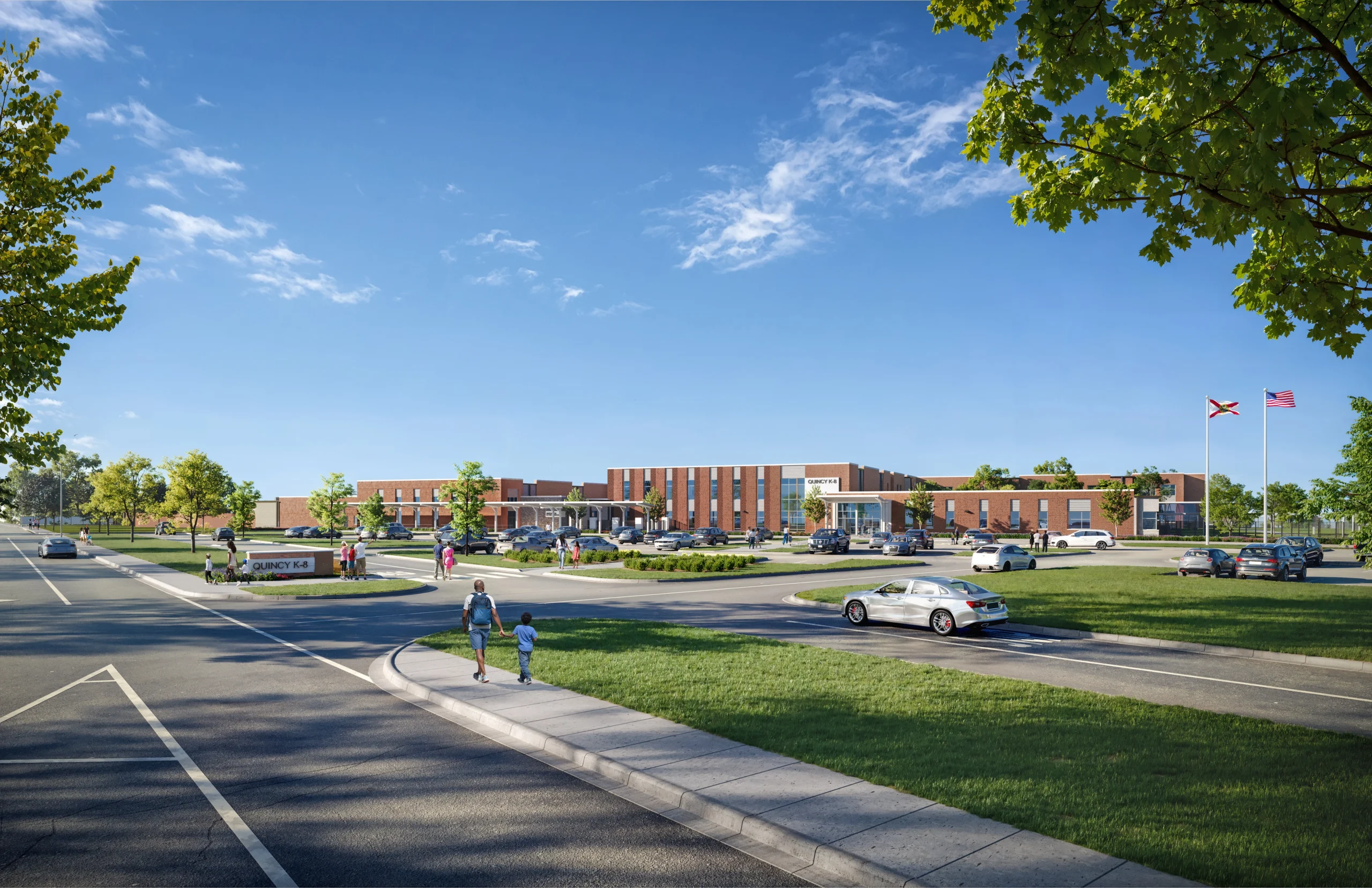
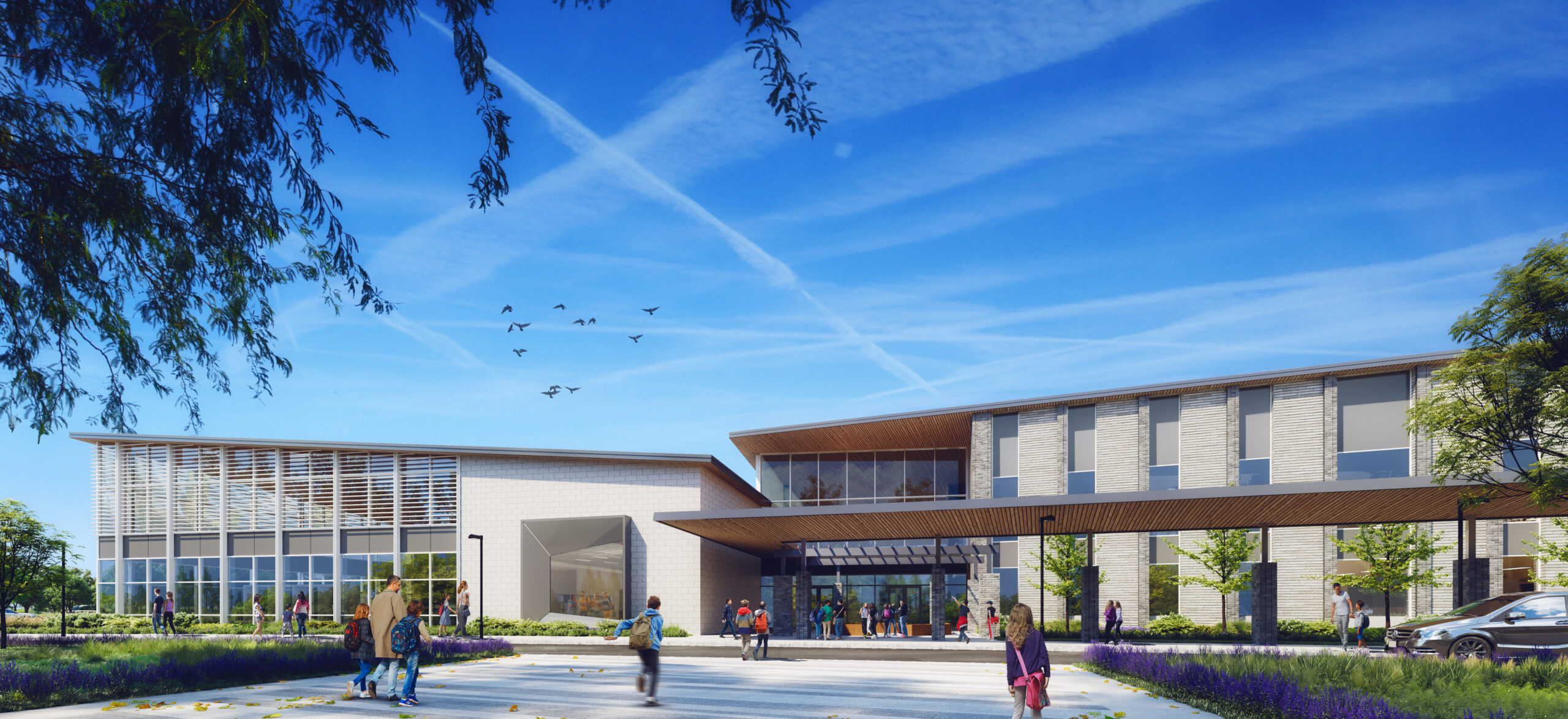
Designed in collaboration with STUDIO+, the Babcock Ranch expansion completes the campus vision as part of a master-planned community with three designated school sites. The entire campus is thoughtfully organized around a central green lawn—a gathering space that serves as the heart of student life.

The master plan evolved during the design process to better serve the educational program. When the original concept of housing band and chorus rooms within the high school addition proved problematic due to acoustic concerns, the team reimagined a former utility yard as a dedicated arts building. Through extensive massing studies evaluating various schemes for a new K-8 Expansion, the design team ultimately determined that a three-story solution would best serve the program requirements.

Continuing the design language of the campus, the facility prioritizes student safety and wellbeing with sightlines between corridors and classrooms to address potential bullying concerns. Central to this focus is the design of single-stall bathrooms with central vanities to replace traditional multi-stall configurations, eliminating one of the major spaces where bullying can occur.

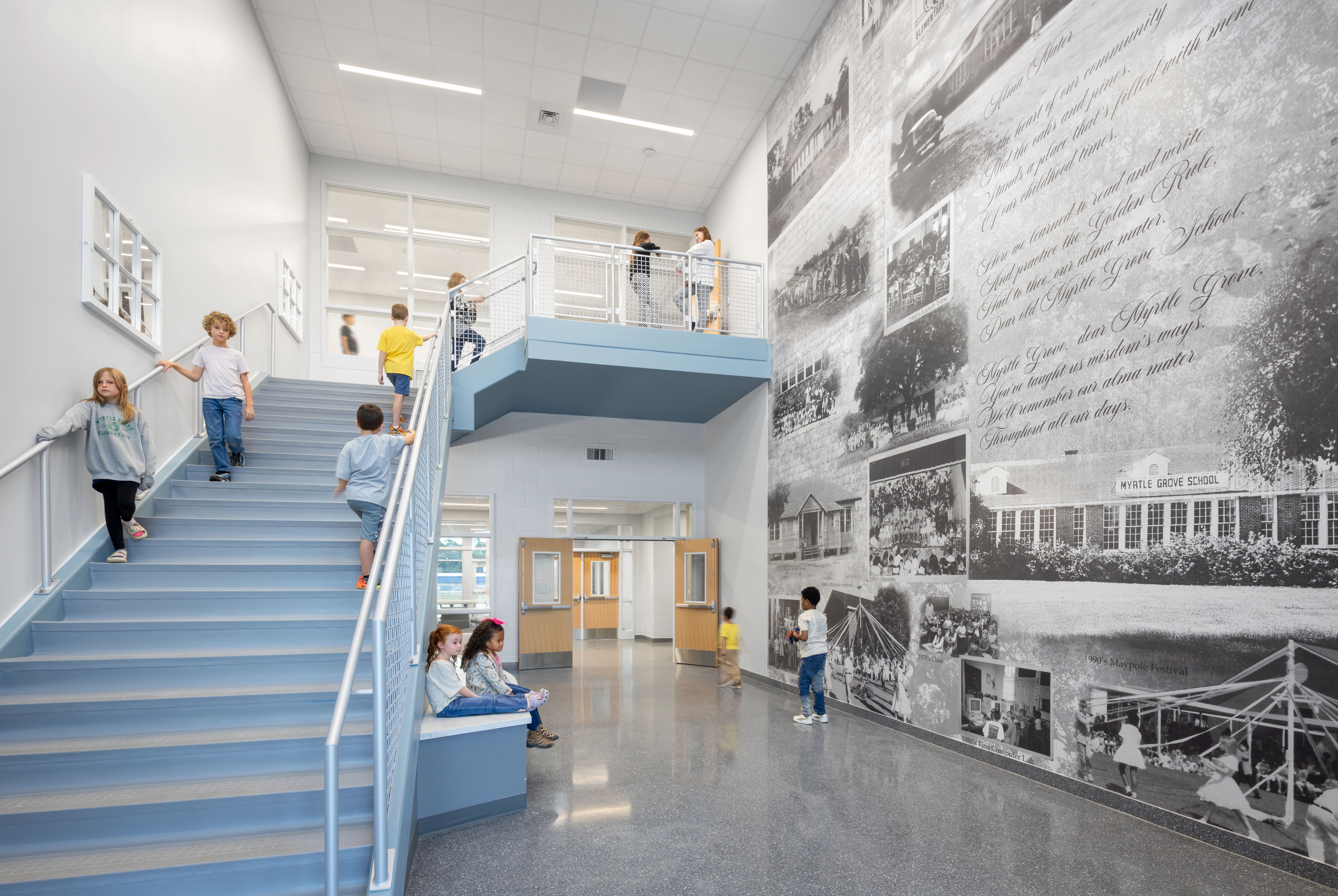
The building’s signature moment occurs immediately upon arrival. Visitors pass through a secure lobby leading to a dramatic two-story atrium. Dubbed “the Connector,” the bridge-like balcony spans the space, allowing students to engage with the activity below. This central gathering space features ultra-wide corridors that extend learning beyond classroom walls, with dedicated learning nodes positioned every four classrooms.

Flexible furnishings can be reconfigured to support various learning styles, while built-in benches and optional tables transform circulation spaces into active learning environments. Huddle rooms off the main corridors provide quiet spaces for small groups to work.

The L-shaped floor plan connects the new construction to the existing high school at the rear. We relocated the administrative suite to the new expansion which serves as a new front door for the K-8 school.  The modern addition completes the next phase of the campus vision and promotes the continued growth of the campus as a leader in education in the community.

GCSC Nursing Simulation Center

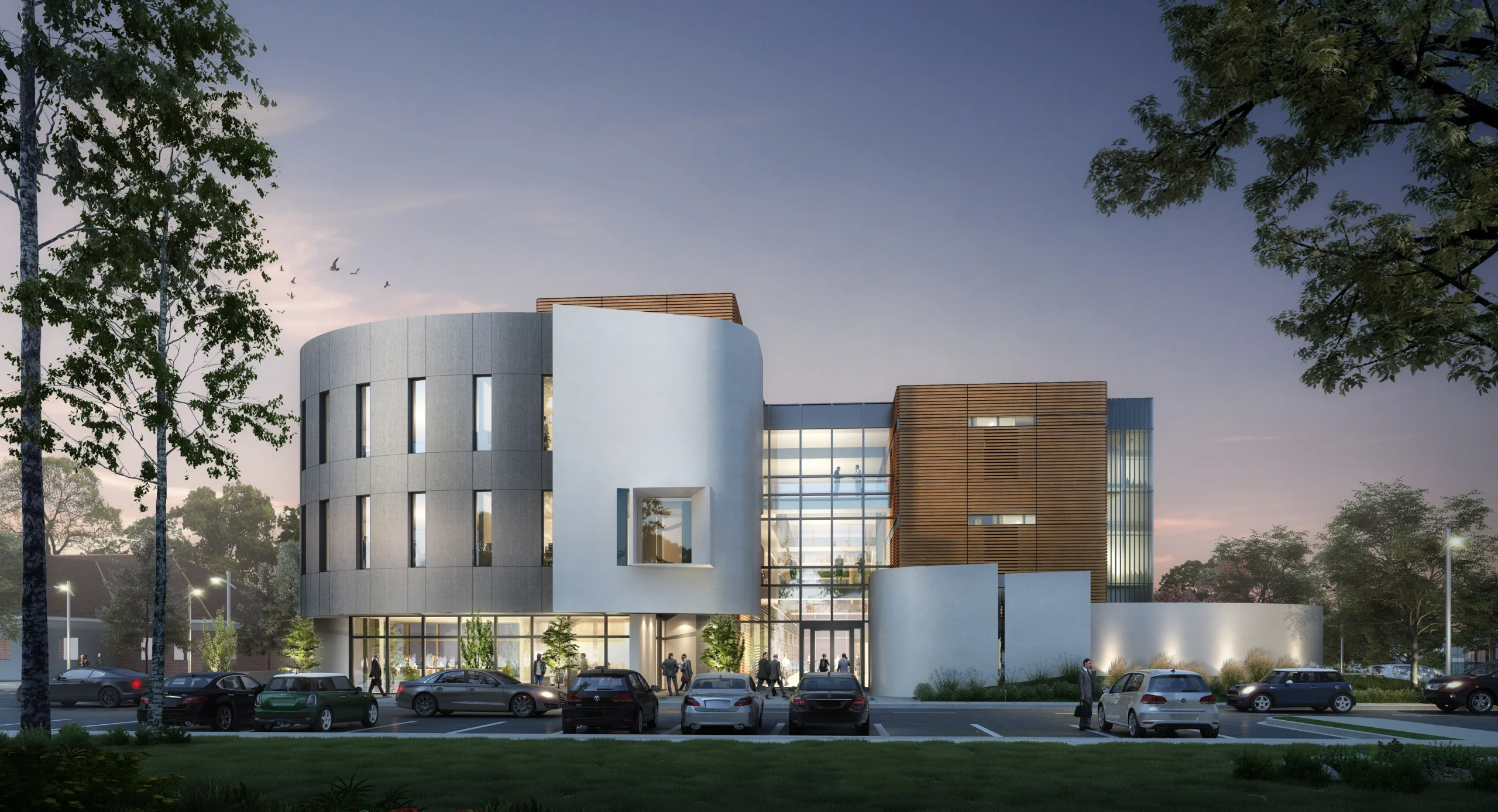
The new Gulf Coast State College Nursing Simulation Center is a 28,500 SF, two-story building sited at the original location of the Natural Sciences Building. The architectural language reflects the contextual influence of the existing adjacent buildings and their historical importance to the campus. With nursing administration areas, two large classrooms, two skills labs, a multi-bed simulation lab with AI mannikins, and a Virtual Reality Lab, the Facility brings modern and real-world experiences to the hundreds of nursing students GCSC trains each year. The new facility will assist in attracting and retaining students to the program, while also reinforcing the college brand and legacy in the region.

HLGstudio collaborated with DAG Architects on the interiors.

Gadsden PreK-8 School

Designed in partnership with Fitzgerald Collaborative, the new Gadsden PreK-8 School will feature innovative classrooms equipped with the latest technology, STEM educational spaces, well-equipped libraries, and much more. With many dated schools in the Gadsden County School District that were no longer feasible to repair, this new building will replace four county schools with aging structures. DAG Architects is providing design, construction documentation, and construction administration for a new combined elementary and middle school, accommodating approximately 1,650 students across 250,000 GSF.

The design is guided by the concept of intersecting connections, fostering community, safety, and creative thinking. This approach highlights the interplay between community building and the neural connections formed through learning. A warm, natural color palette with bright accents will be used to enhance positivity and focus, while easing student anxiety. Architectural forms serve as wayfinding elements, creating fluid learning nodes. Zoning and circulation unite elementary and middle school experiences, encouraging community and maintaining safety through clear sightlines.

Florida A&M University Entomology Building

The new Entomology Building will provide a much-needed, multifunctional academic research center for the school. Addressing the critical needs for entomological teaching, research, and continuing education, this new facility will include state-of-the-art laboratories, greenhouses, “smart” classrooms, private offices, conference rooms, a 200-seat auditorium, and a working museum to house one of the world’s largest mayfly research collections along with one of the Southeast’s largest aquatic insect collections.

The 70,000-square-foot building makes use of a four-level atrium as the principle architectural ordering device. This light-filled atrium serves to both organize and separate the various elements of the program. Placing the high energy laboratories on the south side and the classrooms, offices, and conference areas on the north side, all on display from within the atrium, fosters a dynamic, open and collaborative scientific environment.

The atrium will function as the social heart of the facility with its common areas for socialization and impromptu encounters when moving from labs and offices onto the bridges and open corridors. In addition to serving as a common social space for the researchers, the atrium will accommodate a variety of activities, including exhibitions, banquets, group and private study, as well as a vibrant place for all members of the University’s family to come together as a community.

Using a palette of architectural concrete, stone, masonry, and a glazing system with aluminum shading elements in a carefully proportioned composition, the exterior cladding will provide more of a human-scale to the building and allow it to better harmonize with the fabric of the campus.

The new Entomology Building will deliver a much-needed facility for the growth and advancement of the University’s mission by focusing the collective efforts of scientists, students, and agricultural industry leaders to sustain a responsive, collaborative, and creative learning environment.

St. George’s University Lecture Hall

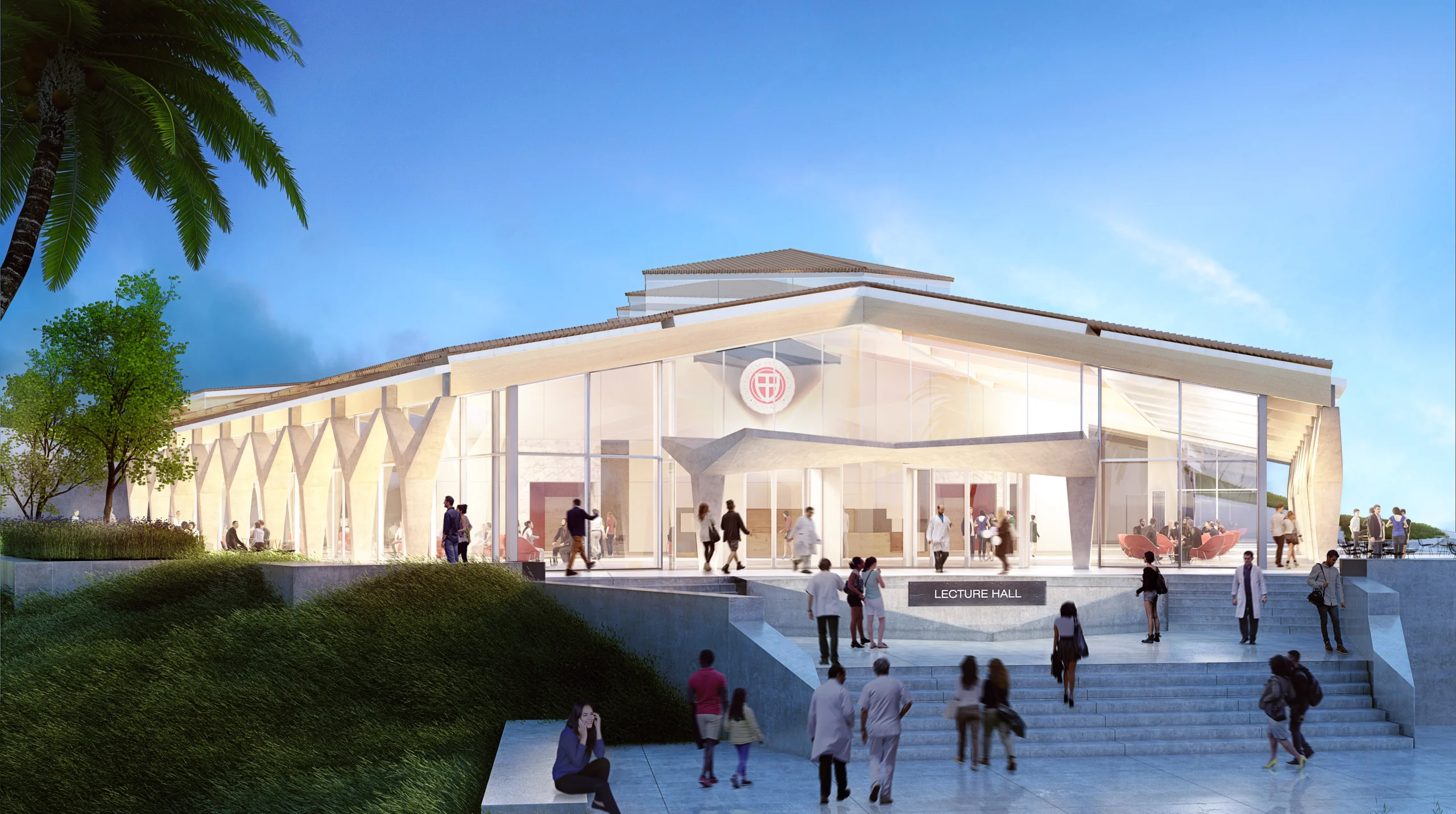
The new Lecture Hall, located on the campus of an independent medical university on a Caribbean Island in the West Indies, will provide a much-needed multi-functional academic center for the school. Sited on a promontory overlooking the campus and the beautiful bays beyond, the building will command a civic type of presence, becoming a landmark destination as well as a beacon when darkness falls across the campus.

The 40,000-square-foot building will consist of a large main hall adjoined by two smaller side halls, providing a total capacity of approximately 1,700 seats. With the integration of retractable telescopic seating systems, the upper portion of the main hall and both side halls can be easily reconfigured to accommodate a variety of uses and teaching styles, transforming these venues to host a multitude of events.  

A multi-level series of steps, benches and landscaped areas will negotiate the 40 SF elevation change from the main roadway to the front entrance and lobby. Upon entering the lobby, visitors are greeted by an open plan cafe and a variety of seating options. 

Wrapping the main hall on three sides, the lobby provides ample space for a variety of activities, including exhibition, banquets, group and private study, as well as a pleasant place for all members of the university family to come together as a community. 

Exterior terraces on either side of the building will provide an extension to the interior lobby space for public gatherings and respite from academic functions. The glass enclosure containing the lobby will establish a strong connection to the immediate landscape and the beautiful surrounding terrain, encouraging activities to easily flow from inside to outside. 

Structurally, the roof is composed of laminated timber beams and rafters forming a diaphragm that will span the lobbies and auditoriums. Exposing the grid of laminated wood on the interior will express structural integrity as well as create a sense of order for the building.  Y-shaped concrete columns marching along the angled sides of the building will support the roof diaphragm and consist of a hybrid of precast elements and cast-in-place connections. 

While the Lecture Hall, with its symmetrical plan, makes use of the predominant clay tile roof found on adjacent campus buildings, the form, detailing and structural characteristics will give the new building a modern feel and further separate it as a centerpiece for the campus. 

Cultivating greater vitality and fostering a greater sense of community among faculty, students, and visitors, the Lecture Hall should quickly become the social hub of the campus. 

St. George’s University Residence Hall

Located on the vibrant Caribbean Island of Grenada, St. George’s University School of Medicine commissioned DAG to design a state-of-the-art, 240-bed student residence hall that redefines the campus living experience. Charged with creating a solution that balances innovation with long-term cost efficiency, the design team responded with a fresh architectural vision rooted in contextual sensitivity and student wellness. 

The project unfolded in two phases, beginning with a comprehensive planning and programming effort aimed at reassessing the University’s established design-build approach. DAG was selected to explore a broader range of design possibilities and elevate the institution’s architectural standards. 

Drawing on the proven success of the university’s existing three-bedroom suite model, the new residence hall expands this concept with refined spatial planning and enhanced communal amenities. The design integrates a series of collaborative lounges, study nooks, and social zones strategically placed to encourage interaction while preserving student privacy, spaces which were not incorporated in previous student housing. Durable, passive cooling strategies, and low-maintenance finishes are seamlessly woven into the architectural palette to ensure long-term sustainability and resilience in the island climate. 

Through thoughtful articulation of form, texture, and spatial hierarchy, the dormitory is envisioned not just as a place to sleep—but as a vital, connected environment that supports academic success, well-being, and a strong sense of community. 

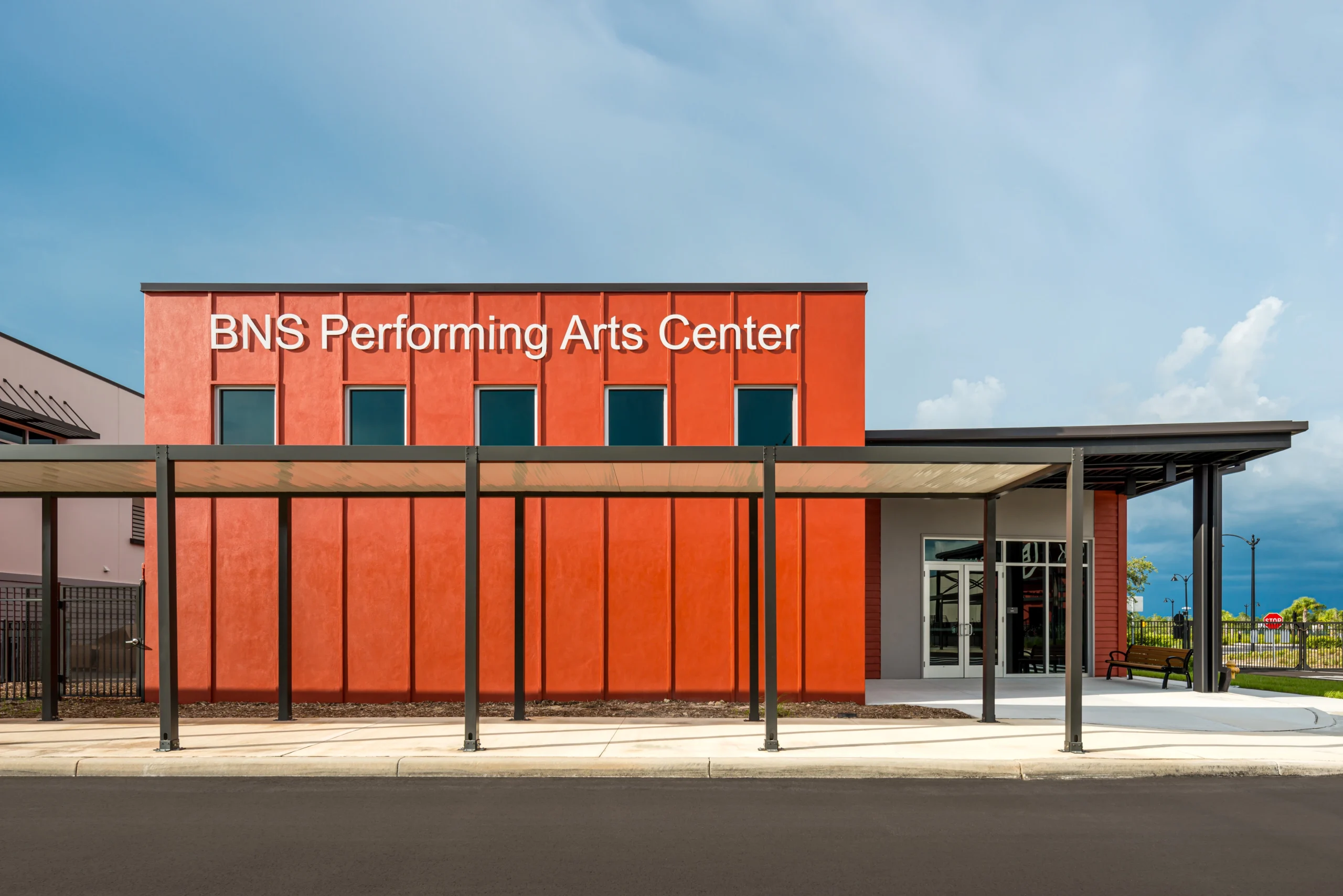
Gretchen Nelson Scott Fine Arts Center at Mosley High School

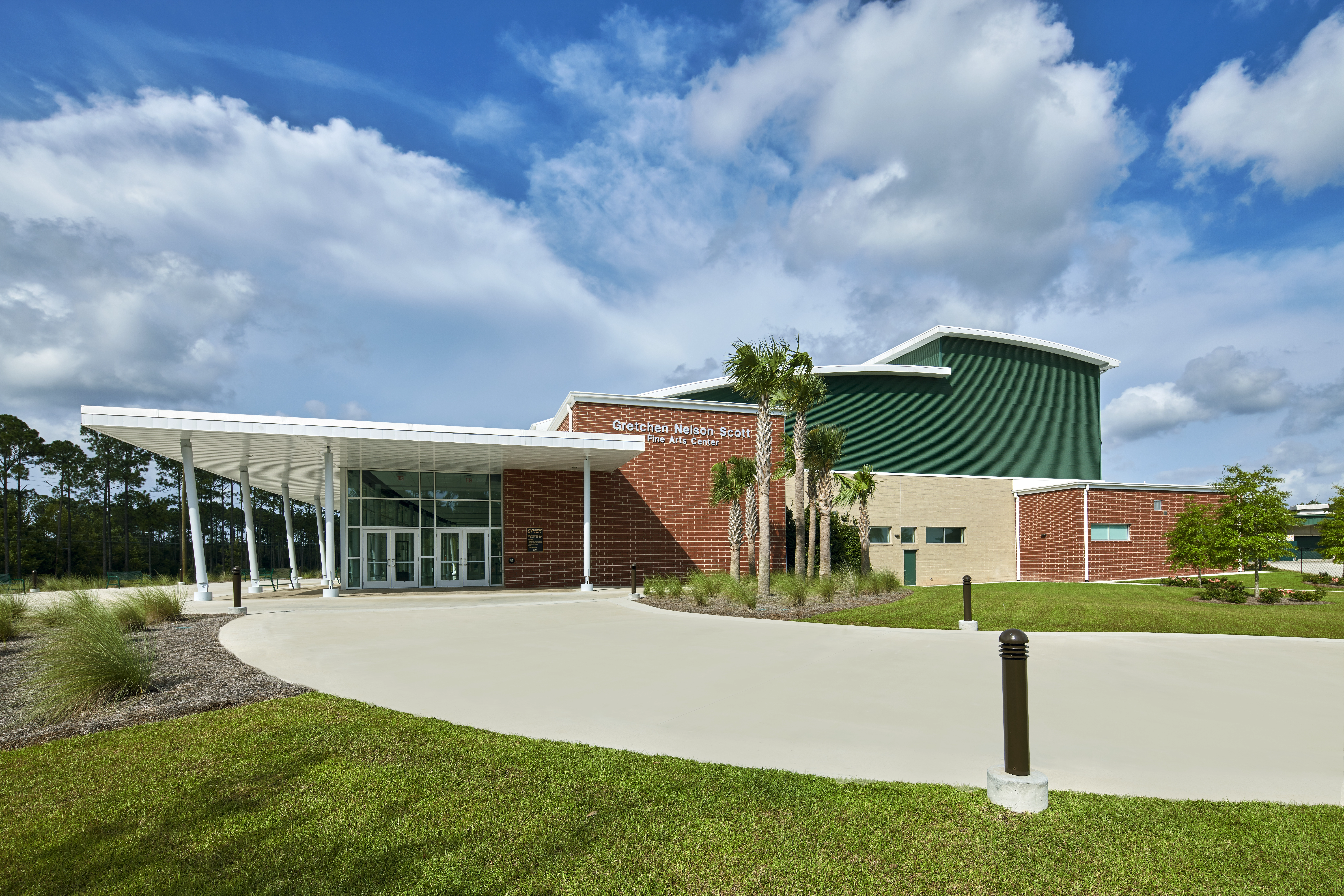
A private donation made it possible for Mosley High School to have their own performing arts building, which also provided a much-needed community facility to host lectures, community theater productions, and other civic programs. One of the project goals was to create a new landmark on the school’s campus, a structure that embodies the ties between the school and its neighboring community and honors the legacy of the family who donated the funding. The design team created a civic and street presence for this new performance venue while integrating it onto the existing campus. A central plaza leads gracefully into the building, and the transparent façade welcomes visitors and students alike. The rear of the Fine Arts Center faces the existing school, which allowed us to create an outdoor amphitheater for more informal productions. The amphitheater is an extension of the indoor stage itself, which allows it to be used as a backdrop for outdoor events.  The facility was designed in partnership with HLGstudio. 

Pineview K-8

With rapid growth in the northern part of the county, Okaloosa County Schools is constructing the new Pineview K-8 school to support the student population. The school’s location on a pine-covered hillside inspired its name and design, reflecting the area’s historical ties to the pine logging and turpentine industries, while also celebrating the natural beauty of the land. 

This state-of-the-art facility will accommodate 1,200 students and feature two-story classroom wings, collaborative study spaces, a media center, and outdoor courtyards. The design also incorporates modern amenities such as specialized band and chorus rooms, advanced classroom technology, a gymnasium with PE and athletic locker rooms, and a cafeteria designed as an Enhanced Hurricane Protection Area. 

With a focus on flexibility and community engagement, the spacious entry lobby serves as a dynamic hub, complete with a built-in learning stair and media projection wall. Together with the media center and administration area, the lobby offers a range of meeting spaces to cater to both the school’s and the community’s diverse needs. 

Babcock High School

In association with STUDIO+, Babcock High School is designed for a 600-student capacity and is positioned on the property near the existing K-8 school to create a complete campus. This charter school design is intended for maximum flexibility in instructional and educational uses.  

The building is designed to give a sense of openness and transparency to see learning happening. The signature space of the school is the two-story Assembly Hall, a central multipurpose space that can be used for assemblies, collaborative work, project presentations, awards, or announcements from the principal and administrators.  

 The main entrance is located at the east end of the building with an access controlled secure lobby. This location provides administrators with close access to the cafeteria and gym in the adjacent shelter. Main Street is the school circulation path. It is splayed to provide collaboration, breakout, and focus spaces at the center and west portions, while controlling circulation square footage. The Hive is the teacher’s workroom, centrally located on each floor with full visibility of Main Street for surveillance.  

General classrooms are stacked along the south side of the school on the 1st and 2nd floors, while specialty lab spaces are on the ground floor with access to outdoor learning spaces. On the second floor, DAG created the four classroom pods to optimize instructional efficiencies through consistent messaging by allowing one teacher to present subject matter to four classes at a time. Time is then maximized to break out with the individual classroom teachers to focus on project-based learning.  

The building’s exterior is designed to complement the architecture of the existing K-8 school yet provides a more technological and sophisticated aesthetic to clearly identify it as the high school on the campus. Branding is provided throughout to create a cohesive connection between the two schools, and reinforce the feeling of connection between students, staff, and administrators.  

The success of this project and partnership also led to more campus projects, including the recent expansion.

Haney Technical College

Since its opening in 1966, HTC has prepared students for skilled, high-paying careers. The design of the new Haney Technical Center aligns with the evolving workforce needs of Bay County, featuring integrated lab and classroom spaces that promote real-world, hands-on learning. In the Nursing Lab, students train in realistic clinical settings, while the Computer Science/IT labs feature visible server rooms to showcase the cutting-edge tools used in instruction.  

Built with insulated concrete forms (ICF) and steel framing, the new structure is intentionally energy-efficient, storm-resilient, and adaptable. Spacious, column-free rooms allow for flexible program-specific layouts—from the hospital-like Nursing Lab to office-style administrative classrooms and high-tech IT labs. The new campus center, located on the corner of FL-77 and Baldwin Road, serves as a welcoming “front door” to the community, enhancing the college’s reputation in the area. Designed to feel collegiate and accessible, it invites prospective students to explore high-demand programs in technical training and adult education.  

The building has helped the college be able to double their enrollment in Practical Nursing, as well as add two more medical programs: Central Sterile Technologies and Patient Care Technician. Additionally, the open communal spaces are utilized daily by students for studying, enjoying meals, as well as taking breaks throughout the day. Haney Technical College is more than rebuilt—it’s reimagined for the future of work.