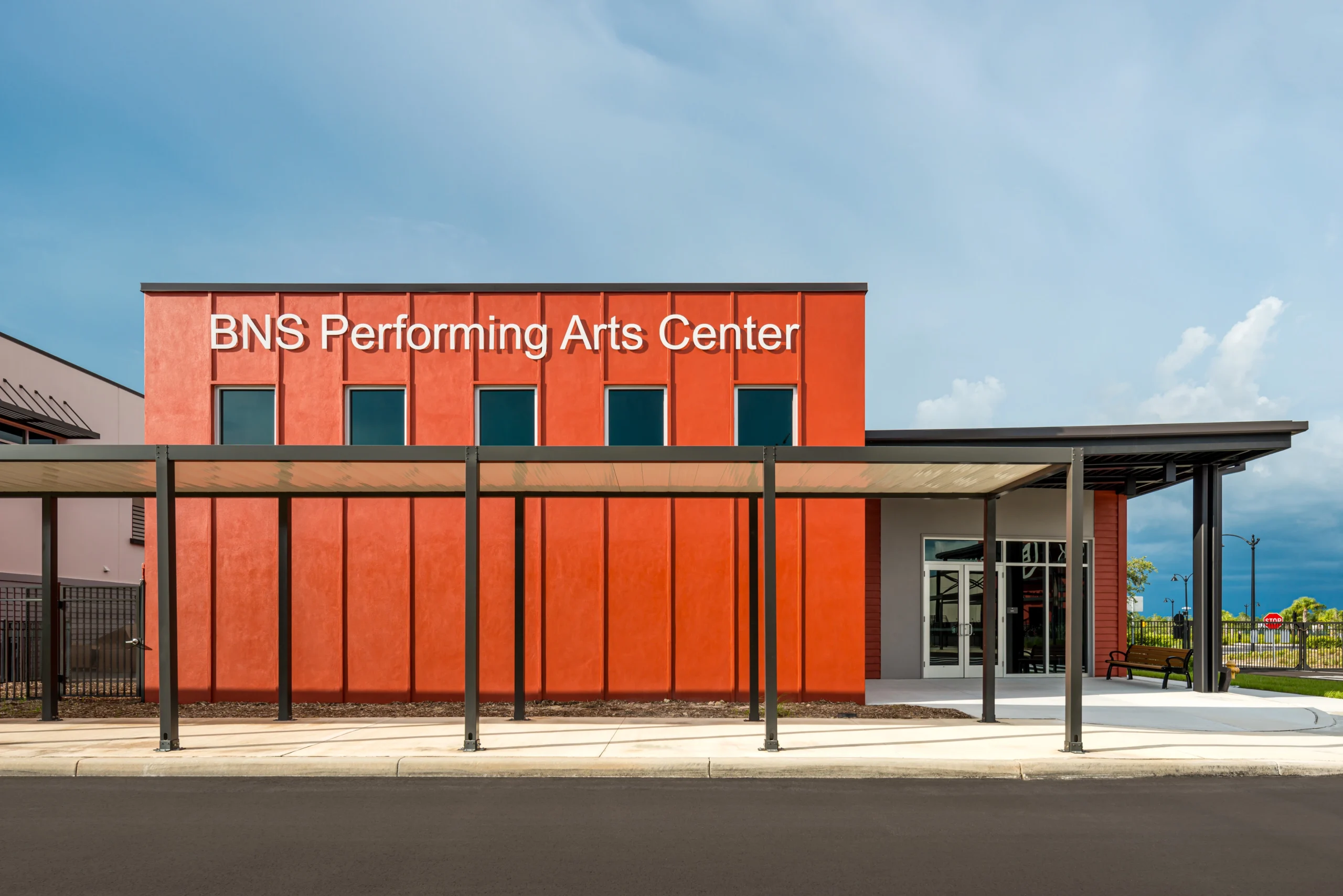
Designed in collaboration with STUDIO+, the Babcock charter school expansion completes the campus vision as part of a master-planned community with three designated school sites. The entire campus is thoughtfully organized around a central green lawn—a gathering space that serves as the heart of student life.
The master plan evolved during the design process to better serve the educational program. When the original concept of housing band and chorus rooms within the high school addition proved problematic due to acoustic concerns, the team reimagined a former utility yard as a dedicated arts building. Through extensive massing studies evaluating various schemes for a new K-8 Expansion, the design team ultimately determined that a three-story solution would best serve the program requirements.
Continuing the design language of the campus, the facility prioritizes student safety and wellbeing with sightlines between corridors and classrooms to address potential bullying concerns. Central to this focus is the design of single-stall bathrooms with central vanities to replace traditional multi-stall configurations, eliminating one of the major spaces where bullying can occur.
The building’s signature moment occurs immediately upon arrival. Visitors pass through a secure lobby leading to a dramatic two-story atrium. Dubbed “the Connector,” the bridge-like balcony spans the space, allowing students to engage with the activity below. This central gathering space features ultra-wide corridors that extend learning beyond classroom walls, with dedicated learning nodes positioned every four classrooms.
Flexible furnishings can be reconfigured to support various learning styles, while built-in benches and optional tables transform circulation spaces into active learning environments. Huddle rooms off the main corridors provide quiet spaces for small groups to work.
The L-shaped floor plan connects the new construction to the existing high school at the rear. We relocated the administrative suite to the new expansion which serves as a new front door for the K-8 school. The modern addition completes the next phase of the campus vision and promotes the continued growth of the campus as a leader in education in the community.
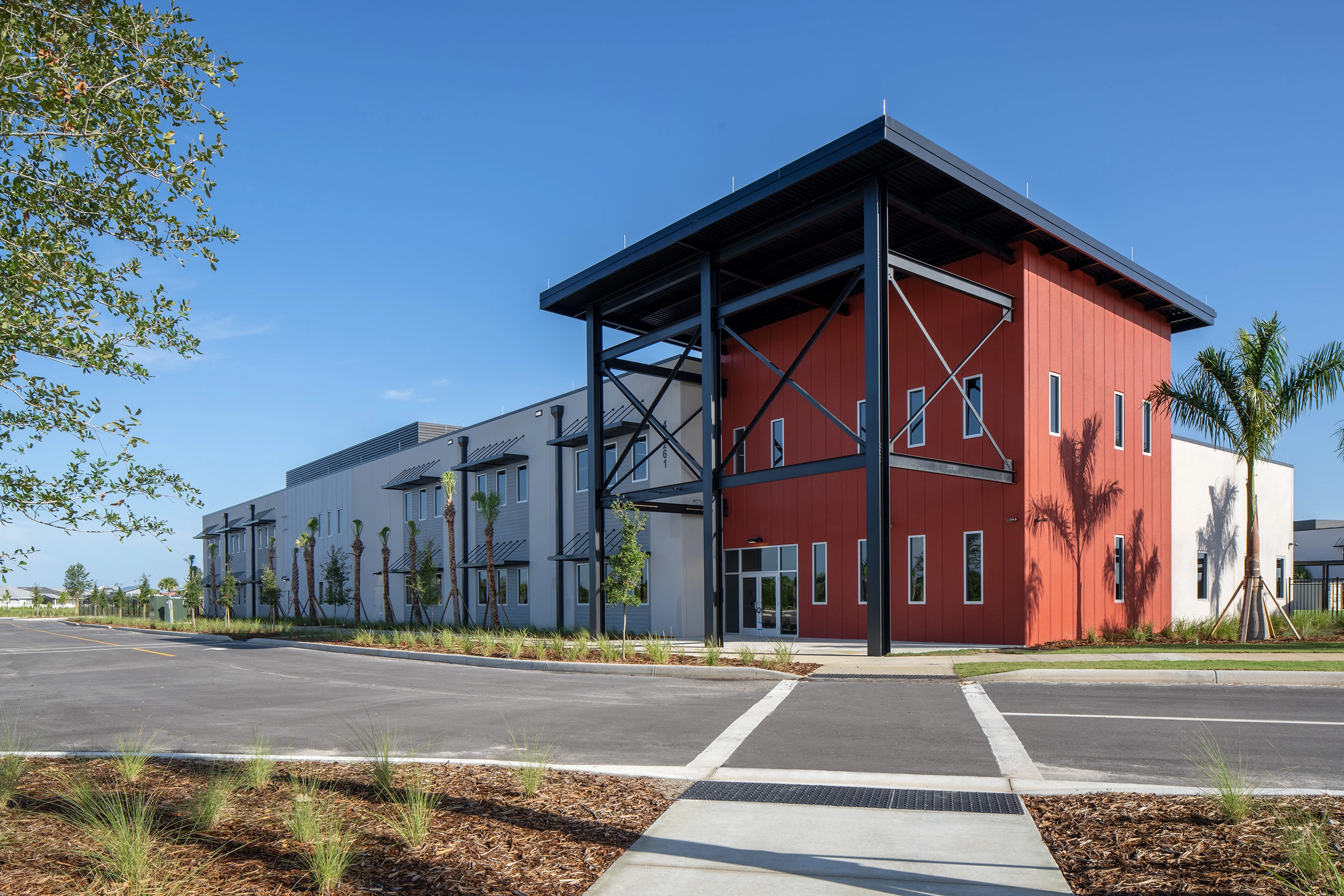
In association with STUDIO+, Babcock High School is designed for a 600-student capacity and is positioned on the property near the existing K-8 school to create a complete campus. This charter school design is intended for maximum flexibility in instructional and educational uses.
The building is designed to give a sense of openness and transparency to see learning happening. The signature space of the school is the two-story Assembly Hall, a central multipurpose space that can be used for assemblies, collaborative work, project presentations, awards, or announcements from the principal and administrators.
The main entrance is located at the east end of the building with an access controlled secure lobby. This location provides administrators with close access to the cafeteria and gym in the adjacent shelter. Main Street is the school circulation path. It is splayed to provide collaboration, breakout, and focus spaces at the center and west portions, while controlling circulation square footage. The Hive is the teacher’s workroom, centrally located on each floor with full visibility of Main Street for surveillance.
General classrooms are stacked along the south side of the school on the 1st and 2nd floors, while specialty lab spaces are on the ground floor with access to outdoor learning spaces. On the second floor, DAG created the four classroom pods to optimize instructional efficiencies through consistent messaging by allowing one teacher to present subject matter to four classes at a time. Time is then maximized to break out with the individual classroom teachers to focus on project-based learning.
The building’s exterior is designed to complement the architecture of the existing K-8 school yet provides a more technological and sophisticated aesthetic to clearly identify it as the high school on the campus. Branding is provided throughout to create a cohesive connection between the two schools, and reinforce the feeling of connection between students, staff, and administrators.
The success of this project and partnership also led to more campus projects, including the recent expansion.
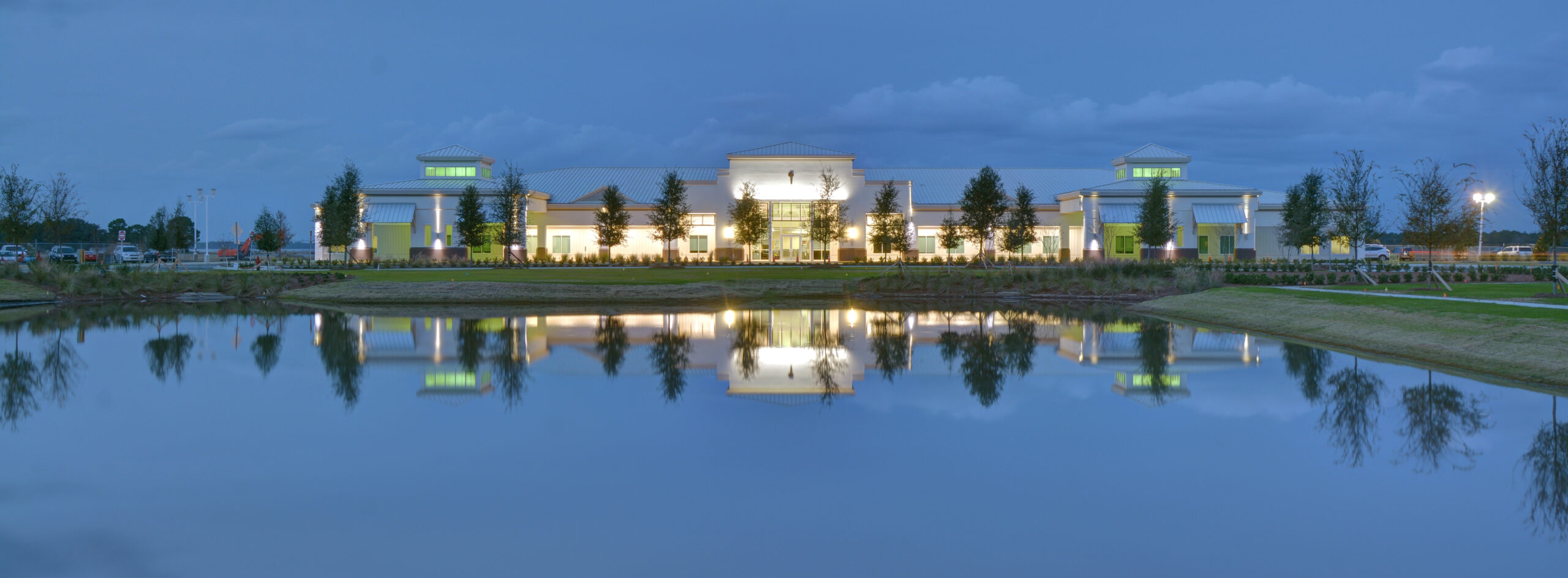
DAG’s adaptive reuse project in Panama City transformed a former airport terminal into a vibrant 68,000-square-foot charter school serving Pre-K through fifth grade students in the newly formed SweetBay community. The conversion anchors a 704-acre mixed-use, master-planned community, with residential areas, retail spaces, restaurants, and recreational facilities including a central park.
DAG employed soft color tones to reduce the scale of the building, allowing it to seamlessly integrate into the surrounding residential environment. The terminal’s outdated green and pink color palette was replaced with natural white and terracotta hues to complement the revitalized setting. Exterior enhancements included the addition of awnings and bracketing, as well as the replacement of windows and siding. The existing roof was re-coated with an energy-efficient finish, lightening its appearance. The former terminal parking lots were reimagined as a landscaped pond, aligning with the site’s new stormwater management plan.
To better suit its new role as an elementary school, the building’s entry scale was reduced. Visitors now enter through a secure vestibule, which opens into a striking two-story staircase. The central space of the terminal was re-envisioned as a key visual feature, celebrating the building’s aviation heritage through a vertical wood wing sculpture, stainless steel rivets and edges, and star-like pin lighting. The sculpture’s base offers a bleacher-like area for students to gather.
The terminal’s central concourse was reconfigured as the school’s main corridor. A brightly colored, transparent dining and multipurpose area now occupies the spaces once designated for ticketing, a café, and a lounge. A partial glass enclosure with Mondrian-inspired panels separates this area from the corridors, maintaining the space’s openness and transparency. The former baggage claims areas have been transformed into large gathering zones for classes or small group instruction. The corridor, once home to rental car services, now features bold color blocks to designate special areas, such as the teachers’ lounge and multipurpose classrooms.
Classrooms were designed for flexibility, with movable walls that can create one large space or three smaller classes. Cork-patterned luxury vinyl tile flooring distinguishes student and teaching areas, while acoustic ceiling discs and lighting add visual interest and enhance the overall atmosphere.
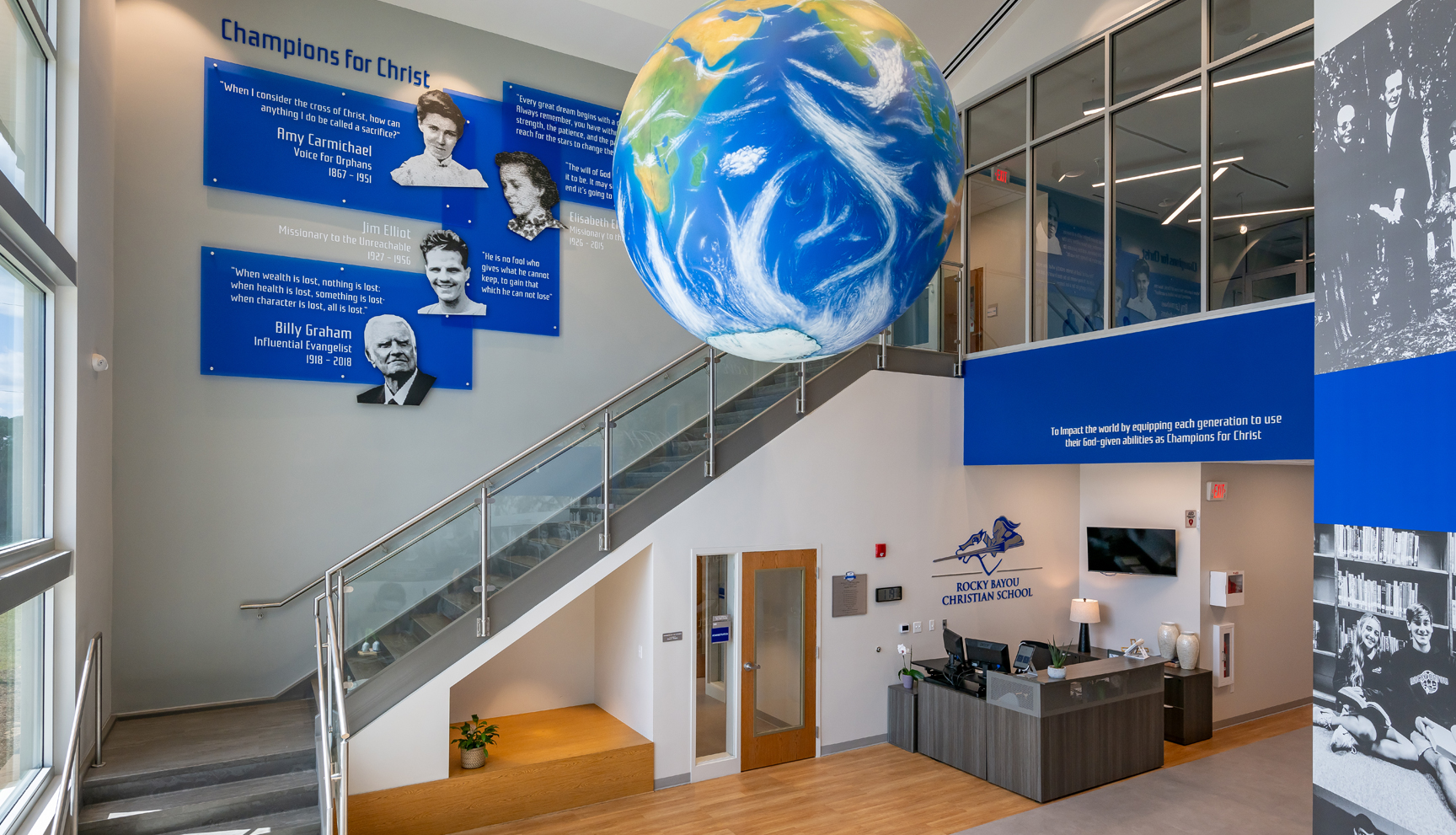
The new building includes three fully outfitted lab spaces; a STEAM classroom lab with indoor-outdoor access for experimentation and varied learning; and administration, conference, and informal gathering spaces. Classrooms were designed to maximize daylight and flexibility. Traffic improvements included widening the entry road to the school, upgrading the parking lot and lighting, and adding sidewalks for pedestrian safety.
Collaboration with stakeholders led to a cohesive branding vision, with museum-like graphics telling the school’s history intertwined with inspirational Christian messages. DAG is set to help the school reimagine their campus master plan in 2025.