Designed in collaboration with STUDIO+, the Babcock charter school expansion completes the campus vision as part of a master-planned community with three designated school sites. The entire campus is thoughtfully organized around a central green lawn—a gathering space that serves as the heart of student life.
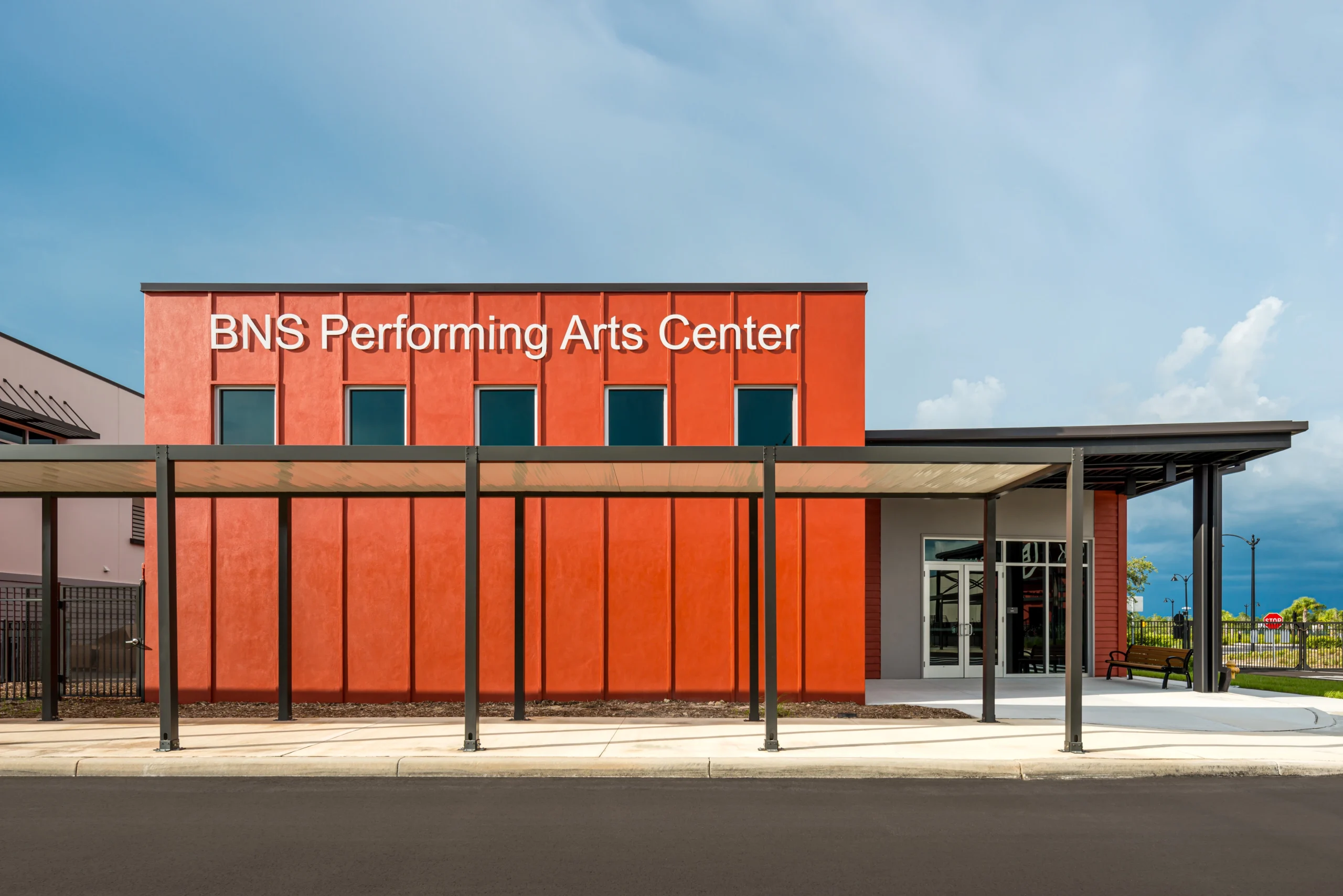
The master plan evolved during the design process to better serve the educational program. When the original concept of housing band and chorus rooms within the high school addition proved problematic due to acoustic concerns, the team reimagined a former utility yard as a dedicated arts building. Through extensive massing studies evaluating various schemes for a new K-8 Expansion, the design team ultimately determined that a three-story solution would best serve the program requirements.
Continuing the design language of the campus, the facility prioritizes student safety and wellbeing with sightlines between corridors and classrooms to address potential bullying concerns. Central to this focus is the design of single-stall bathrooms with central vanities to replace traditional multi-stall configurations, eliminating one of the major spaces where bullying can occur.
The building’s signature moment occurs immediately upon arrival. Visitors pass through a secure lobby leading to a dramatic two-story atrium. Dubbed “the Connector,” the bridge-like balcony spans the space, allowing students to engage with the activity below. This central gathering space features ultra-wide corridors that extend learning beyond classroom walls, with dedicated learning nodes positioned every four classrooms.
Flexible furnishings can be reconfigured to support various learning styles, while built-in benches and optional tables transform circulation spaces into active learning environments. Huddle rooms off the main corridors provide quiet spaces for small groups to work.
The L-shaped floor plan connects the new construction to the existing high school at the rear. We relocated the administrative suite to the new expansion which serves as a new front door for the K-8 school. The modern addition completes the next phase of the campus vision and promotes the continued growth of the campus as a leader in education in the community.
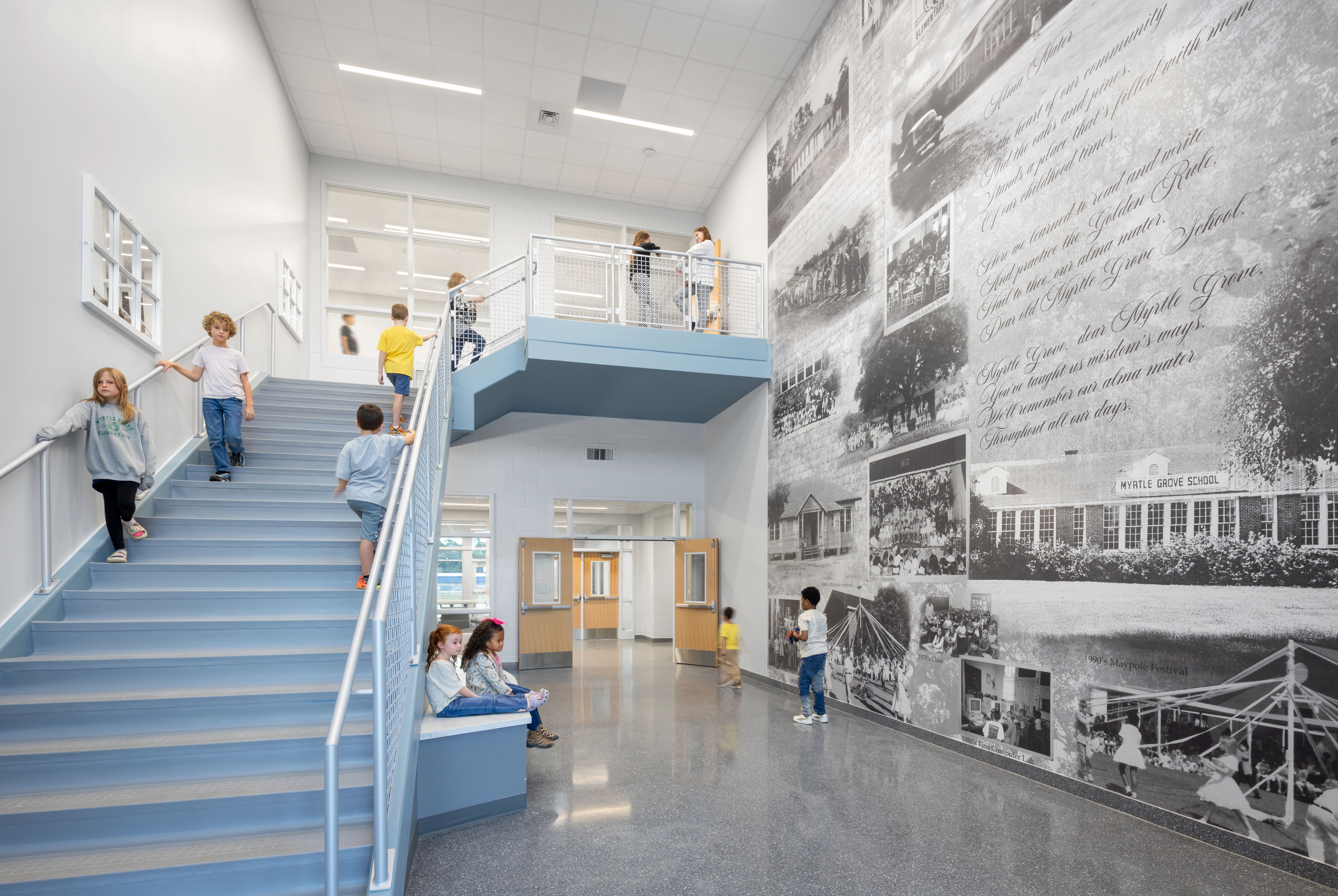
This 77,000-square-foot, two-story facility serves PreK through fifth-grade students with 29 contemporary classrooms, a STEM lab, and outdoor learning spaces. The design celebrates the school’s history, while providing state-of-the-art educational technologies. Rather than erasing the past, the architectural approach transforms historical elements from the original 1939 building into meaningful design features. For example, the wooden stage planks became a conference table and the historic cafeteria doors frame views from an upper balcony that overlooks the modern cafetorium.
A floor-to-ceiling heritage wall near the main entrance serves as the heart of this historical narrative, featuring archival photographs. The original transom windows, now fitted with safety mirrors, create a view for students to see their connection to the generations of learners who previously attended Myrtle Grove. The two-story configuration thoughtfully organizes learning by age, with primary grades downstairs and upper elementary upstairs. The school was planned with a phased approach for construction, with outlying temporary facilities to ensure teaching was not interrupted during design and construction. Phase II is set to be completed in 2027, which will add 16,000 SF of multipurpose spaces for arts and physical education.
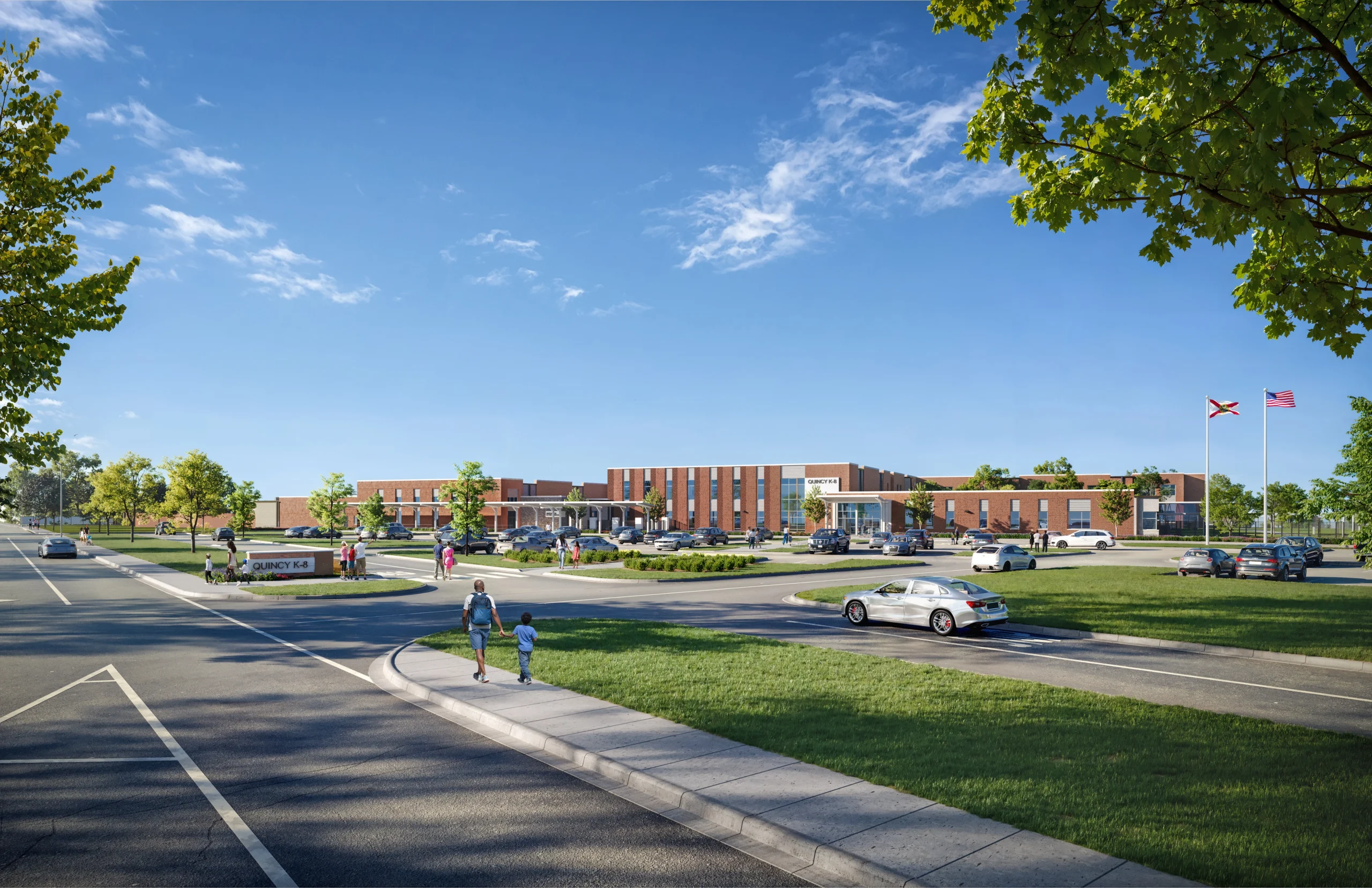
Designed in partnership with Fitzgerald Collaborative, the new Gadsden PreK-8 School will feature innovative classrooms equipped with the latest technology, STEM educational spaces, well-equipped libraries, and much more. With many dated schools in the Gadsden County School District that were no longer feasible to repair, this new building will replace four county schools with aging structures. DAG Architects is providing design, construction documentation, and construction administration for a new combined elementary and middle school, accommodating approximately 1,650 students across 250,000 GSF.
The design is guided by the concept of intersecting connections, fostering community, safety, and creative thinking. This approach highlights the interplay between community building and the neural connections formed through learning. A warm, natural color palette with bright accents will be used to enhance positivity and focus, while easing student anxiety. Architectural forms serve as wayfinding elements, creating fluid learning nodes. Zoning and circulation unite elementary and middle school experiences, encouraging community and maintaining safety through clear sightlines.
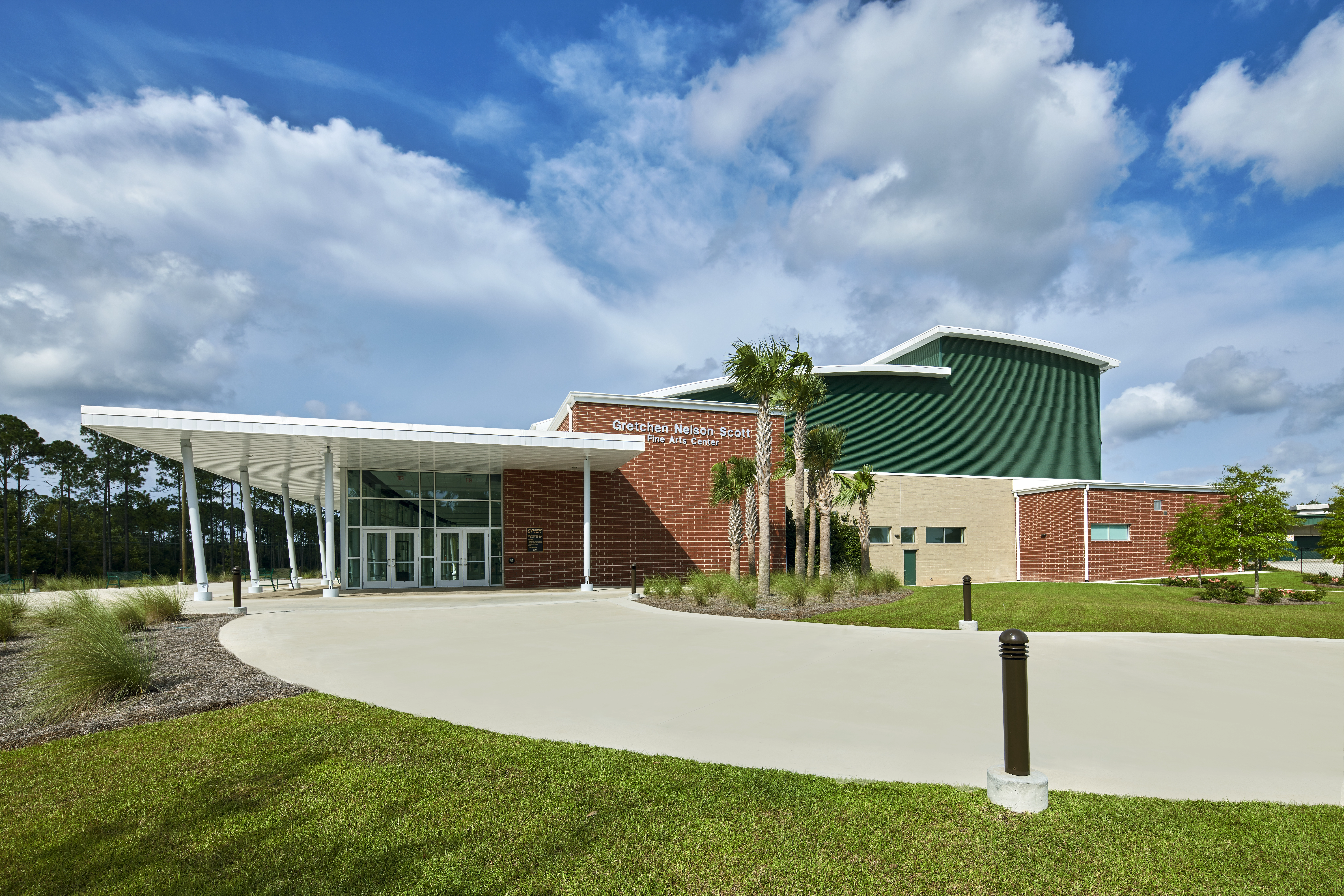
A private donation made it possible for Mosley High School to have their own performing arts building, which also provided a much-needed community facility to host lectures, community theater productions, and other civic programs. One of the project goals was to create a new landmark on the school’s campus, a structure that embodies the ties between the school and its neighboring community and honors the legacy of the family who donated the funding. The design team created a civic and street presence for this new performance venue while integrating it onto the existing campus. A central plaza leads gracefully into the building, and the transparent façade welcomes visitors and students alike. The rear of the Fine Arts Center faces the existing school, which allowed us to create an outdoor amphitheater for more informal productions. The amphitheater is an extension of the indoor stage itself, which allows it to be used as a backdrop for outdoor events. The facility was designed in partnership with HLGstudio.
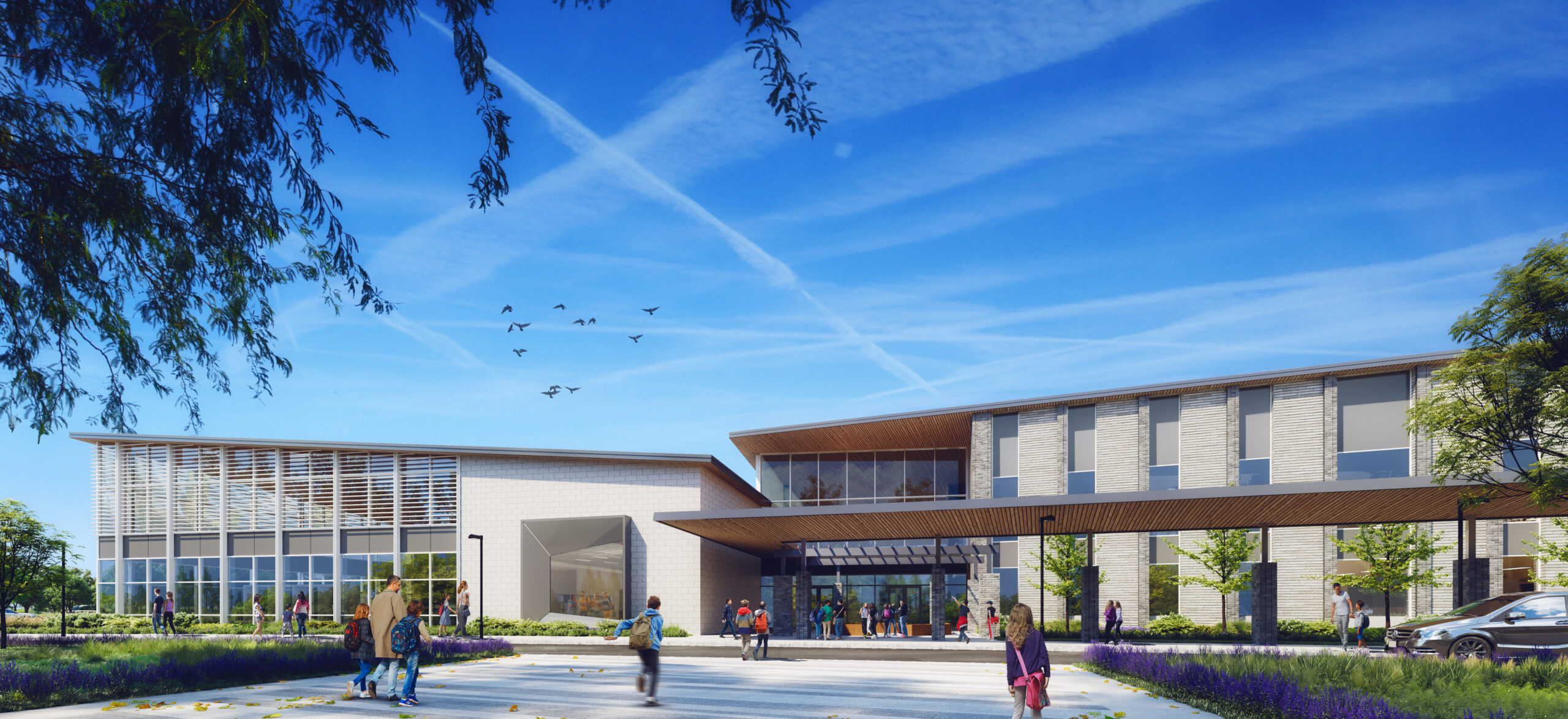
With rapid growth in the northern part of the county, Okaloosa County Schools is constructing the new Pineview K-8 school to support the student population. The school’s location on a pine-covered hillside inspired its name and design, reflecting the area’s historical ties to the pine logging and turpentine industries, while also celebrating the natural beauty of the land.
This state-of-the-art facility will accommodate 1,200 students and feature two-story classroom wings, collaborative study spaces, a media center, and outdoor courtyards. The design also incorporates modern amenities such as specialized band and chorus rooms, advanced classroom technology, a gymnasium with PE and athletic locker rooms, and a cafeteria designed as an Enhanced Hurricane Protection Area.
With a focus on flexibility and community engagement, the spacious entry lobby serves as a dynamic hub, complete with a built-in learning stair and media projection wall. Together with the media center and administration area, the lobby offers a range of meeting spaces to cater to both the school’s and the community’s diverse needs.
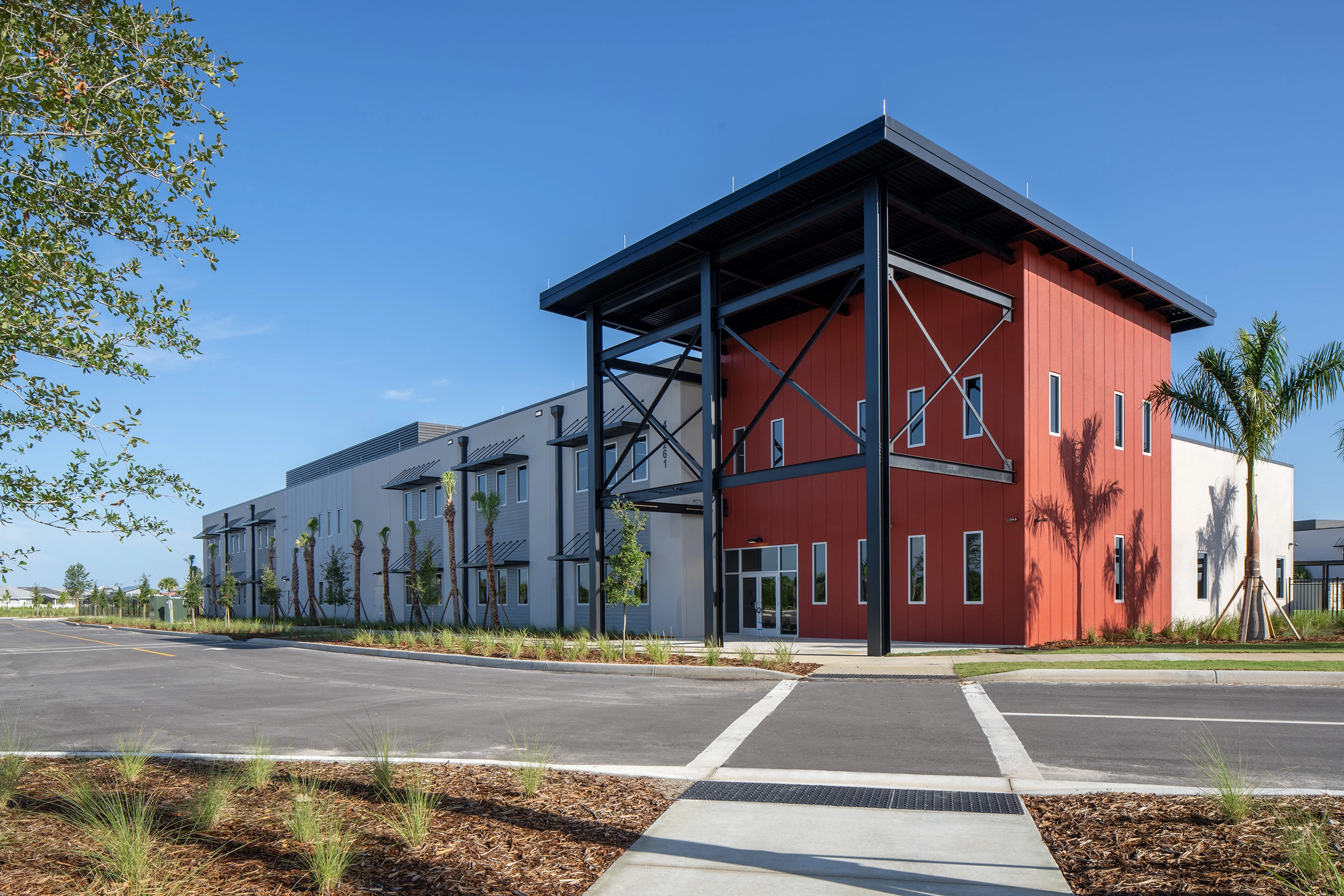
In association with STUDIO+, Babcock High School is designed for a 600-student capacity and is positioned on the property near the existing K-8 school to create a complete campus. This charter school design is intended for maximum flexibility in instructional and educational uses.
The building is designed to give a sense of openness and transparency to see learning happening. The signature space of the school is the two-story Assembly Hall, a central multipurpose space that can be used for assemblies, collaborative work, project presentations, awards, or announcements from the principal and administrators.
The main entrance is located at the east end of the building with an access controlled secure lobby. This location provides administrators with close access to the cafeteria and gym in the adjacent shelter. Main Street is the school circulation path. It is splayed to provide collaboration, breakout, and focus spaces at the center and west portions, while controlling circulation square footage. The Hive is the teacher’s workroom, centrally located on each floor with full visibility of Main Street for surveillance.
General classrooms are stacked along the south side of the school on the 1st and 2nd floors, while specialty lab spaces are on the ground floor with access to outdoor learning spaces. On the second floor, DAG created the four classroom pods to optimize instructional efficiencies through consistent messaging by allowing one teacher to present subject matter to four classes at a time. Time is then maximized to break out with the individual classroom teachers to focus on project-based learning.
The building’s exterior is designed to complement the architecture of the existing K-8 school yet provides a more technological and sophisticated aesthetic to clearly identify it as the high school on the campus. Branding is provided throughout to create a cohesive connection between the two schools, and reinforce the feeling of connection between students, staff, and administrators.
The success of this project and partnership also led to more campus projects, including the recent expansion.
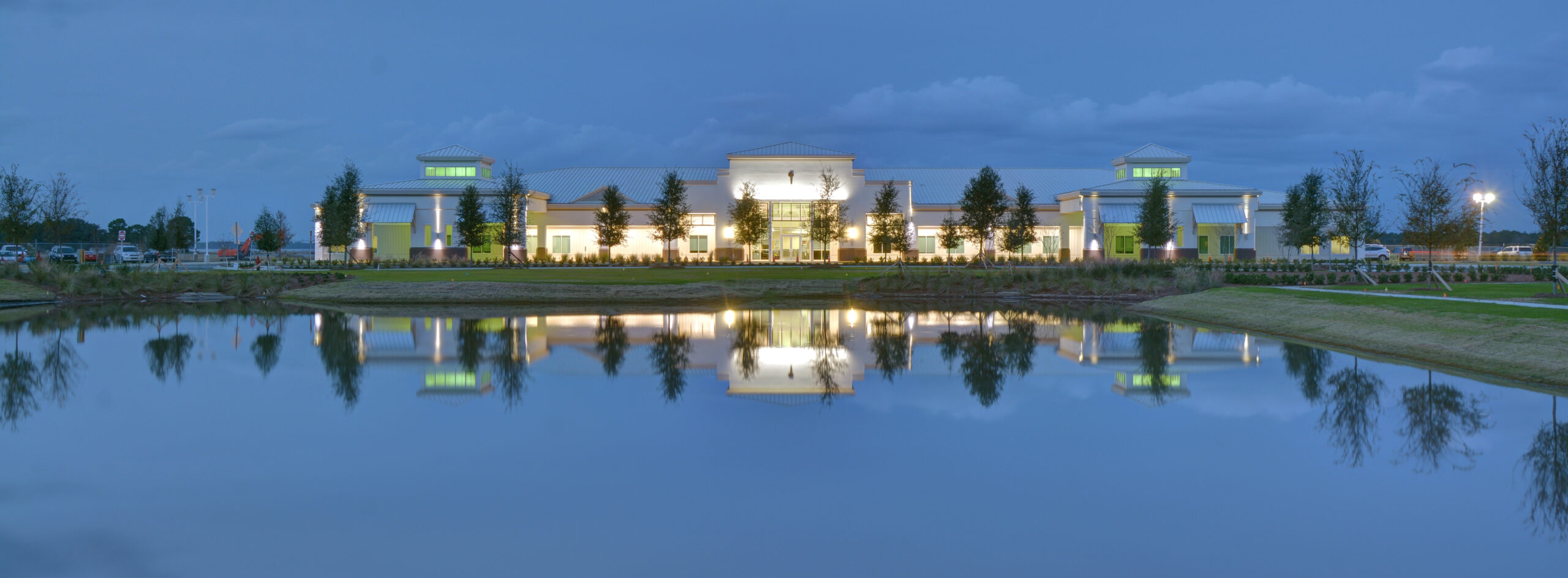
DAG’s adaptive reuse project in Panama City transformed a former airport terminal into a vibrant 68,000-square-foot charter school serving Pre-K through fifth grade students in the newly formed SweetBay community. The conversion anchors a 704-acre mixed-use, master-planned community, with residential areas, retail spaces, restaurants, and recreational facilities including a central park.
DAG employed soft color tones to reduce the scale of the building, allowing it to seamlessly integrate into the surrounding residential environment. The terminal’s outdated green and pink color palette was replaced with natural white and terracotta hues to complement the revitalized setting. Exterior enhancements included the addition of awnings and bracketing, as well as the replacement of windows and siding. The existing roof was re-coated with an energy-efficient finish, lightening its appearance. The former terminal parking lots were reimagined as a landscaped pond, aligning with the site’s new stormwater management plan.
To better suit its new role as an elementary school, the building’s entry scale was reduced. Visitors now enter through a secure vestibule, which opens into a striking two-story staircase. The central space of the terminal was re-envisioned as a key visual feature, celebrating the building’s aviation heritage through a vertical wood wing sculpture, stainless steel rivets and edges, and star-like pin lighting. The sculpture’s base offers a bleacher-like area for students to gather.
The terminal’s central concourse was reconfigured as the school’s main corridor. A brightly colored, transparent dining and multipurpose area now occupies the spaces once designated for ticketing, a café, and a lounge. A partial glass enclosure with Mondrian-inspired panels separates this area from the corridors, maintaining the space’s openness and transparency. The former baggage claims areas have been transformed into large gathering zones for classes or small group instruction. The corridor, once home to rental car services, now features bold color blocks to designate special areas, such as the teachers’ lounge and multipurpose classrooms.
Classrooms were designed for flexibility, with movable walls that can create one large space or three smaller classes. Cork-patterned luxury vinyl tile flooring distinguishes student and teaching areas, while acoustic ceiling discs and lighting add visual interest and enhance the overall atmosphere.
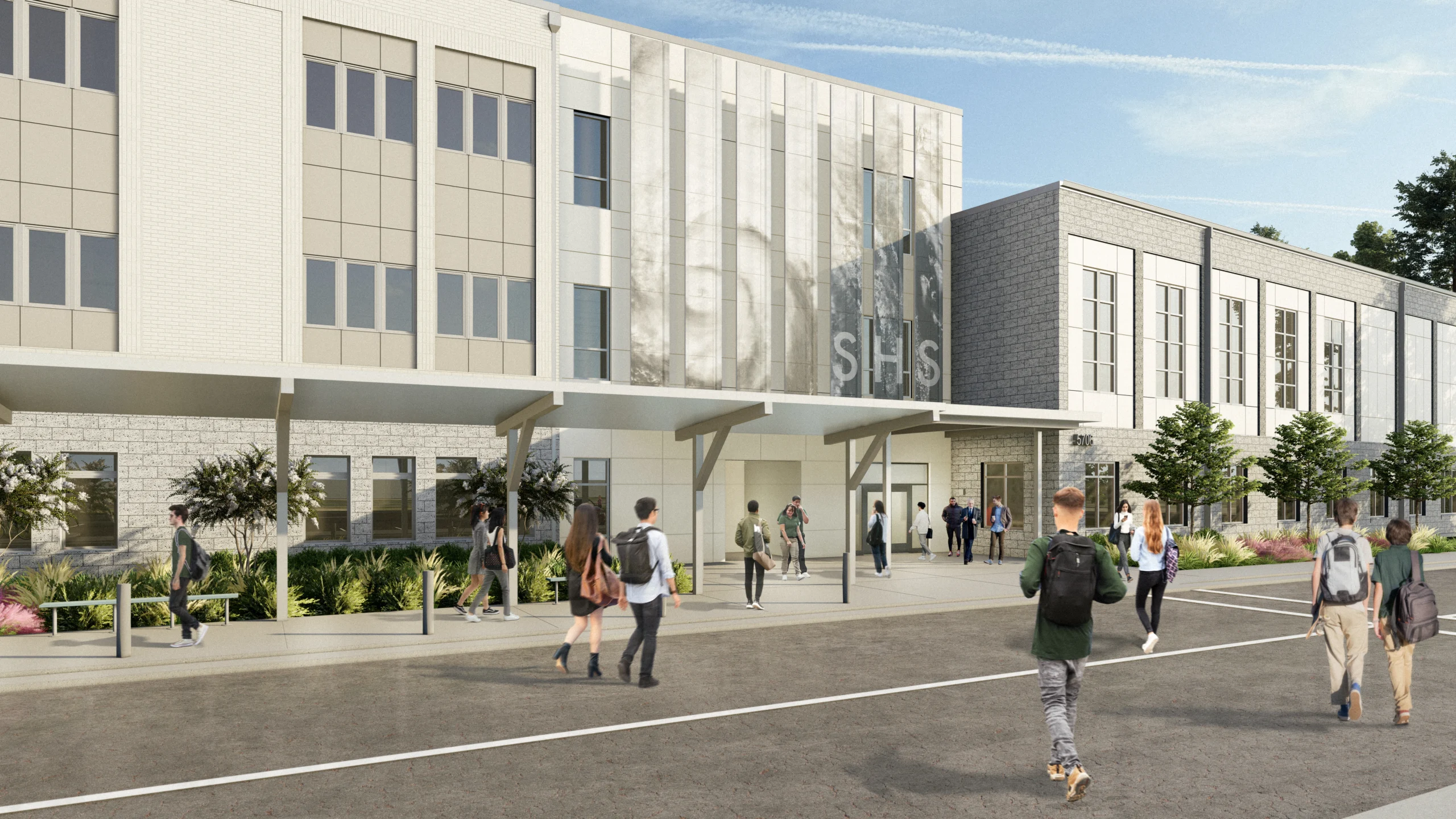
Slated for completion in Spring of 2026, the $110 million high school facility will accommodate 1,800 students in grade nine through twelve with a modern and thoughtful design. The interior and exterior materials and color palettes create a coastal, collegiate character for the campus.
This three-story high school will feature 74 classrooms, CTE (Career and Technical Education) labs, a gymnasium building, a sports fieldhouse, and various athletic fields including a synthetic turf multi-sport field. The design team maximized the 35-acre site by designing a 3-story high school with a central interior courtyard that provides a secure outdoor gathering area for the students. DAG provided a cohesive campus design down to the school mascot and school colors, which are incorporated into the sports facilities. The design prioritizes safety with secure entry points, including badge-access doors and restricted public access areas once the school is operational.

This new K-8 school serves 1,200 students in the Santa Rosa County School District. The two-story facility features three wings on each floor, including 25 primary classrooms, 20 intermediate and middle school classrooms, and 23 exceptional student education rooms. The design incorporates sustainable practices and Crime Prevention Through Environmental Design (CPTED) principles, setting a standard for future K-8 schools in the county.
The design features a central two-story atrium, named the “Hub,” which incorporates the school’s central stairs and provides a gathering space along with good supervision of students of different age groups, addressing a key concern of the school administration. The site had a limited construction area due to existing wetlands, which helped drive the compact two-story pinwheel design. This school is a prototype for future district K-8 schools, and the compact design works well on smaller sites.

Through design research on the long-term benefits of both immersive and kinesthetic activity as well as biophilic design on educational outcomes, “Anytime learning” became one of the key design strategies for Dune Lakes Elementary School. Stepped seating, teaching walls, open outdoor areas, and interactive wall elements ensure students have unique opportunities to engage, collaborate, and study.
Each classroom and public circulation space incorporates natural daylighting, either through large windows, clerestory windows, or towering skylights. Wayfinding was inspired by the county’s environmental and historical richness, allowing the buildings themselves to be part of the students’ educational experiences. The project reflects architectural elements familiar to the community, while environmentally conscious elements include interior finishes, LED lighting, and native landscaping. The elementary school utilizes a variety of CPTED principles and safe school strategies, while still maximizing moments of creative play, whimsy, and inquisitive learning.