News / May 26, 2026
How Targeted Renovations Transform Dated Properties
For building owners and developers, weighing the cost of a renovation against new construction is a common decision and the math often comes down to how much the change will lead to measurable returns.
According to PwC and the Urban Land Institute’s Emerging Trends in Real Estate 2026, tenant demand is increasingly divided—with intense competition for top-tier assets and persistent vacancies in lower-quality properties, property upgrades can have a large impact on demand. Three of DAG’s recent projects illustrate how strategic, limited-scope renovations can produce significant improvements to the function and aesthetics of a building.
Whitehead Electric – Atlanta, GA
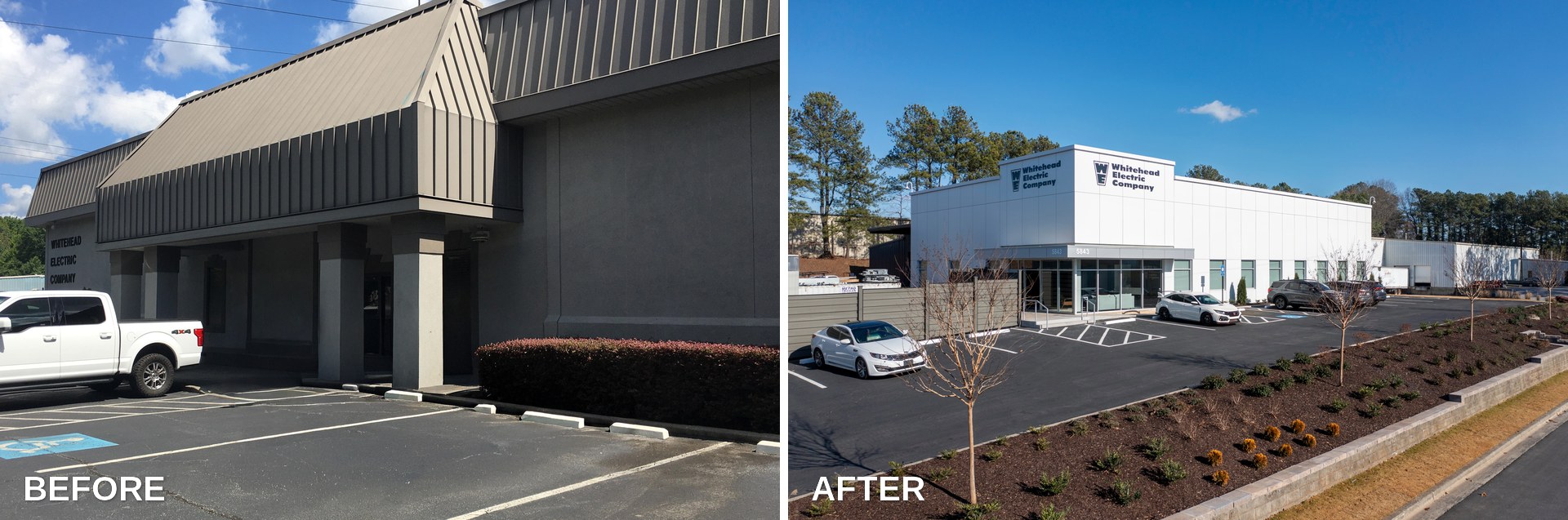
When Whitehead Electric considered leaving its existing facility, a 1970s premanufactured metal building, their assumption was that the space no longer served the company’s needs and couldn’t be remade to support the company culture they aspired to. After an unsuccessful search for budget-friendly replacement properties, the team turned its focus on what renovating the existing building could accomplish.
The design process had to be nimble and incorporated an acceptance of discovery throughout design even into the construction phase. Multiple challenges arose over time including: structural elements in unexpected places, elements of the existing building that had to remain for lateral bracing, enclosure elements that had significantly deteriorated, and numerous chance discoveries as interior demolition proceeded.
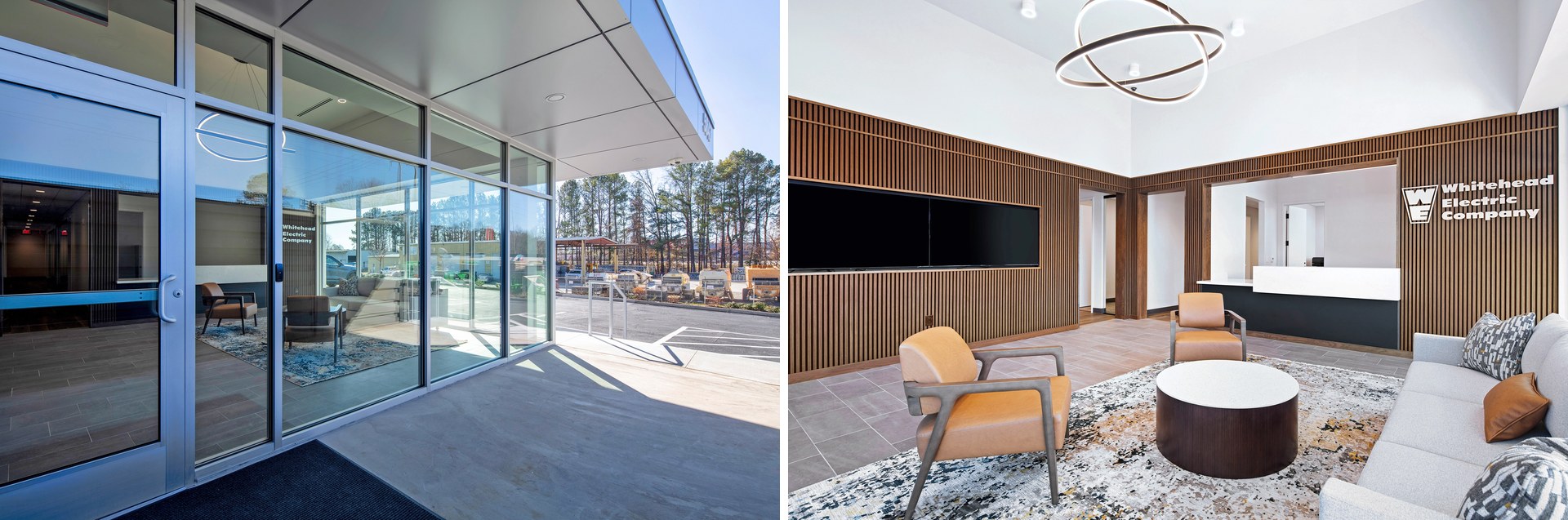
Working in collaboration with HLGstudio, DAG identified the building’s highway visibility as an unrealized asset. Situated with direct sightlines to I-285, the facility had done little in the past to capitalize on that exposure. The design positioned an open and daylit modern main building entry at the highway-facing building corner, for enhanced visibility and to create a welcoming feature for building approach.
The building exterior was reskinned in a bright white metal paneling that transformed its image and curb presence. As the company is an electrical and lighting contractor, this exterior was advantaged as a projection surface for active LED lighting and signage. Together with its new transparent glass entry space, this placed the company’s expertise on display, extending its image to the outside world even at night. The result is a refreshed building with hospitality-style interior spaces that reinvigorates the business brand and strengthens the company’s culture into its next generation.
West Waters Avenue – Tampa, FL
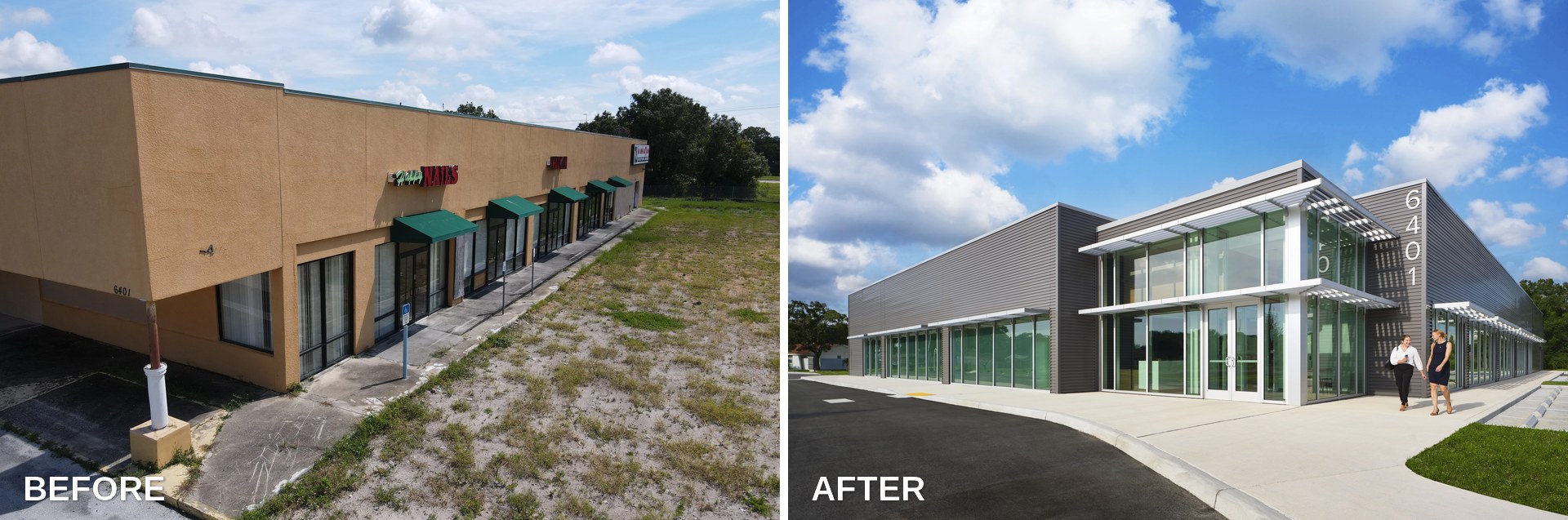
The renovation of 6401 West Waters Avenue in Tampa, FL repurposed an unoccupied and neglected retail building shell and turned it into an inviting manufacturing facility for the operations of a pharmaceutical compounding center.
The adaptive reuse project included gutting the structure, while re-using the existing structural grid, roof, bearing walls, and foundations. These became part of a new metal panel enclosure to house the client’s product storage and lab operations, with their elevated requirements for cleanliness and climate control, in a modern enclosure that communicates technical elevation and welcome at the same time. A double-height entrance was added, with generous glazing and exposed structure to create focus, openness and a contemporary order to the former strip retail building – a “glass slipper” for a Cinderella-style transformation.
The design was coordinated closely with the client’s interior design and branding consultants to create a new image for the building that unifies interior space planning, building operations, and public-facing functions.
One Seagrove Place – Santa Rosa Beach, FL
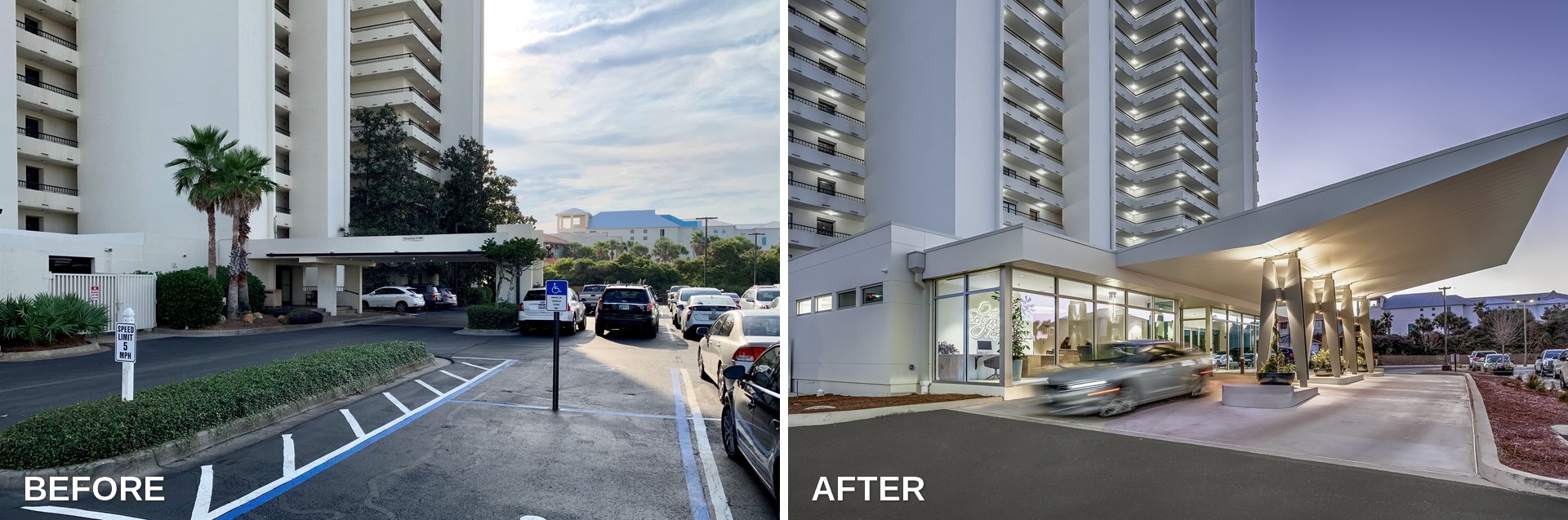
One Seagrove Place, a condominium located on Florida’s Gulf Coast, engaged DAG to evaluate opportunities for improving tenant and guest experience and to strengthen the property’s competitive position in the local market. Rather than a comprehensive renovation, concept design identified an advantage in narrowing the scope to the arrival sequence and opportunities to enhance guests’ first impressions.
The existing entry canopy was replaced with a raised butterfly roof structure for an enhanced building approach and street presence. At night this entry element is illuminated, making it a visible landmark to the local city. Vehicle circulation was improved by expanding curbside arrival from one lane to two.
Inside, the lobby was reconfigured with the front desk placed in direct view of the entry, updating the previous arrangement where it was apart from the entry and required guests to navigate a hallway before reaching staff. Additional seating and workspaces were also added for visitor touch-down. The original, distinctive One Seagrove Place sign, previously on the exterior porte cochere, was repositioned as an interior sign, preserving this iconic feature of the original building.
These improvements not only changed the guests’ response to the building, but it also brought regional attention to the project; it won 2025 AIA Florida Northwest Citation Award for Renovations/Additions. DAG is currently building on this success by renovating the pool area to make it more luxurious and inviting for visitors.
Connect for More Information