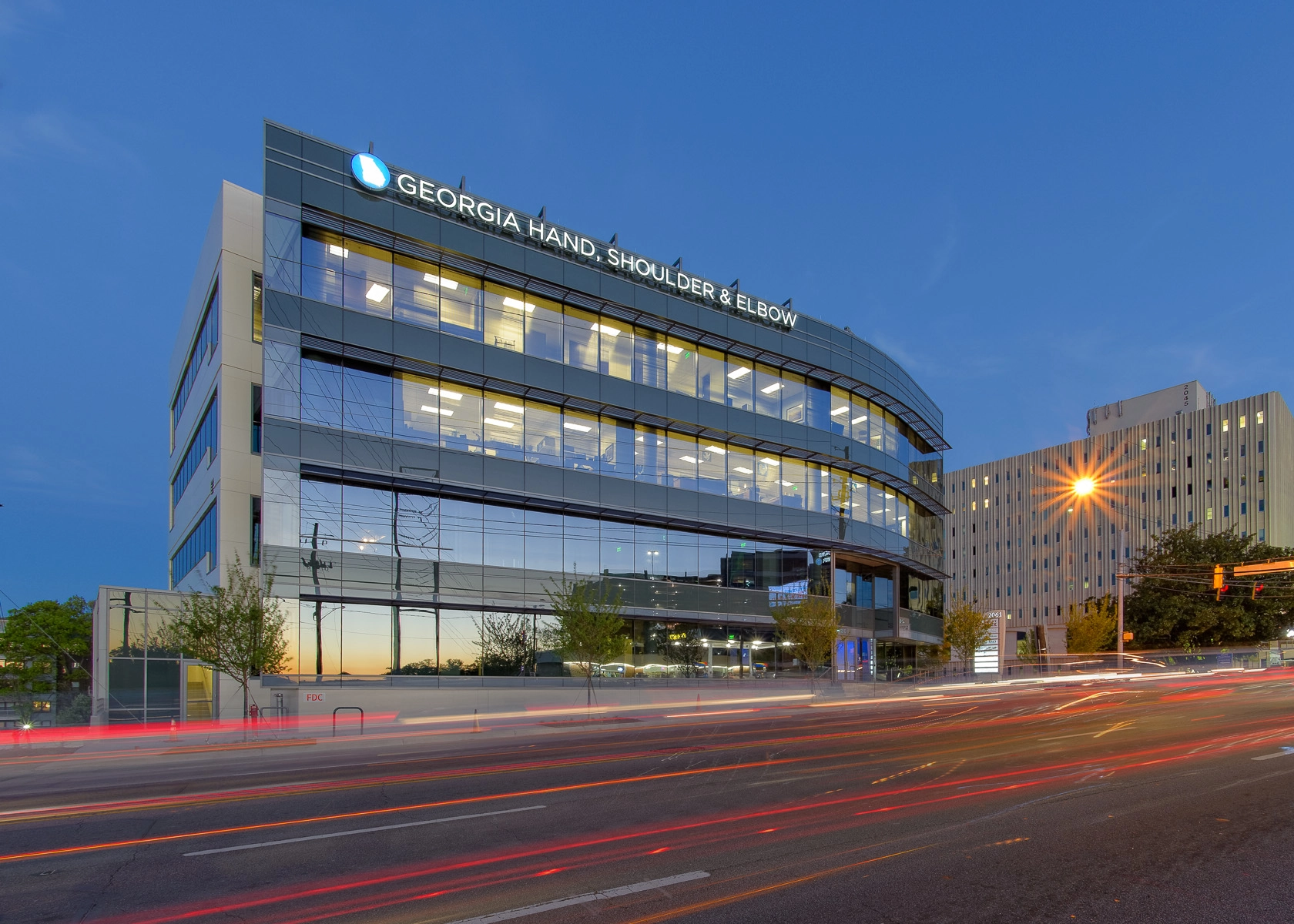
This medical office building is in the heart of Atlanta’s Piedmont Hospital corridor on Peachtree Street. Existing site challenges created an opportunity for a prominent building design on the former restaurant site.
This 50,000-square-foot, multi-tenant medical office building includes the offices and two surgery suites for Georgia Hand, Shoulder & Elbow, a large orthopedic practice. The project also includes a parking deck for 200 vehicles along with a patient drop-off area created toward the rear of the site. A compact, efficient floorplan evolved because of the site constraints.
The graceful curve of the spandrel glass allows increased visibility while traveling in either direction on Peachtree Street. The insulated glass and louvered sunshades along Peachtree control sun and reduce heat gain, while allowing natural light to penetrate deeper within the building. The other three facades are a combination of metal panels and glass, reflecting a more conventional office design. The twilight gray glass combines with the limestone color metal panels to create a notable presence along Peachtree.
Designed by Principal Larry Sweat while with a previous firm.

Northwest Medical Center, one of Buckhead’s premier multi-tenant medical office buildings since the 1970’s, underwent a major upgrade and modernization project. The vision to transform the aging property into a state-of-the-art health care facility included distinctive enhancements to both the exterior and interior.
The programming and design for this 156,000-square-foot, four-story, medical office building embodies significant building improvements. The building was originally constructed with Core10 steel which began to rust-through requiring a new skin of insulated metal panels and 1” insulated loading glass which gave the building a fresh new appearance while correcting heat gain and noise issues from the nearby expressway.
The complex was additionally designed with a new arrival plaza addressing ADA and drop-off reorganization, a pedestrian canopy bridge and new wayfinding. A xeriscaping (creative landscaping designed to conserve water) courtyard now greets patients as they arrive and serves as a break space for staff. Other upgrades that improved patient and visitor experience are the redesign of the building lobbies and public corridors. The lobbies were redesigned to allow additional daylighting into the space. They complement the exterior with white and grey marble floors, contemporary furnishings, the addition of planters, as well as the relocation of the elevators. Exterior hardscape and landscape elements were redesigned to address the settling soli conditions which had occurred over a long span of time.
Designed by Principal Larry Sweat while with a previous firm.

The new Gulf Coast State College Nursing & Simulation Center is a 28,500 SF, two-story building sited at the original location of the Natural Sciences Building. The architectural language reflects the contextual influence of the existing adjacent buildings and their historical importance to the campus. With nursing administration areas, two large classrooms, two skills labs, a multi-bed simulation lab with AI-integrated mannikins, and a virtual reality lab, the facility brings modern and real-world experiences to the hundreds of nursing students GCSC trains each year. The new facility will assist in attracting and retaining students to the program, while also reinforcing the college brand and legacy in the region.
HLGstudio collaborated with DAG Architects on the interiors.
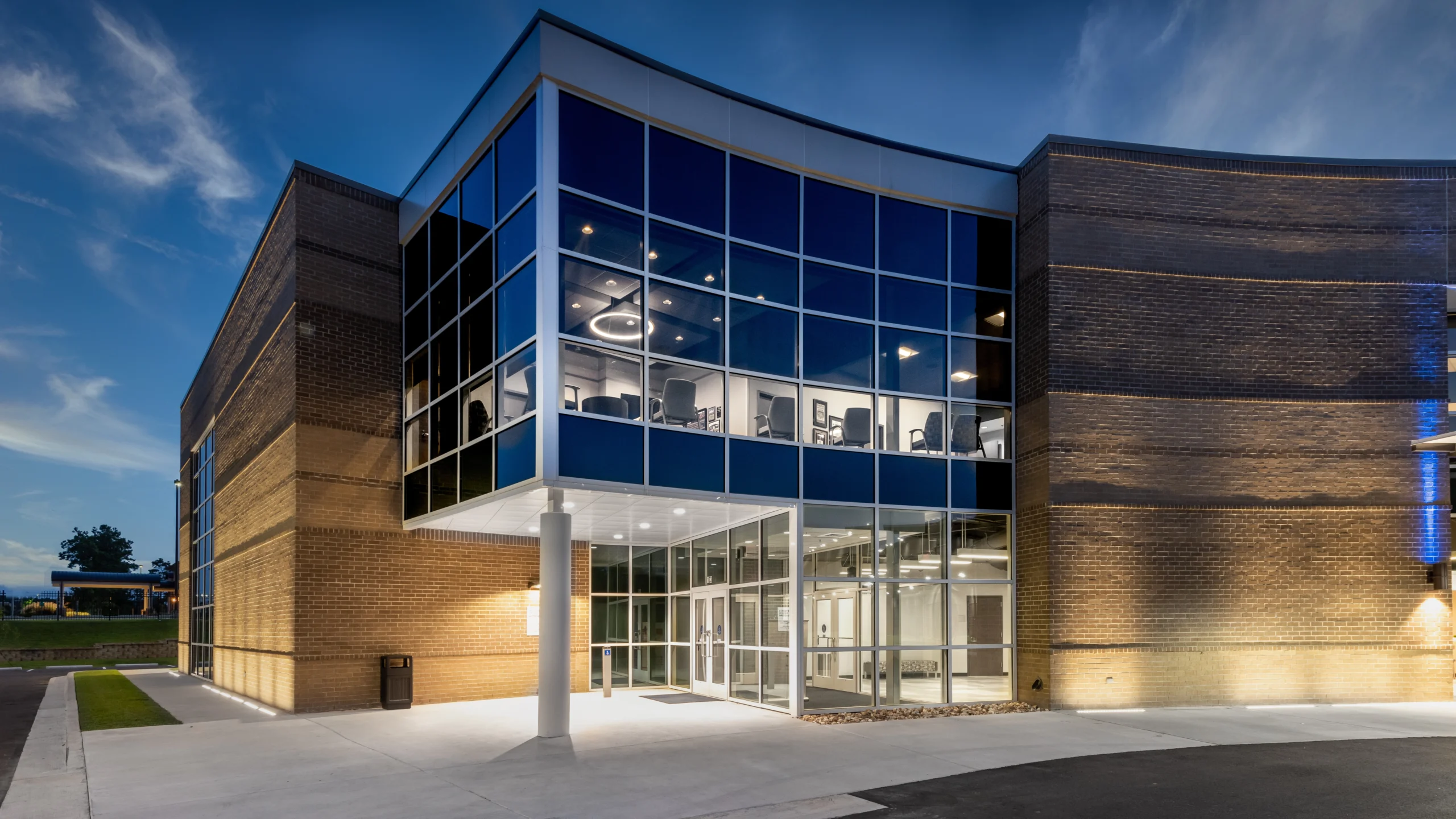
The new two-story, 42,000-square-foot medical office building and 13,000 SF sports performance facility responds to the need for a state-of-the-art destination for orthopedic treatment and elite athletic training and assessment.
The clinic portion of the project treats a spectrum of orthopedic conditions and diseases including musculoskeletal injuries, fractures and complex total joint reconstructions. The facility additionally includes spaces for Magnetic Resonance Imaging and X-rays, along with a physical therapy gym with hydrotherapy pool, exam rooms, and physician’s offices. The sports training facility allows the opportunity for physicians to provide outpatient treatment and rehabilitation.
Other amenities include covered parking for physicians, porte cochere for patient drop-off, and convenient connectivity to the sports training facility.
Designed by Principal Larry Sweat while with a previous firm.

This renovation of the Emory/St. Joseph’s Doctors Building includes both exterior enhancements and an interior revitalization, including the revitalization of the atrium space aimed to create a more vibrant environment. The renovation was designed to be reflective of the high-quality health care for which the physicians are recognized. The design mission was to visually enhance and to activate this medical office environment, as well as provide forward-thinking solutions to create spaces which promote well-being and comfort for patients, their families and staff.
The atrium has been redesigned with biomimicry concepts and nature-inspired solutions to create a space of healing, comfort and refuge. The space offers not only places to gather, but intimate spaces offering a place of respite. The first-floor space allowed the addition of several highly visible including a credit union, fitness center and other retail spaces. To further activate the common area space, kiosks were designed to allow for a change of product or service.
A stepped commons area was added to what had been a dead-end space, creating a gathering space for nursing students as well as providing connectivity to the new food service and outdoor courtyard. This area also contains a green wall water feature, creating ambiance and tranquil sounds. Of particular interest is a glass elevator in the atrium space which serves not only as a design feature, but also a functional improvement to pedestrian circulation between the three office buildings and the hospital.
The exterior has new color-coded vestibules to assist with wayfinding, as well as new exterior and interior environmental signage. The north facing facade has a new entrance design and vestibule.
Designed by Principal Larry Sweat while with a previous firm.
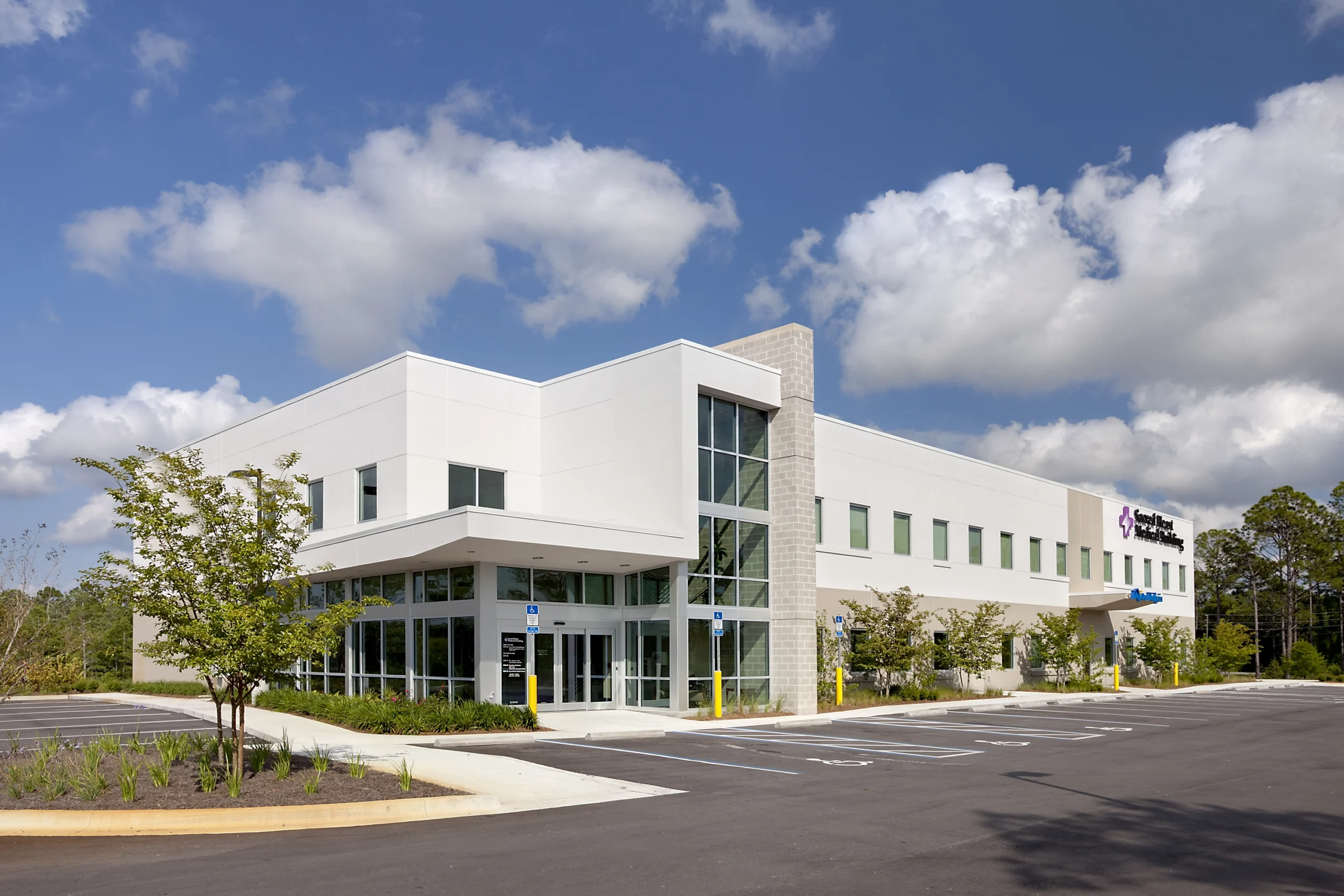
Part of the new Sacred Heart medical complex in Port St. Joe, this medical office building is the first of two more planned buildings. The 24,300 SF medical office building houses related services for the hospital and provides office space for doctors and other medical specialists. The building is sited to correspond to the hospital entry and a bridgeway that connects the two buildings. The building sits at a 30-degree angle to the main road to allow visibility of the entry, both from the main road and the hospital entry and approach. The building itself designed around typical medical office rooms to allow for the most efficient use of the square footage in the leasable space within the building. The distinguishing features are the entryway and main stair, whose design allows for an expression of arrival and movement to and within the building. The design echoes the architectural vernacular of the neighboring Sacred Heart on the Gulf Hospital, also designed by DAG.
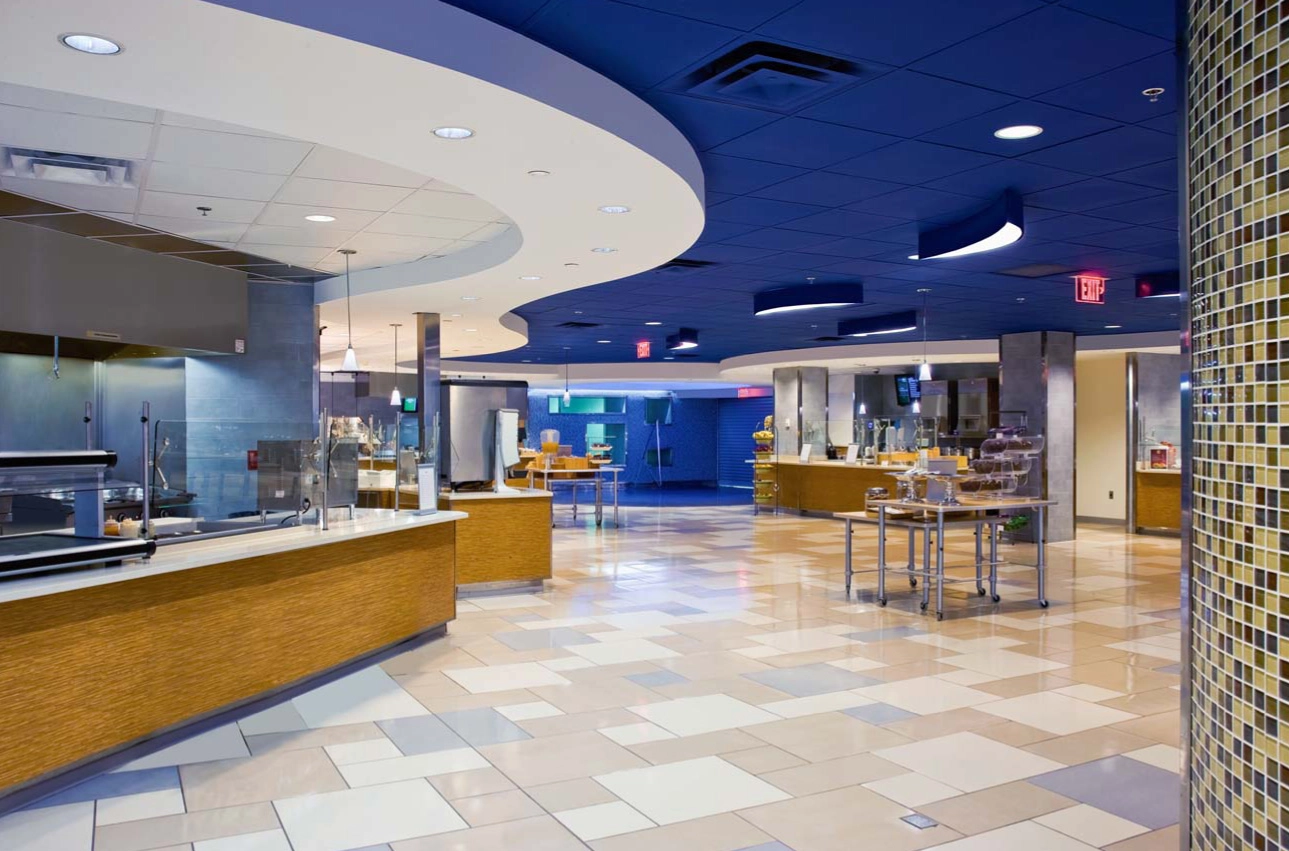
Food service for hospital guests and staff alike is paramount to promoting better physical and mental health. Conceptually utilizing water and nature as known elements for healing and well-being the space now accentuates the concept. Like many hospitals designed over the past several decades, the dining facility was more of a cafeteria style environment that prohibited the required movement of physicians, staff, and visitors alike. Our goal was to not only design a highly efficient restaurant and dining space, but one that speaks to health and wellness characterized by Children’s Healthcare of Atlanta. The renovation provided better traffic flow throughout the dining facility, with presentation cooking stations organized in a scramble concept.
Prior to the renovation, the dining facility was 13,600 square feet. The renovation and addition added 8,500 square feet and increased the total seat count from 350 to 600. The shell of the existing serving and seating area was completely renovated from floor to ceiling, creating a more health-centric and child-friendly environment.
The renovation and expansion also included a more efficient tray return and dishwashing system. Close attention was paid to the acoustics in the renovated area. Construction was completed in three phases during a 20-week period to maintain uninterrupted food service delivery.
Designed by Principal Larry Sweat while with a previous firm.
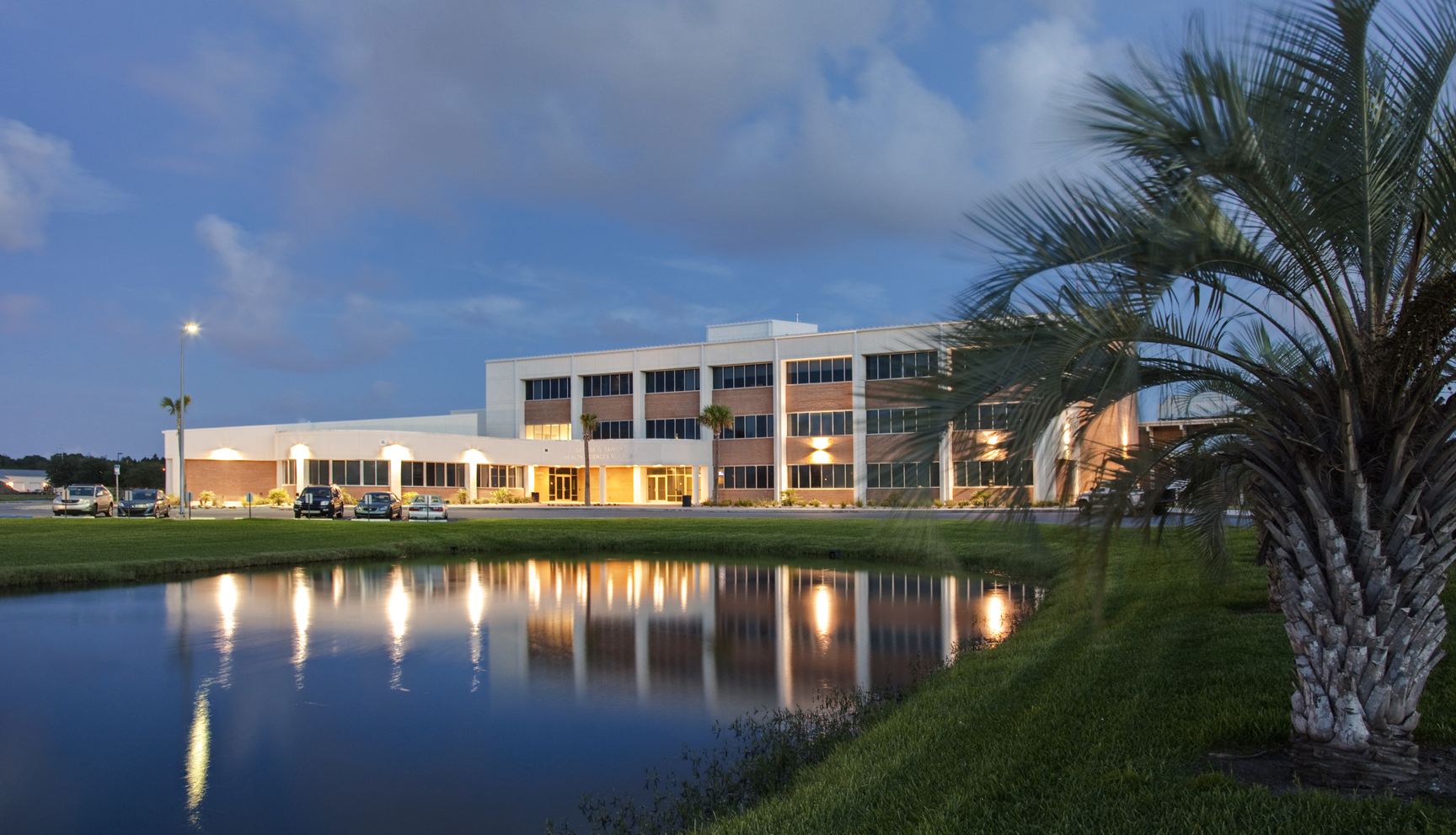
The Gulf Coast State College Health Science Building renovation modernized the academic program and addressed advancements in the health sciences and teaching strategies. Originally constructed in 1982, the three-story building required removal of both the exterior skin, as well as interior framing, leaving the structural bones from which to work. Thorough consultations with 15 allied health departments and staff ensured the new facilities met the needs of multiple stakeholders.
The updated center supports a range of programs, including Dental, Nursing, EMS, Respiratory Therapy, Pharmacy, Radiography, Surgical Technology, Physical Therapy, and Sonography. Modern classrooms feature cutting-edge teaching technologies and communication systems, while nursing labs benefit from advanced clinical equipment and simulation technology. On the first floor, a large dental clinic with dedicated dental hygiene and assisting labs provides affordable dental care to the community, enhancing both educational and service offerings.
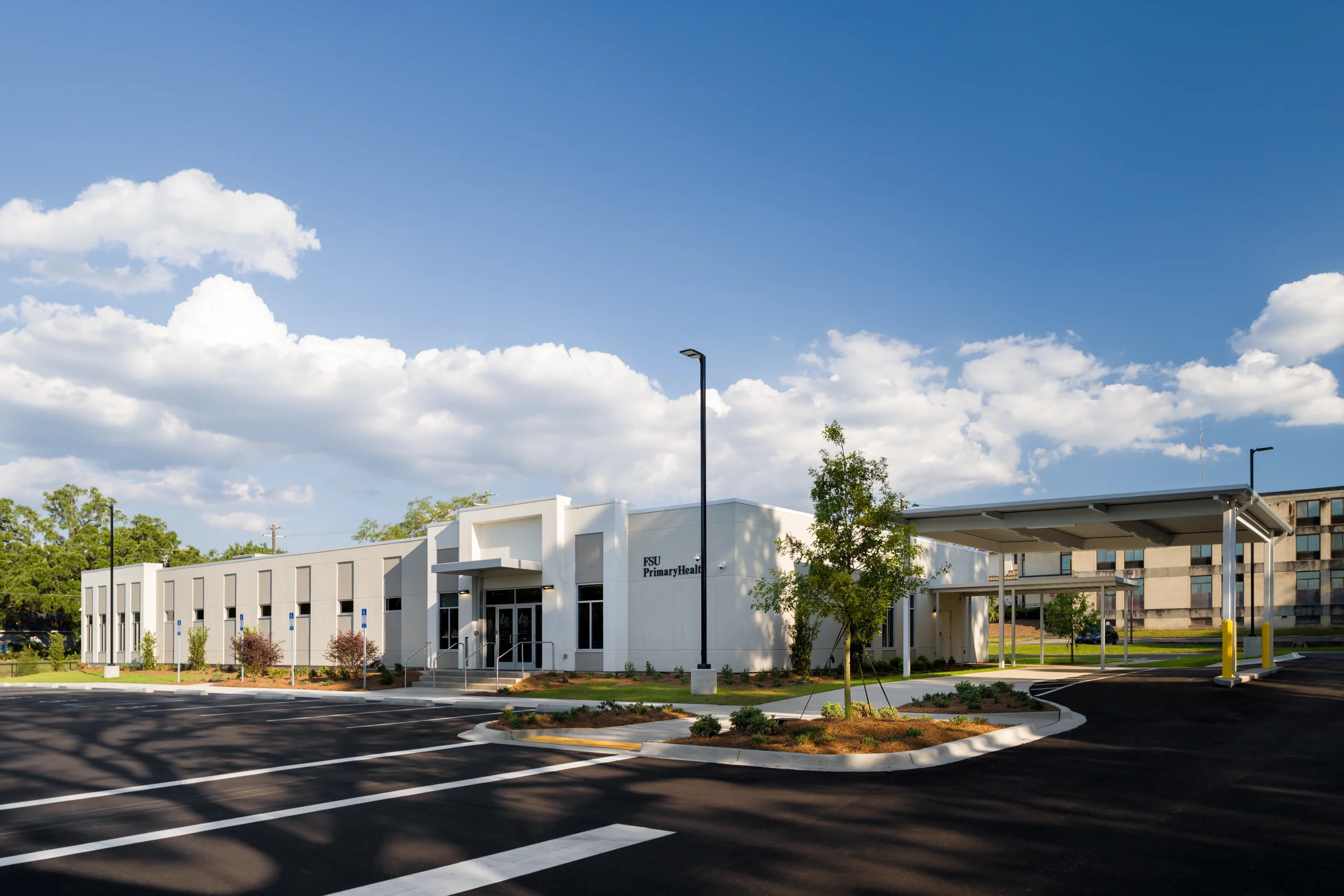
This new health center brings a range of primary care services to an underserved community of southwest Tallahassee for the first time. Addressing primary care needs and mental and behavioral health, the clinic is served by certified physicians and FSU College of Medicine faculty along with a rotation of medical students.
The nearly 10,000-square-foot building, organized on one level for easy accessibility, features 15 patient exam rooms, two rooms dedicated to behavioral health services, two health procedure rooms, and two separate rooms for conferences and community activities. Adjacent to the building is a covered ambulance bay, offering convenient transportation to Tallahassee hospitals.
Using a neutral color palette, the exterior architecture is distinguished by the rhythm of gray-striped vertical banding that organizes the fenestration, expresses the functions of the interior program, and creates a building that harmonizes with the existing neighborhood.
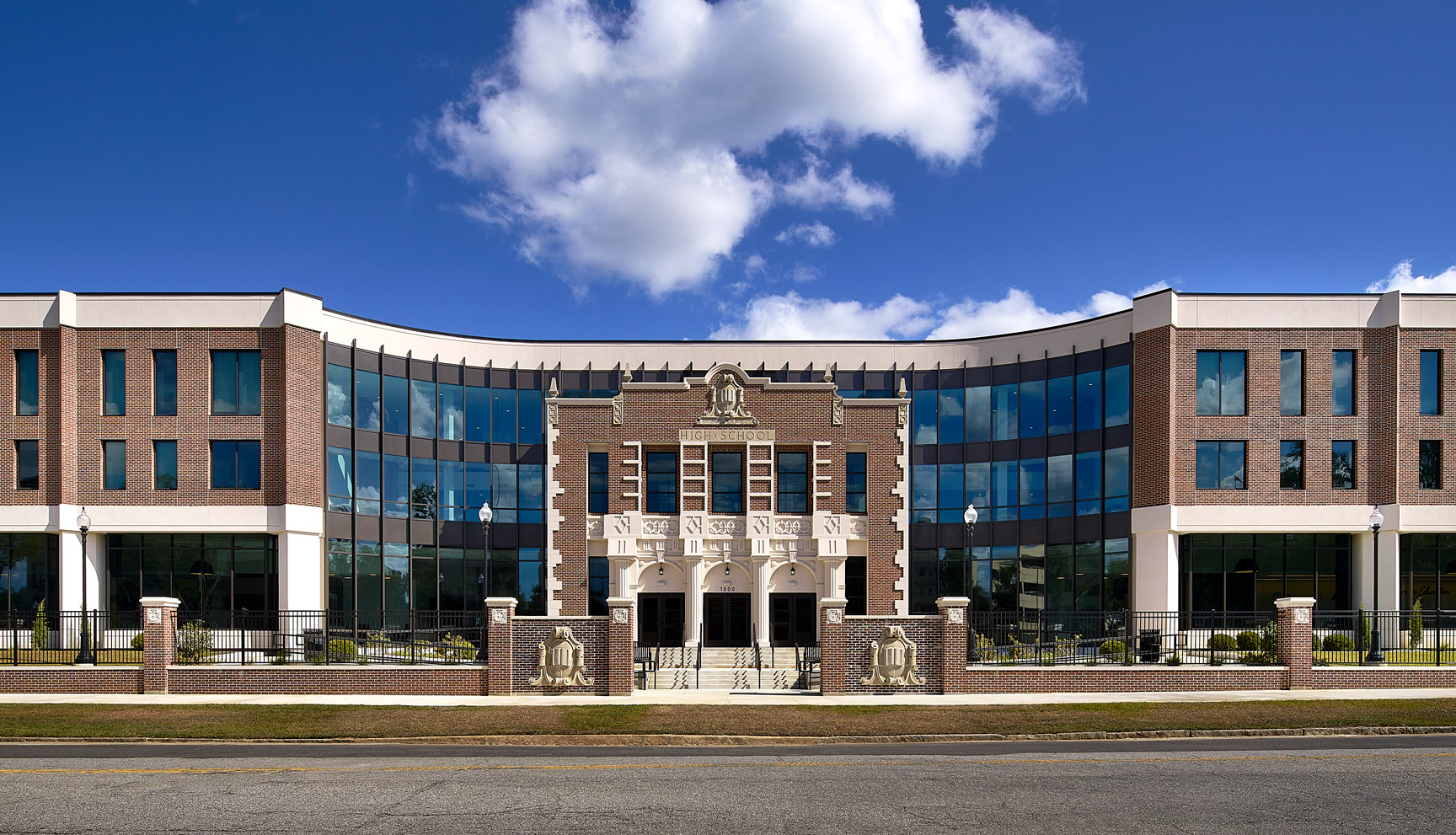
Among the COVID-19 related challenges faced by Phoebe Putney Hospital System was a lack of trained nurses to staff their regional facilities. The healthcare provider decided to team with Albany Technical College Nursing School to offset the high cost of hiring traveling contract nurses by creating this 40-million-dollar Living & Learning Center, located on hospital property across the street from the main hospital entrance.
The facility was designed as a three-story 122,000 GSF building on the site of the abandoned Lee County High School, which had served the community for over 50 years. On the first level is a 46,000 SF state-of-the-art nursing school with ample classroom space, lecture halls, and simulation labs for future nurses to gain work experience. This education program also includes administration, student lounges, and break-out study spaces. The second and third levels are designed to house 80 market-rate nurse dormitory apartments. The offerings include studio, one-bedroom, and two-bedroom units, in addition to communal lounge/study spaces.
This modern building complements the architecture of the hospital campus and is highlighted by a point cloud-recorded entry portal that recalls the original Colonial Revival style of the high school façade. The partnership between Albany Technical College and Phoebe Putney has spurred significant educational expansion, with a 37% year-to-date growth in student enrollment.
HLGstudio collaborated with DAG Architects to form the Atlanta-based design team. This project was completed as a design-build process led by Pelicano Construction. Albany Technical College is part of the state-funded TCSG program.